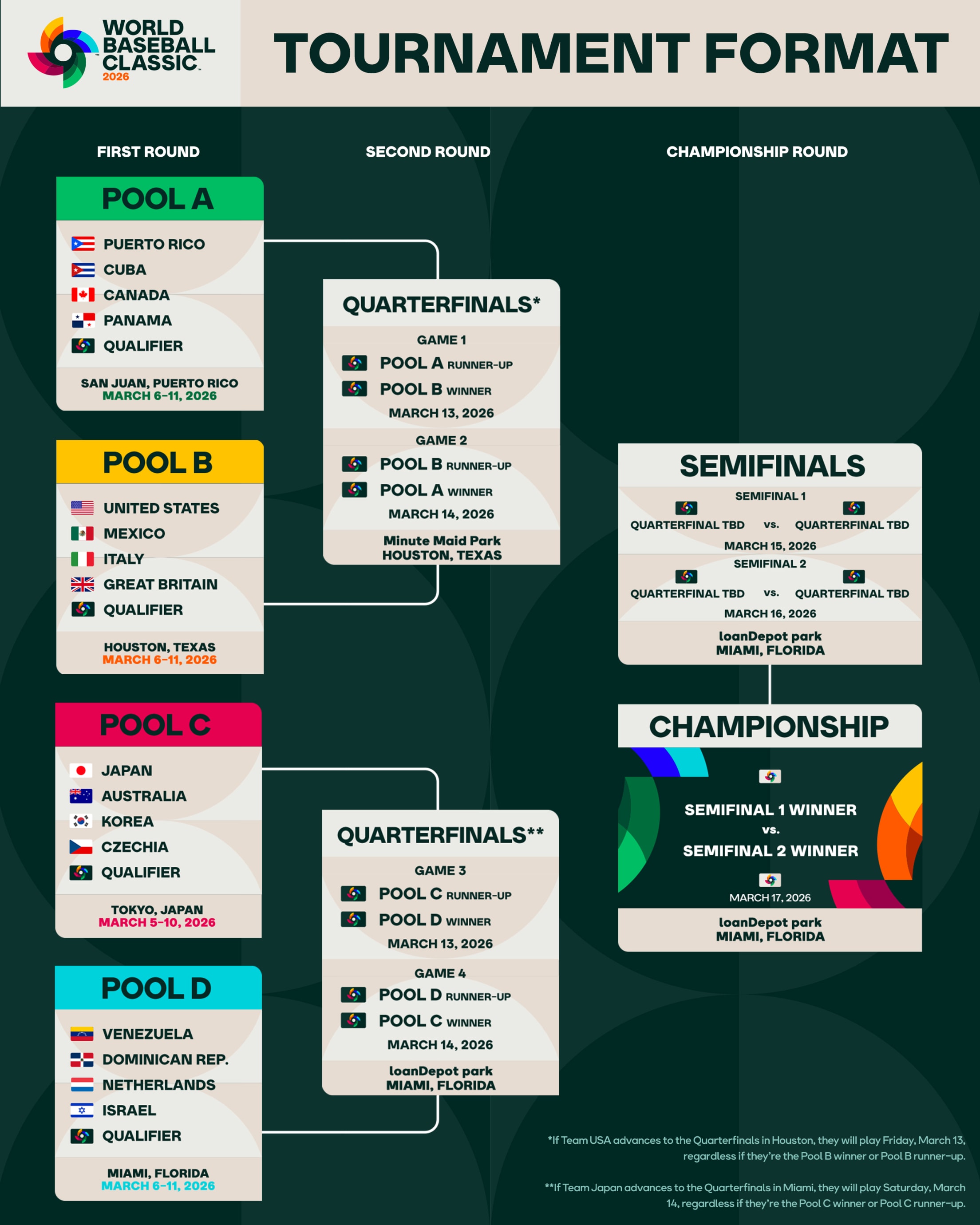
The romanticism surrounding the World Baseball Classic (WBC) is a collective delusion. For two weeks every few years, the baseball world pretends a series of high-variance exhibition games in March represents the "pinnacle" of the sport. We are told the WBC "brings joy back" to the game. We are told it "saves" baseball from its own perceived staleness.
That narrative is not just lazy; it is dangerous to the long-term health of the professional product. You might also find this connected story interesting: Shadows on the Pitch.
The "joy" spectators cite is actually just the chaos of small sample sizes fueled by nationalistic fervor. It is a sugar high. Once the tournament ends, the crash is inevitable, leaving MLB teams to pick up the pieces of broken ligaments and disrupted pitching programs. If you believe the WBC is the savior of baseball, you don't actually understand the mechanics of how elite baseball is played, sustained, or won.
The Pitching Mechanics Catastrophe
Pitching is a delicate, calibrated science of incremental buildup. From the moment a starter reports to Spring Training, every throw is a calculated step toward 100% readiness by Opening Day. The WBC shatters this calibration. As reported in detailed coverage by ESPN, the effects are widespread.
In a standard Spring Training environment, a pitcher like Gerrit Cole or Zack Wheeler might spend March working on a specific grip or a new horizontal break on a sweeper. They throw at 80% intensity, focusing on repeatability and muscle memory.
Then comes the WBC. Suddenly, a pitcher who should be tossing four innings of "work" in a half-empty Florida stadium is asked to throw high-leverage heaters in front of a screaming capacity crowd. The adrenaline spike forces the body to override its natural buildup. When you ramp up to 100% intensity three weeks too early, you aren't "competing"—you are redlining an engine that hasn't been oiled yet.
We saw this play out with Edwin Díaz. A freak injury during a celebration, yes, but the underlying physical tax of playing "playoff-intensity" baseball in March is undeniable. When a $100 million asset goes down for a tournament that offers zero utility to the primary employer, that isn't "growing the game." It's negligence.
The Myth of Global Growth
The most common defense of the WBC is that it "expands the global footprint" of baseball. This is a classic case of confusing activity with progress.
The WBC doesn't create new fans; it harvests existing ones. The viewers in Japan, the Dominican Republic, and Puerto Rico are already baseball-obsessed. They don't need a tournament to convince them the sport matters. Meanwhile, the elusive "casual" American fan—the one the league is desperate to capture—is largely indifferent. To the average viewer, the WBC feels like a glorified Pro Bowl with higher stakes and lower quality of play.
Real global growth happens through infrastructure, not three-game sets in Miami. If the goal is truly to expand the reach of the sport, the investment should be in year-round academies in Europe and Africa, not a marketing-led tournament that disrupts the only league that actually funds the sport's existence.
The Fraudulence of Small Sample Sizes
Baseball is the only major sport where the "better" team loses a three-game series nearly 40% of the time. The 162-game season exists for a reason: it is the only way to filter out luck and identify true excellence.
The WBC does the opposite. It celebrates the fluke. A single hanging slider or a bloop single in a "win or go home" format determines "national superiority." This might be exciting for a television producer, but it is fundamentally antithetical to the nature of baseball.
When we crown a winner in the WBC, we aren't crowning the best baseball nation. We are crowning the team that got hot over a weekend. Pretending this carries the same weight as a World Series—or even a mid-August pennant race—insults the intelligence of anyone who appreciates the grind of the sport.
The Roster Disparity Problem
Let’s talk about the E-E-A-T of roster construction. I have watched front offices navigate the nightmare of WBC player releases. It is a tug-of-war between PR and performance.
The WBC is essentially a "Who Showed Up?" tournament. If the United States sent its absolute top-tier rotation, the conversation might change. But they don't. The best arms in the league—the ones with the most to lose—frequently opt out, and for good reason. Their loyalty is to the $200 million contract and the city that pays it, not a marketing exercise.
This results in a diluted product. You have All-Stars facing off against pitchers who wouldn't make a Double-A roster in the Texas League. This disparity doesn't "elevate" the game; it creates a lopsided, erratic competition that relies on jerseys to provide the gravity the talent level often lacks.
The "Joy" Fallacy
Critics say the WBC is "fun" because the players care more. They point to the dugout celebrations and the intensity of the crowds.
This "joy" is an indictment of the modern MLB experience, not a validation of the WBC. If fans find the WBC more engaging, it's because the league has failed to market the daily drama of the regular season. Using the WBC as a crutch to "fix" baseball is like using a defibrillator on a marathon runner who just needs a glass of water. It provides a temporary jolt while ignoring the underlying fatigue.
The tournament creates a false binary: either baseball is "boring" (The MLB Regular Season) or it is "electric" (The WBC). By leaning into this, the league is cannibalizing its own primary product. It is telling fans that the 162-game journey doesn't matter, and only the "event" baseball is worth their time.
Stop Trying to Save Baseball with Gimmicks
If you want to fix the sport, stop looking at the WBC. The "problems" with baseball—pace of play, lack of stars, regionalization—are being addressed by pitch clocks and balanced schedules. These are systemic fixes. The WBC is a costume party.
I have seen teams lose their entire season trajectory because a middle infielder tweaked a hamstring in a meaningless pool-play game. I have seen pitching staffs scrambled for the first two months of the season because their "ace" threw 65 pitches in a high-stress environment on March 12th.
The cost is too high. The reward is a trophy that half the world forgets by June.
Professional baseball is a marathon of attrition and precision. The WBC is a sprint through a minefield. Stop calling it a "joy" and start calling it what it is: an unnecessary risk that prioritizes short-term TV ratings over the long-term integrity of the athletes and the teams that actually sustain the sport.
If you love the game, you should want the best players on the field in October, not on the training table in April.
Stop watching the highlight reels and look at the injury reports. That is where the real story of the World Baseball Classic is written.