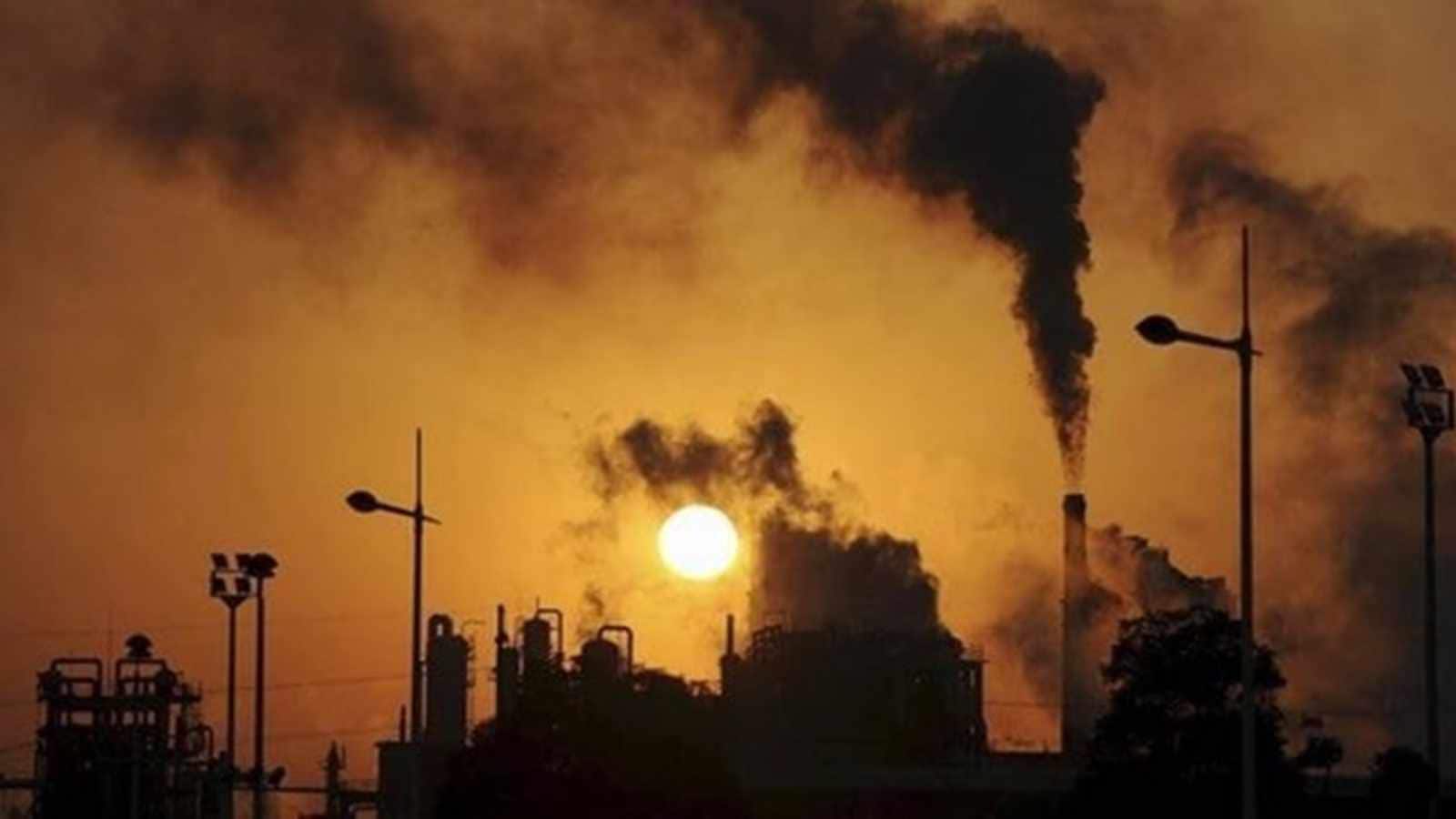
The World Meteorological Organization (WMO) just dropped its latest "State of the Climate" report. Predictably, the media is feasting on the term energy imbalance. They want you to envision the planet as a ticking pressure cooker, absorbing more heat than it radiates back into space. The headlines scream about record-high Joules and catastrophic tipping points.
They are missing the forest for the trees.
Obsessing over the Earth's net energy intake—currently clocked at a staggering rate of roughly $1.5 \text{ W/m}^2$—is a distraction. It is a macro-metric that tells us everything about the physics and absolutely nothing about the human response. By focusing on the "emergency" of the imbalance, we ignore the much more critical "emergency" of our stagnant, 19th-century approach to energy density.
Stop looking at the thermometer. Start looking at the engine.
The Energy Imbalance Myth: It is Not a Leak, It is a Lag
The core of the WMO argument is that the planet is retaining heat because the composition of the atmosphere has changed. This is basic thermodynamics. If you increase the opacity of the atmosphere to long-wave radiation, the surface must warm to restore equilibrium.
But the "state of emergency" narrative treats this like a mechanical failure. It isn't. It is a predictable physical adjustment. The real problem isn't that the Earth is getting warmer; it's that our global infrastructure is too rigid to handle a shifting baseline. We’ve spent trillions building cities on the assumption that coastlines are static and weather patterns are eternal.
That was our first mistake. Our second is thinking we can "fix" the imbalance by simply doing less of everything.
The WMO notes that the ocean has absorbed about 90% of the excess heat. This is often framed as a "ticking time bomb." In reality, the ocean is the ultimate thermal buffer. The heat capacity of the top 3 meters of the ocean equals the entire atmosphere. We aren't dealing with a sudden explosion; we are dealing with a slow, centuries-long thermal soak.
Efficiency is a Death Trap
Most climate "experts" tell you that the path to stability is efficiency and conservation. This is the Jevons Paradox in action, and it’s why most climate policy fails.
When you make a process more efficient, you don't use less of the resource. You make the resource cheaper, which drives up demand. We’ve seen this with LED bulbs, and we’ve seen it with fuel-efficient cars. Expecting "efficiency" to solve a global energy imbalance is like trying to put out a forest fire with a more efficient squirt gun.
The WMO report highlights record levels of greenhouse gases. The standard response is to demand a "drawdown." But a drawdown in a world that requires 100 trillion dollars of GDP to function is a fantasy without a radical leap in energy density.
If we want to address the imbalance, we don't need to live smaller. We need to live larger—with better tech.
The Problem with the "Net Zero" Obsession
Net Zero is a spreadsheet trick. It allows governments to claim they are balancing the books while the physical reality on the ground remains unchanged.
The WMO reports that 2024 was the warmest year on record. Why? Because the energy imbalance is baked into the system. Even if we stopped every carbon-emitting tailpipe today, the thermal inertia of the oceans would keep the warming trend alive for decades.
Instead of fighting a losing battle against a $1.5 \text{ W/m}^2$ forcing, we should be obsessing over Exergy—the useful work we can extract from energy. The current "green" transition is actually a move toward lower energy density. Solar and wind are magnificent tools, but they are diffuse. They require massive land footprints and astronomical amounts of copper, lithium, and steel.
We are trying to solve a high-energy problem with low-energy solutions.
The Data the WMO Glosses Over
The report is heavy on temperature anomalies and light on the Urban Heat Island (UHI) effect. While the global average temperature is rising, the localized temperature in our cities—where 56% of humans live—is rising much faster due to concrete and asphalt.
We blame the global energy imbalance for deaths that are actually caused by poor urban design. We can’t change the Earth’s radiative forcing overnight, but we could change the albedo of every roof in Phoenix or New Delhi by next week.
Why don't we? Because it’s not "grand" enough. It doesn't require a global treaty or a carbon tax. It’s just sensible engineering. We’ve become addicted to the "State of Emergency" because it justifies centralized control, whereas adaptation requires decentralized brilliance.
Stop Asking if the Climate is Changing
The "People Also Ask" section of your search engine is filled with queries like:
- "Is the energy imbalance reversible?"
- "How much time do we have left?"
These are the wrong questions. The climate has never been stable. The Holocene—the 10,000-year period of relative stability we’ve enjoyed—is the outlier, not the norm.
The question isn't "How do we stop the change?" It’s "How do we build a civilization that doesn't care if the climate changes?"
We have the technology to desalinate water at scale. We have the technology to grow food in vertical, climate-controlled environments. We have the technology to build modular nuclear reactors (SMRs) that provide 24/7 baseload power without a single gram of CO2.
The "emergency" isn't the $2.5 \text{ petajoules}$ of extra heat. The emergency is our refusal to use the tools we already have because they don't fit a specific political aesthetic.
The Brutal Truth About Adaptation
Adaptation is seen as a dirty word in climate circles. It feels like "giving up."
But let’s look at the numbers. The WMO points out that climate-related disasters are getting more expensive. But they aren't getting more deadly. Global deaths from climate-related disasters have plummeted by over 90% in the last century.
Why? Because we got richer. We built better buildings. We developed better early warning systems. We created more robust supply chains.
The "State of Emergency" isn't a death sentence; it's a bill. To pay it, we need more energy, not less. We need to increase our mastery over the environment, not retreat from it.
The False Idol of the "Pre-Industrial" Baseline
The WMO report uses the 1850-1900 average as its baseline. This was a period of global poverty, rampant disease, and a life expectancy of about 31 years.
Why is this our "ideal" state?
By tying our goals to a pre-industrial climate, we are subconsciously tying our goals to a pre-industrial lifestyle. We are mourning a version of Earth that was objectively more hostile to human life than the one we have today.
Yes, the energy imbalance is real. Yes, $CO_2$ is a greenhouse gas. But the solution isn't to look backward with nostalgia. It’s to push forward with a level of industrial ambition we haven't seen since the Apollo program.
Your New Mandate
Forget the "State of Emergency." That is a term designed to induce paralysis or panic.
If you are a business leader, stop buying carbon offsets that don't work and start investing in hardened infrastructure. If you are a policymaker, stop subsidizing inefficient "solutions" and start deregulation for high-density power.
We are not "balancing" the climate. We are managing a dynamic, chaotic system. The WMO is right about the physics, but they are dead wrong about the mood.
The planet is absorbing heat. Good. Let’s build the technology to handle it.
Build the sea walls. Drill the geothermal wells. Deploy the reactors.
Stop whining about the imbalance and start engineering the future.