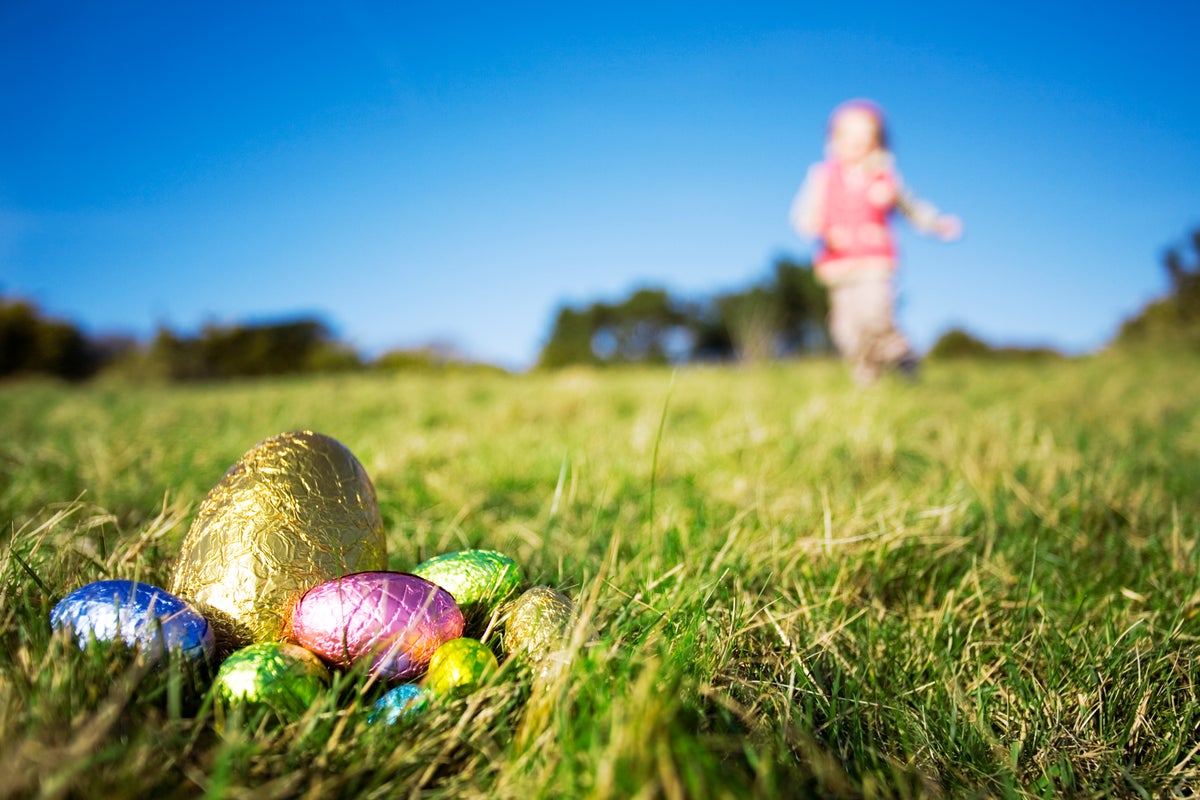
The plastic eggs were neon streaks against the damp, waking grass of Lower Saxony. In the small German town of Wittmund, the air usually carries the salt of the North Sea, a bracing reminder that nature is always moving, always breathing. This was Easter Sunday. It was supposed to be a day of sugar-highs, hidden treasures, and the simple, rhythmic joy of children sprinting through a garden.
Instead, the sky turned a bruised, metallic grey.
We often treat the wind as a background character in our lives. It is a nuisance that messes up hair or a gentle hand that cools a summer afternoon. But in an instant, the wind can become a physical weight, a blind force that does not negotiate. When a sudden, violent gale tore through the festivities, it didn't just rattle the windows of the nearby timber-framed houses. It found the weakness in an old tree.
The sound would have been unmistakable. A sharp, rhythmic crack like a gunshot, followed by the heavy, sickening groan of wood fibers surrendering to gravity.
The Fragility of the Ordinary
A ten-month-old child has no concept of weather patterns or the structural integrity of timber. To an infant, the world is a series of sensory inputs: the warmth of a jacket, the muffled sound of laughter, the bright colors of the holiday. That child was among the three people who lost their lives when the massive trunk came down. Two adults, standing nearby in that universal posture of parental watchfulness, were also crushed.
They were doing what we all do. They were being present. They were celebrating the return of the light after a long winter.
There is a specific kind of horror in a tragedy that strikes during a moment of peak safety. We expect danger on the highway or in the dark corners of a city. We don't expect it in the middle of a grassy field surrounded by neighbors. When the tree fell, it didn't just claim three lives; it shattered the collective illusion that our rituals protect us.
Emergency crews arrived to find a scene that defied the day’s intent. The bright plastic shells of the eggs remained scattered in the dirt, a jarring contrast to the heavy machinery and the grim, focused movements of the first responders. The wind continued to howl, mocking the efforts of those trying to make sense of the wreckage.
The Invisible Stakes of a Changing Climate
While we look for someone to blame—the local council, the gardener, the town’s planning committee—the reality is more complex and far more unsettling. We are living in an era where the "extraordinary" is becoming the baseline.
Trees that have stood for eighty years, weathering a century of seasons, are now facing conditions they weren't built for. In many parts of Europe, alternating cycles of extreme drought and sudden, heavy saturation have weakened the root systems of the continent's most venerable giants. A tree might look healthy from the outside, its bark thick and its branches budding with the promise of April, while underneath, the soil has become a loose slurry or the roots have turned brittle.
Consider the physics of a falling tree. A mature oak or beech can weigh several tons. When that weight is accelerated by a gust of wind exceeding 100 kilometers per hour, it becomes a blunt force instrument. There is no time to run. There is no shelter.
The wind that day wasn't a freak accident in the traditional sense. It was a symptom. Across Germany and much of Northern Europe, high-velocity wind events are increasing in frequency. They arrive with less warning and more ferocity, turning a public park into a minefield. We see the headlines about "high winds," but we rarely translate those words into the reality of a three-ton limb snapping over a stroller.
The Weight of the Aftermath
In the days following the event, Wittmund fell silent. The eggs were collected, not by children, but by investigators.
Grief in a small community is not a private affair. It is a heavy, communal fog. You see it in the way people walk past the cordoned-off area, their eyes averted. You hear it in the lowered voices at the local bakery. The question isn't just "Why them?" but "How do we go back to the park?"
The survivors carry a burden that doesn't show up in the police reports. There is the survivor’s guilt of those who were standing just five feet to the left. There is the trauma of the children who saw the world break in half before they even learned to tie their shoes.
We often talk about "acts of God" or "natural disasters" as a way to absolve ourselves of the terror of randomness. If it’s an act of God, we don't have to worry about the tree in our own backyard, because it’s out of our hands. But that's a lie we tell ourselves to stay sane. The truth is that we are in a constant, unspoken negotiation with the environment around us. We build our lives in the shadow of giants, trusting they will stay upright.
A New Kind of Vigilance
This tragedy forces a cold realization. The pastoral ideal—the dream of the safe, outdoor life—requires a new kind of maintenance. We can no longer assume that the landscape is a static backdrop. It is a living, reacting participant in our lives.
Towns across the region are now faced with a grim task: the mass inspection of every tree that stands near a playground, a school, or a trail. It is a logistical nightmare and a somber necessity. They have to look for the "invisible stakes"—the subtle signs of rot, the lean that has increased by a fraction of a degree, the soil that no longer holds firm.
But you cannot inspect every branch in every forest. You cannot predict the exact moment a gust will hit a specific angle of the canopy.
There is a profound vulnerability in being human. We are soft-bodied creatures in a world of hard edges and heavy things. We spend so much of our time trying to control our environment—adjusting thermostats, paving roads, building fences—that we forget how quickly the earth can reclaim its dominance.
The Easter egg hunt in Wittmund was a celebration of life and renewal. It ended as a testament to how quickly those things can be rescinded. As the town moves forward, there will be memorials and there will be safety reports. There will be new regulations and perhaps a few less trees in the public square.
But for the families involved, the world changed forever on a Sunday morning when the wind picked up. They are left with a void that no amount of investigation can fill. They are left with the memory of a day that began with the hunt for something small and ended with the loss of everything.
The wind has died down now. The North Sea air is still. But the trees that remain stand as silent, towering reminders that the ground beneath us is never as solid as we wish it to be.
One moment, there is the laughter of a child and the rustle of leaves. The next, there is only the sound of the wind, moving on to the next town, indifferent to the lives it left in pieces on the grass.