The oxygen tank didn't explode. It screamed.
In the Wazir Akbar Khan neighborhood of Kabul, the air usually carries the scent of diesel exhaust and baking flatbread. But on a Tuesday that began like any other, that scent was replaced by the metallic tang of ionized air and the thick, choking powder of pulverized concrete. The hospital, a sanctuary defined by its hushed corridors and the rhythmic beep of monitors, became a furnace in a heartbeat.
Reports filtered out through the fog of war and the frantic dispatches of the Taliban’s interior ministry. The numbers are staggering. Four hundred dead. Two hundred and fifty injured. But numbers are a sedative. They allow the mind to categorize a catastrophe as a statistic rather than a collection of severed lives.
To understand the weight of 400 souls, you have to look at the shoes left in the hallway.
A hospital is a place of vulnerability. People go there when they have run out of options, carrying sick children or elderly parents. They are often barefoot or in plastic sandals, moving softly so as not to wake the ward. When the strike hit, those shoes remained. Hundreds of pairs, caked in white dust, orphaned by the people who stepped out of them to meet a violent end.
The Anatomy of the Strike
The official word from the Taliban authorities points toward a Pakistani strike. This isn't just a border skirmish or a localized dispute. It is a laceration on the soul of a city already defined by its scars. Kabul has always been a city of walls, but the hospital was supposed to be the one place where the walls offered protection rather than imprisonment.
Imagine a surgeon named Dr. Aris. This is a man who has spent twenty years stitching together the victims of a forty-year war. He is a hypothetical composite of the very real men and women who stood in those operating theaters. He is scrubbed in, leaning over a patient, perhaps correcting a heart valve or removing a shard of old shrapnel. His world is three inches of illuminated flesh.
Then, the ceiling vanishes.
The shockwave of a modern missile doesn't just break bones; it liquefies the air in the lungs. In that surgical suite, the sterile blue drapes turned into ribbons of fire. Dr. Aris isn't a "casualty count." He is a library of medical knowledge burned to the ground. He is the father who won't walk his daughter to school. He is the only man in three provinces who knew how to fix a specific kind of pediatric trauma. When you kill 400 people in a hospital, you aren't just killing individuals. You are killing the future health of an entire region.
The Invisible Stakes
Why a hospital? In the chess game of regional geopolitics, the "why" is often buried under layers of deniability and propaganda. The Taliban claims the strike was a targeted act of aggression by Pakistan. If true, the strategic intent was likely to signal that nowhere is safe, not even the most sacred ground of humanitarian care.
But the "why" matters less to the man digging through the rubble with his fingernails.
The political tension between Islamabad and Kabul has been simmering for years, a complex brew of border disputes, accusations of harboring militants, and the eternal struggle over the Durand Line. For the people in the wards, these are abstract concepts. They don't care about the Durand Line. They care about the fever their infant son caught two nights ago.
The tragedy of the Kabul strike is that it forces the most vulnerable people to pay the bill for the pride of powerful men. Every brick that fell was a testament to the failure of diplomacy. Every siren that wailed into the Afghan night was a confession of a world that has forgotten how to value a human life above a tactical advantage.
The Logistics of Grief
The aftermath of such an event is a chaotic, bloody choreography.
Kabul’s infrastructure is a patchwork quilt of hope and desperation. When 250 people are injured simultaneously, the remaining hospitals don't just "stretch." They break. There are not enough beds. There is not enough blood. There are not enough hands to hold the ones who are dying.
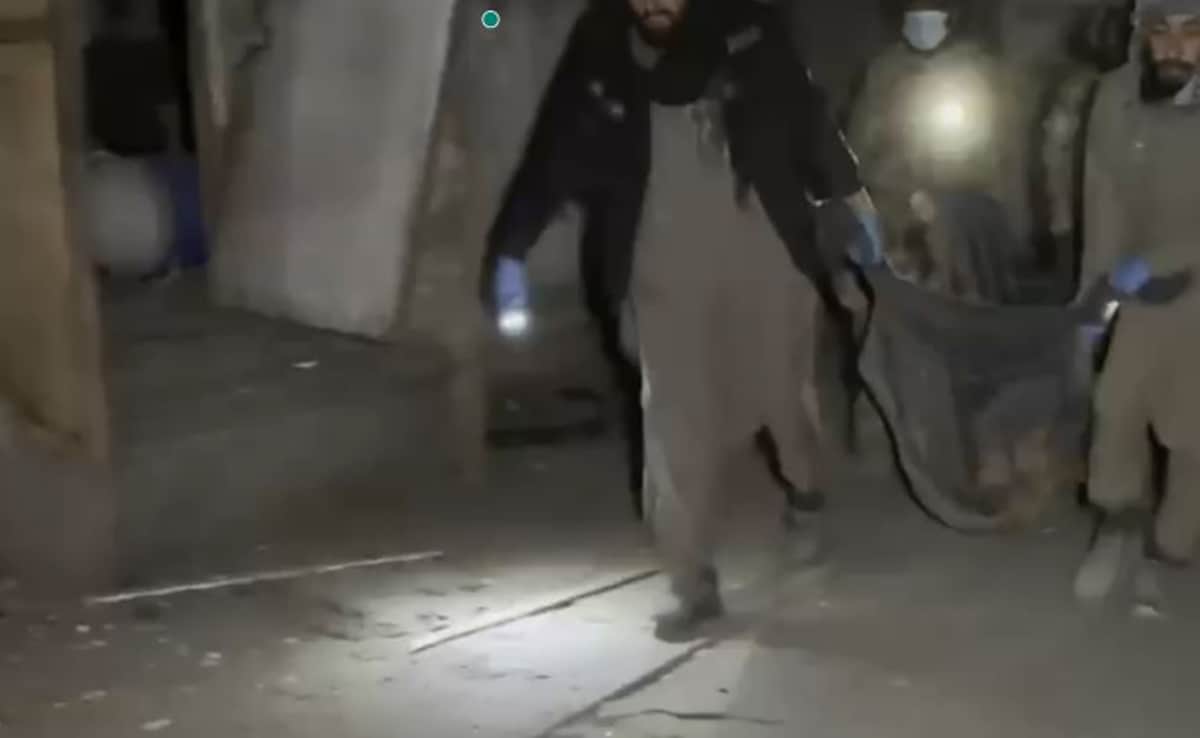
The injured were carried on doors. They were loaded into the trunks of private cars. They were cradled in the arms of strangers who ran until their own lungs burned. This is the reality of a "strike." It isn't a clean, surgical removal of an enemy. It is a messy, agonizing redistribution of pain.
Consider the ripple effect. A man loses his legs in the blast. He was the primary breadwinner for a family of eight. His injury is a life sentence of poverty for his children. A mother is killed while visiting her sister; her children are now part of the surging population of orphans in a country that is already struggling to feed its own.
The strike didn't just end 400 lives. It altered the trajectory of thousands more, sending them spiraling into a darkness that no political manifesto can justify.
The Silence After the Scream
As the dust settled over Wazir Akbar Khan, a terrifying silence took hold. It’s the silence that follows a sound so loud it resets the hearing. In that silence, the political machinery began to churn. Statements were issued. Blame was assigned. The Taliban utilized the tragedy to cement their narrative of victimhood and national sovereignty. Pakistan, meanwhile, faced the international glare of an accusation that, if proven, would mark a dark evolution in their cross-border operations.
But look away from the podiums. Look at the ground.
There is a specific kind of dust that comes from a destroyed building. It is fine, like flour, and it settles on everything. It coats the eyelashes of the dead. It turns the blood on the floor into a thick, dark paste. It gets into the throats of the survivors, making them cough for weeks, a constant physical reminder of the day the sky fell.
The international community watches these events through the flickering lens of a smartphone screen. We see the smoke. We see the "Breaking News" banners. We see the 400 and the 250. Then, we swipe.
We swipe because the reality is too heavy to hold. To acknowledge the humanity of the victims in Kabul is to acknowledge our own precariousness. It is easier to view it as a tragedy in a "troubled region" than to see it as a massacre in a place where people were trying to heal.
The Weight of the Rubble
The Wazir Akbar Khan hospital wasn't just a building. It was a promise. It was the physical manifestation of the idea that even in a land defined by conflict, there are rules. There are lines you do not cross. There are places where the gun must be left at the door.
When that promise is blown apart, the damage is structural in a way that goes beyond masonry. The trust of the people evaporates. If you cannot be safe in a hospital bed, where can you be safe? The psychological toll of this strike is a ghost that will haunt Kabul for a generation. It breeds a specific kind of fatalism—a belief that effort is futile and that death can arrive at any moment, from any direction, for no reason at all.
We must resist the urge to look at this through the cold eyes of a strategist. We must refuse to see this as a mere "incident" on a timeline of regional instability.
Instead, look at the shoes.
Imagine the person who wore them. They woke up, perhaps complained about the cold, drank a cup of green tea, and walked toward the hospital hoping for a cure. They didn't know they were walking into the center of a geopolitical firestorm. They didn't know they would become a number in a headline.
The 400 are not gone. They are present in the empty chairs at dinner tables tonight. They are present in the unanswered questions of their children. They are present in the sudden, sharp silence of a city that has forgotten what it feels like to be whole.
The sun sets over the Hindu Kush, casting long, purple shadows over the ruins of the Wazir Akbar Khan wards. The smoke has finally cleared, leaving behind only the skeleton of a place that used to save lives. Below the twisted rebar and the shattered glass, the dust is still settling, coating the abandoned sandals and the broken stethoscopes in a fine, white shroud.
There is no more screaming now. Only the wind.


