The air in the high-ceilinged halls of North Tehran does not move. It is heavy with the scent of rosewater and the weight of centuries. Behind closed doors, eighty-eight men sit in oversized chairs, their faces lined with the history of a revolution that has grayed into an establishment. They are the Assembly of Experts. To the outside world, they are a bureaucratic body defined by Article 107 of the Iranian Constitution. To the people walking the bustling streets of the Grand Bazaar, they are the gatekeepers of the future.
They are the only people who can decide who holds the most powerful office in the Middle East.
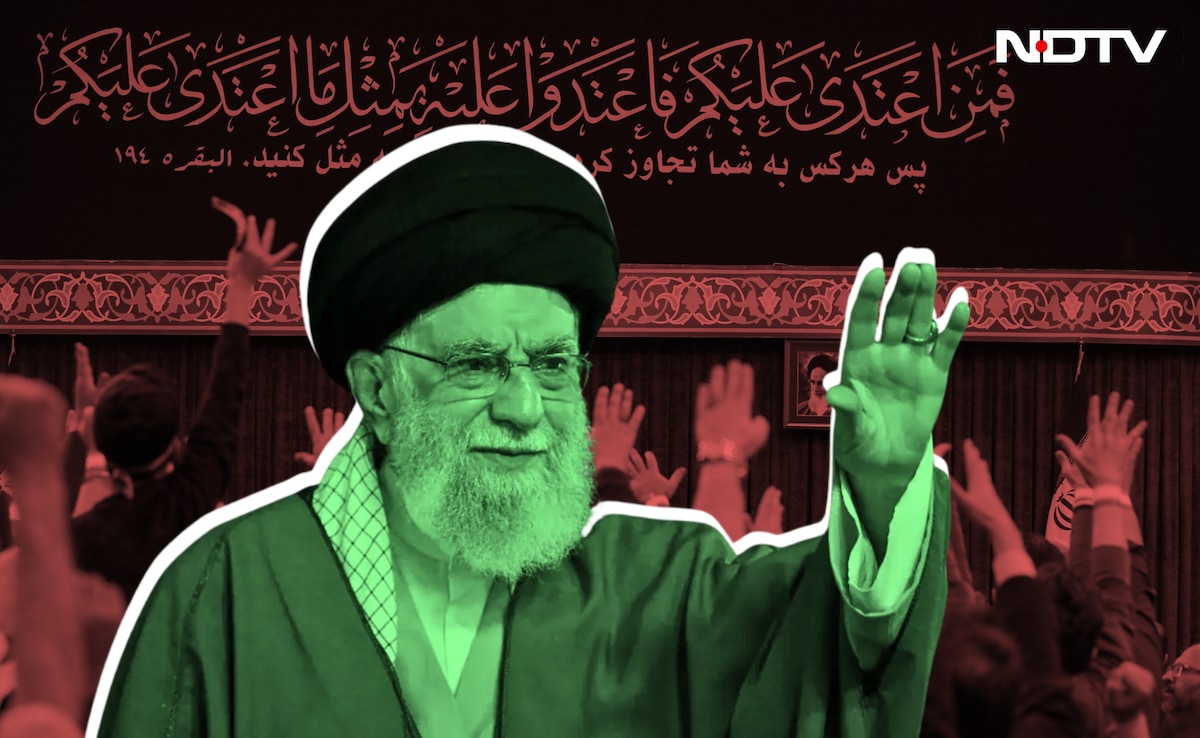
When the current Supreme Leader, Ali Khamenei, speaks, the world analyzes his cadence for signs of frailty. He is in his mid-eighties. In a system where one man holds the ultimate authority over the military, the judiciary, and the moral compass of the nation, his health is more than a medical status. It is a geopolitical heartbeat.
The process of replacing him is not an election in the sense that most of the world understands it. There are no campaign rallies, no televised debates, and no catchy slogans. It is an exercise in shadow-play and silent consensus.
The Architect of the Invisible
Imagine a man named Abbas. He is a fictional composite of the middle-class Tehranis I’ve spoken with—men who remember the 1979 Revolution not as a textbook chapter, but as a smell of smoke and a feeling of sudden, terrifying hope. Abbas drinks his tea and looks at the television. He knows that his vote for the Assembly of Experts every eight years is a vote for the men who will eventually sit in a room and whisper a single name.
That name will become the Vali-e-Faqih, the Guardian Jurist.
The Assembly is a collection of clerics, but they function as a board of directors for a divine corporation. Their primary job is to monitor the Leader, but their true purpose is to be ready for the moment the seat goes cold. According to the law, once the Leader passes or is deemed unable to rule, the Assembly must convene immediately.
They don't start from scratch.
For years, a secret committee within the Assembly has been vetting a shortlist. This list is more guarded than any military secret. If you are on it, your life is a performance of piety and political maneuvering. If you are not on it, you are irrelevant.
The Requirements of the Crown
To wear the mantle, a candidate must possess more than just a deep knowledge of Islamic jurisprudence. They need tadayyun—an unwavering commitment to the revolutionary principles—and a razor-sharp grasp of international politics.
Consider the paradox. The Leader must be a man of the mosque, yet he commands a sophisticated drone program. He must be a scholar of the Quran, yet he must navigate the labyrinth of global oil markets and nuclear negotiations.
The criteria are both rigid and frustratingly vague. A candidate must be "just and pious," possessed of "correct political and social insight," and "resourceful." In practice, "resourceful" means having the backing of the Islamic Revolutionary Guard Corps (IRGC). Without the blessing of the men in olive drab, the men in black robes cannot govern.
This is the tension that keeps Abbas awake. He knows that while the clerics debate the theology of leadership, the generals are measuring the drapes. The transition is a dance between the divine and the drill sergeant.
The Fallen Frontrunners
The path to the top is littered with the ghosts of "almosts."
For a long time, Ebrahim Raisi was the name on everyone’s lips. He was the protégé. He had the lineage. He held the presidency. Then, a helicopter disappeared into the fog of the Iranian mountains. In a single afternoon, the carefully constructed succession plan of the decade dissolved into a wreckage of twisted metal.
Death is the only thing the Assembly cannot lobby against.
With Raisi gone, the silence in those whispering rooms has become deafening. The spotlight shifted, perhaps unfairly, toward Mojtaba Khamenei. He is the second son of the current Leader. He is influential, quiet, and deeply embedded in the security apparatus.
But there is a problem.
The 1979 Revolution was fought to end a monarchy. To pass the mantle from father to son feels, to many, like a betrayal of the very foundation of the Republic. It creates a narrative crisis. How do you justify a hereditary succession in a system built on the ruins of a Shah’s palace?
The Mechanism of the Vote
When the time comes, the Assembly will meet in an extraordinary session. The doors will lock.
The candidates will be presented. The debate will be fierce, though polite. To win, a candidate needs a two-thirds majority. If no one reaches that threshold, the process repeats, shedding the weakest names like autumn leaves.
During this interval, the country is governed by a temporary council: the President, the head of the judiciary, and one member of the Guardian Council. It is a fragile bridge. It is a period where the very air feels combustible.
For the person living in a small apartment in Isfahan or working in the oil fields of Khuzestan, this isn't just about theology. It’s about the price of bread. It’s about whether the internet stays on. It’s about whether the "morality police" will be emboldened or restrained.
The Supreme Leader is the only person who can stop a law, start a war, or change the social fabric with a single decree.
The Shadow of the Shortlist
The names currently being whispered—those who survived the vetting and the political purges—are men like Alireza Arafi or Hashem Hosseini Bushehri. High-ranking clerics with impeccable credentials. But do they have the charisma? Do they have the steel?
The struggle for the succession is a struggle for the soul of the state. On one side are the hardliners who believe the survival of the system requires a fist. On the other are the pragmatists who fear that without a slight opening of the valve, the pressure of a young, restless population will cause the pipes to burst.
The Assembly knows this. They are old men, but they are not blind. They see the protests. They feel the weight of the sanctions. They know that the man they choose will either be the one who preserves the legacy or the one who oversees its transformation.
The Final Measure
The power of the Supreme Leader is often described as absolute, but it is actually a delicate equilibrium. He is the anchor. If the anchor is too heavy, it drags the ship down. If it is too light, the ship drifts into the rocks.
In the tea houses of Tehran, the conversation usually stops when the news comes on. People watch the Leader’s gestures. Does he lean? Does he cough? They are looking for the future in the tremble of a hand.
The transition, when it happens, will be the ultimate test of the system's "robustness"—a word the planners love, but the people dread. It is a moment where the invisible stakes become visible.
The sun sets over the Alborz mountains, casting long, sharp shadows over the city. Below, the traffic hums, millions of lives moving in a thousand directions, all of them tethered to a decision that will be made by eighty-eight men in a room that smells of rosewater.
They will emerge. They will announce a name.
And in that moment, the history of a nation will pivot, not because of a ballot cast in a box, but because of a consensus reached in the dark. The ink on the decree will be fresh, but the weight of it will be ancient.
The city waits. The room waits. The ghosts of the fallen wait.
The successor is already there, somewhere in the fold of the crowd or the silence of a library, waiting for the whisper to become a command.


