The media has a script for the West Bank. You know it by heart. It’s a tragedy in three acts: settler violence, Palestinian victimization, and the supposed "failure" of the state. It makes for great headlines and even better outrage. It’s also a lazy, two-dimensional map for a four-dimensional war.
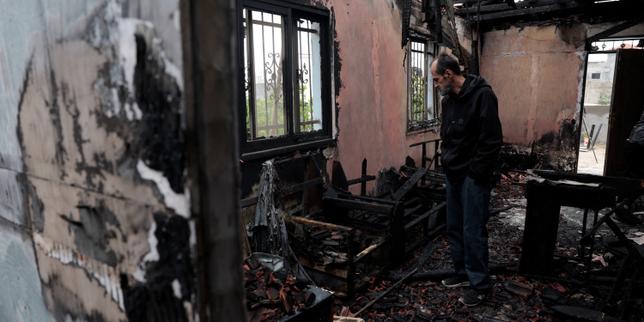
When reports surface of coordinated attacks on Palestinian villages, the reflex is to label it "lawlessness." That is a fundamental misunderstanding of how power functions in 2026. This isn't a breakdown of the system; it’s a feature of a new, decentralized kinetic reality that the legacy press is too slow to grasp. If you’re looking at these events through the lens of a 1990s peace process, you aren't just wrong. You’re obsolete.
The Myth of the Uncoordinated Mob
The common narrative suggests these "settler attacks" are spontaneous outbursts of radical fervor. That’s a comforting thought because it implies the problem is just a few bad actors. The truth is far more clinical.
We are witnessing the democratization of low-intensity conflict. What looks like a "mob" to a journalist on the ground is actually a highly networked, data-driven operation. These groups aren't just wandering into villages with sticks. They are utilizing open-source intelligence (OSINT), localized surveillance drones, and encrypted mesh networks to exploit gaps in both Israeli military presence and Palestinian security.
I’ve seen this before in corporate espionage and cyber warfare. When a centralized authority—in this case, the Israeli state—is stretched thin by multi-front conflicts, the periphery doesn't just fall into chaos. It self-organizes. The "coordination" the media whispers about isn't necessarily coming from a dark room in Jerusalem; it’s coming from an algorithm.
The Security Vacuum is a Choice
The standard critique is that the IDF "fails to intervene." This assumes the goal of a modern military is to act as a neighborhood watch.
In reality, we are seeing the emergence of "Strategic Friction." By allowing—or failing to prevent—decentralized violence, the state effectively outsources its territorial enforcement. It’s a brutal, high-stakes version of the gig economy. Why risk a political crisis by sending in uniformed soldiers to clear an area when you can let the "periphery" do the heavy lifting?
It’s an ugly truth that human rights groups hate to admit: The vacuum isn't an accident. It’s an asset.
When you analyze the data on where these clashes occur, they aren't random. They happen at the exact pressure points where legal territorial expansion has stalled. These aren't "attacks." They are "territorial audits" performed by civilians.
The Failure of the "Two-State" Lens
Every article on this topic eventually pivots to how this "destroys the hope for a two-state solution."
Stop. The two-state solution hasn't been a viable political framework since the turn of the millennium. Continuing to use it as a benchmark for West Bank violence is like trying to fix a Tesla with a steam engine manual.
The conflict has moved beyond borders and into the realm of demographic saturation.
- Urbanization as Weaponry: This isn't about "farms" or "olive groves." It’s about high-density corridors.
- Infrastructure Dominance: The real war is being fought over 5G towers, water bypasses, and road elevations.
- Digital Sovereignty: Whoever controls the data layer of the West Bank controls the physical reality.
The competitor’s article focuses on the blood and the dust. They miss the fiber optics. They miss the fact that these villages are being bypassed by a digital and physical infrastructure that renders the traditional concept of "land ownership" irrelevant.
Why "Condemnation" is a Useless Currency
Washington, Brussels, and London love to issue "strong condemnations." They believe words have a stabilizing effect. They don't.
In the current geopolitical economy, condemnation is a trailing indicator. It tells you what happened yesterday while doing nothing to stop what happens tomorrow. By the time a press secretary expresses "grave concern," the facts on the ground have already been codified into a new status quo.
If you want to understand why these attacks continue, look at the capital flow. Look at the private funding of "security outposts" that bypass official government budgets. Follow the money from international donors that fuels the radicalization on both sides. The media wants to talk about "hate." I want to talk about "incentives."
The Counter-Intuitive Reality of Governance
People ask: "How can a modern democracy allow this?"
They’re asking the wrong question. The right question is: "How does a modern state maintain control when it no longer has a monopoly on violence?"
We are entering an era of Fractional Sovereignty. The West Bank is the laboratory for this. It is a place where multiple legal systems, multiple security forces, and multiple civilian militias all operate in the same physical space. It’s messy, it’s violent, and it’s the future of many contested borders globally.
The "coordination" the media decries is actually a primitive form of this new governance. It’s a decentralized enforcement mechanism that doesn't need a central command to function. It only needs a shared objective and a Telegram group.
Stop Looking for "Peace" and Start Looking for "Equilibrium"
The obsession with "solving" the West Bank is a Western vanity. You don't "solve" a thousand-year-old land dispute fueled by modern technology. You manage the equilibrium.
Right now, the equilibrium has shifted toward aggressive civilian-led expansion because the cost of that expansion is lower than the cost of state-led diplomacy. Until that cost-benefit analysis changes, no amount of "monitoring" or "reporting" will stop the cycle.
The "senseless violence" you read about in the papers is actually highly sensible to the people committing it. It’s effective. It’s cheap. And it’s working.
If you’re still waiting for the "peace process" to resume, you’re not a visionary. You’re a tourist.
The maps are being redrawn in real-time by people who don't care about your op-eds or your international law. They care about the next hilltop, the next drone feed, and the next kilometer of road.
Get used to it. This isn't a "series of attacks." It’s the new architecture of war.
Build a better map or get off the field.