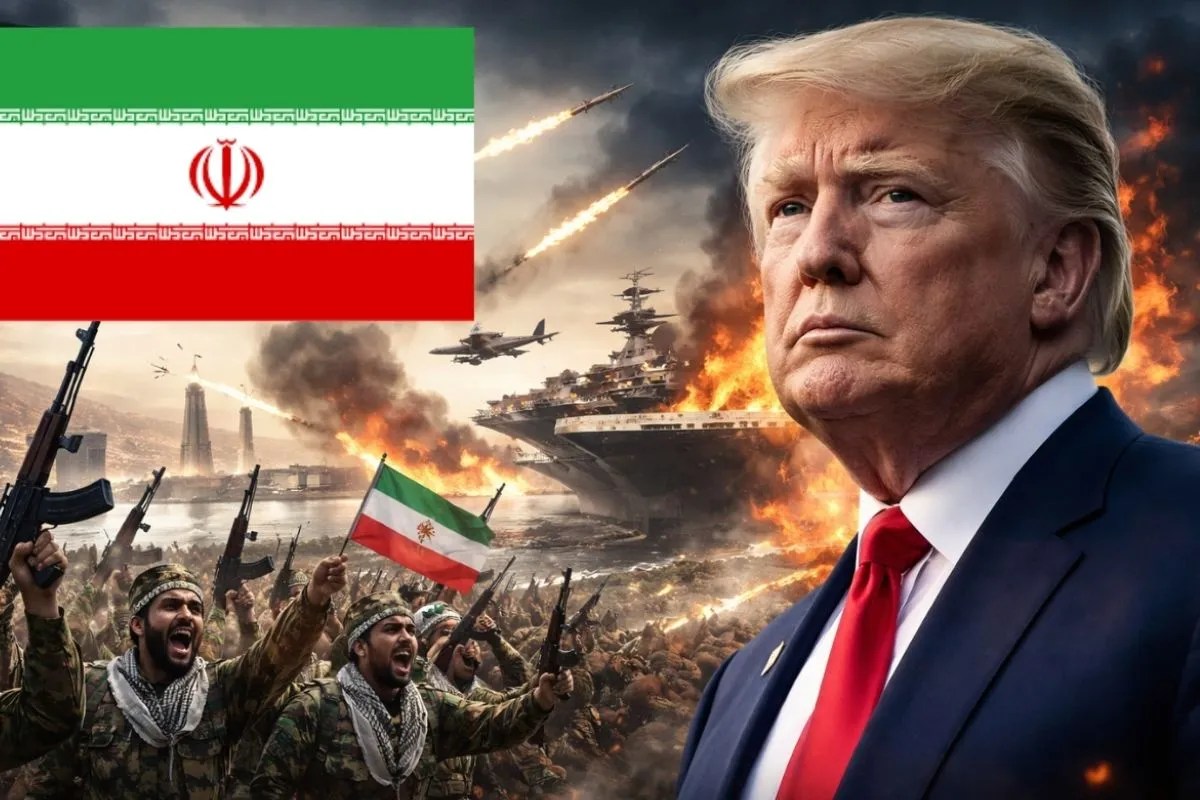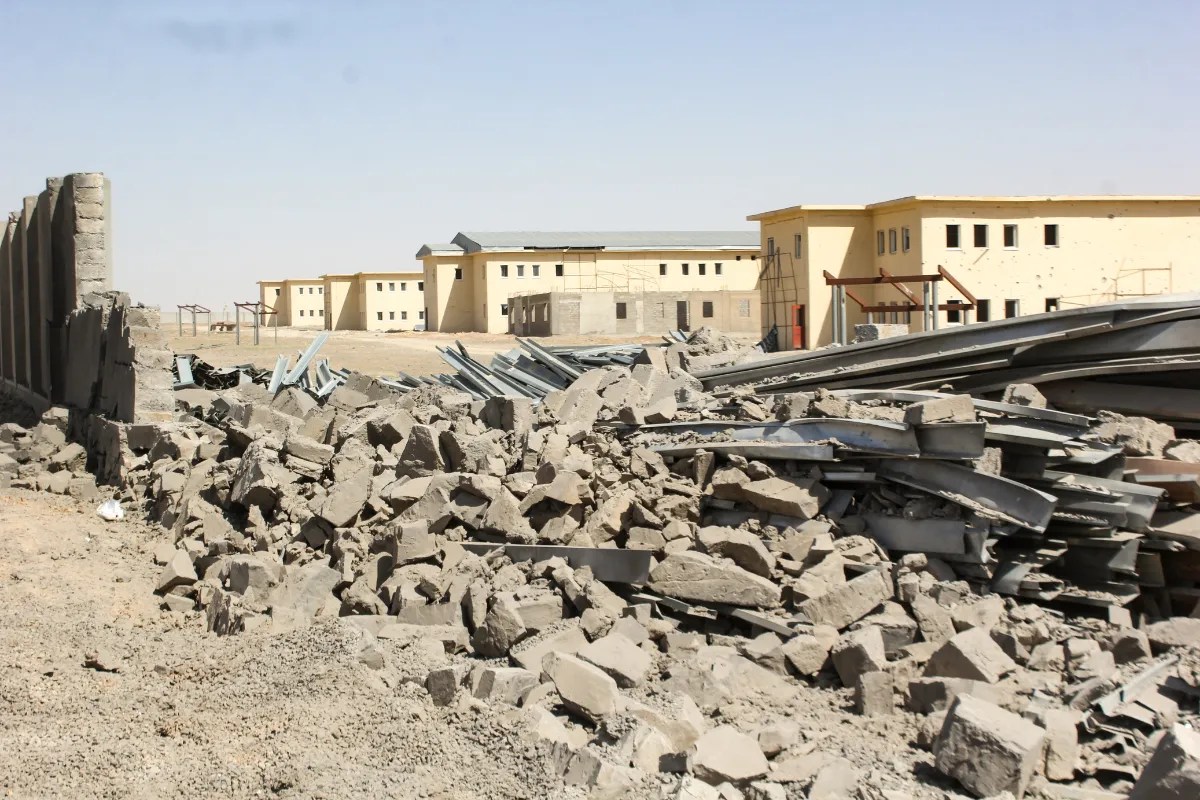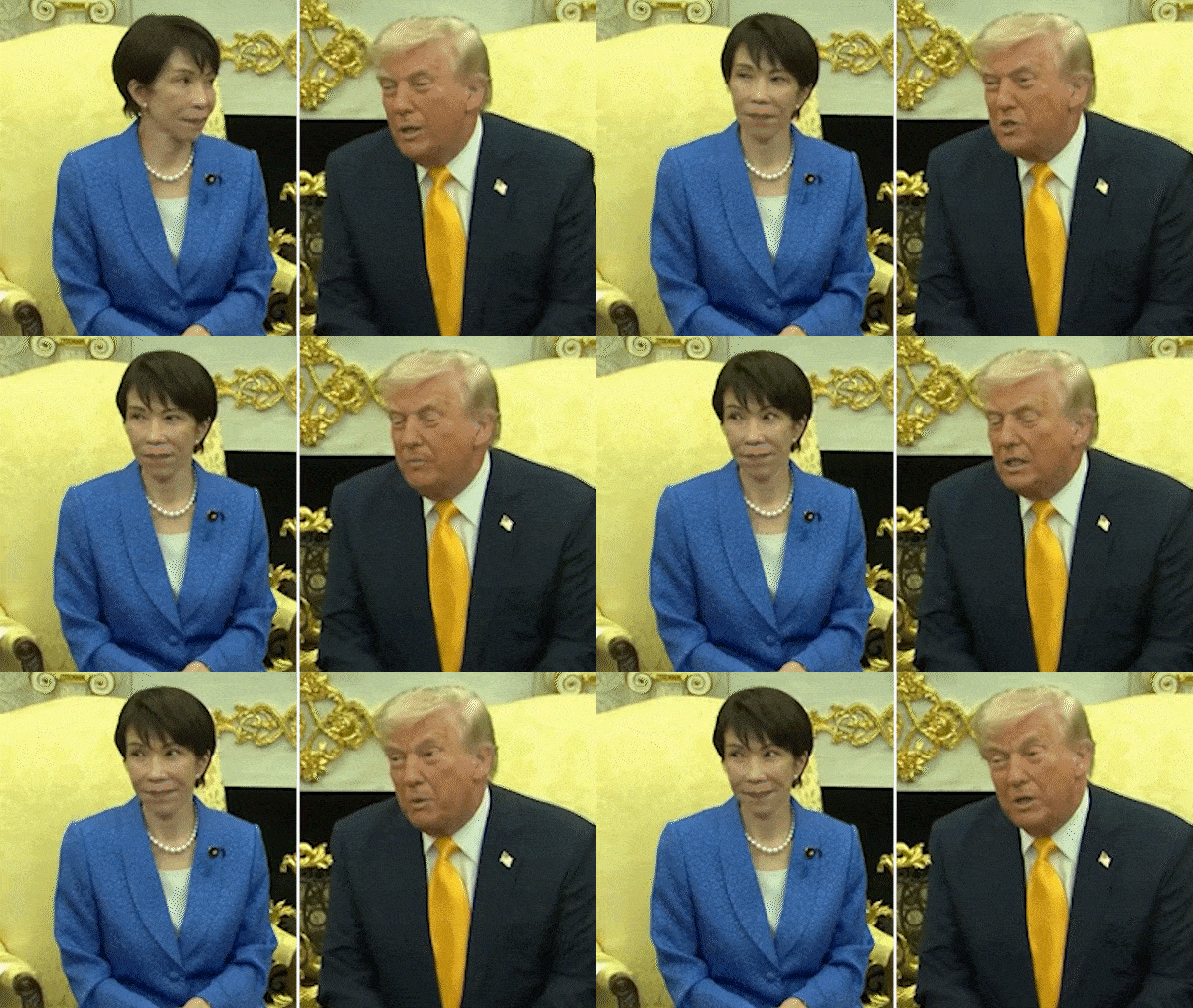
The air inside the room was thick, not with heat, but with the specific, suffocating density of statecraft. You could hear the faint rhythmic click of camera shutters, a mechanical heartbeat against the silence of two men sitting in ornate chairs. On one side, the American President, a man who treats the world stage like a high-stakes boardroom. On the other, the Japanese Prime Minister, a representative of a nation that carries the scars of the twentieth century in its very marrow.
Between them sat an invisible ghost. It was the memory of December 7, 1941.
Most political briefings are a blur of acronyms and trade percentages. They are dry. They are forgettable. But when Donald Trump looked toward Shinzō Abe and compared a modern Iranian provocation to the attack on Pearl Harbor, the atmosphere shifted. It wasn’t just a headline. It was a collision of two different ways of remembering the world. For one, the comparison was a rhetorical tool—a way to underscore the gravity of a drone strike or a tanker seizure. For the other, and for the millions watching in Tokyo and Honolulu, it was an invitation to a trauma that changed the genetic code of the Pacific.
History isn't a book on a shelf. It is a living, breathing pressure.
The Anatomy of a Comparison
To understand why those words landed with the thud of a lead weight, you have to look at what Pearl Harbor represents in the American psyche. It is the ultimate "Day of Infamy." It is the moment the shield was pierced. By invoking it, a leader isn't just talking about a military maneuver; they are signaling that the rules of engagement have fundamentally shifted. They are telling the public that the time for polite negotiation has ended and the era of absolute response has begun.
But words don't travel in a vacuum. They cross oceans.
Imagine a Japanese diplomat sitting in that room. For them, Pearl Harbor isn't just a historical event; it is the first domino in a sequence that led to the total devastation of their homeland. It is a word that carries the scent of burning oil and the subsequent shadow of the mushroom cloud. When an American leader uses that specific historical shorthand while sitting next to a Japanese leader, the irony isn't just thick. It’s tectonic.
The President's intent was clear: he wanted to paint Iran as an existential threat, a "sneaky" aggressor that justifies a massive buildup of force. He was building a case for a "maximum pressure" campaign. Yet, in choosing that specific analogy, the nuance of the current crisis—a complex web of nuclear deals, regional proxies, and shipping lane disputes—was flattened into a black-and-white caricature of 1941.
The Human Cost of Hyperbole
We often think of foreign policy as a game of chess played by giants. It’s easier that way. If it’s just pieces on a board, we don't have to think about the sailor on a destroyer in the Strait of Hormuz, gripping a railing as a fast-attack boat weaves through the wake. We don't have to think about the family in Tehran wondering if the price of bread will triple by Tuesday because of a new set of sanctions triggered by a single speech.
Hyperbole has a price. When we use the language of total war to describe modern geopolitical friction, we narrow the exit ramps.
If an event is "just like Pearl Harbor," then the only logical conclusion is a response "just like World War II." That is the trap of the historical metaphor. It creates a momentum that is hard to stop. It turns a localized conflict into a global destiny.
Consider the mechanics of the Iranian situation at that moment. You had a series of attacks on oil tankers. You had the downing of a high-tech American drone. These are serious, dangerous escalations. They require a firm hand and a clear strategy. But are they the equivalent of a carrier-based surprise attack that sank the Pacific Fleet?
Objectively, no.
Subjectively, in the heat of a press conference, the comparison serves a different master: the gut. It aims for the part of the brain that doesn't check dates or casualty counts. It aims for the part of the brain that simply wants to feel justified in its anger.
The Silence Across the Table
The most telling part of these moments isn't usually what is said, but the reaction of the person listening. Shinzō Abe’s presence was a masterclass in the art of the "diplomatic wince." Japan has spent decades reinventing itself as a pillar of global peace, a nation that has moved so far past its imperial shadow that it often acts as the primary mediator between the West and the Middle East.
In fact, Abe had recently traveled to Tehran. He was trying to be the bridge. He was trying to prevent the very fire that the Pearl Harbor comparison seemed to be stoking.
There is a profound disconnect when one ally is trying to douse the flames with water while the other is describing the fire in terms that suggest it can only be put out with an explosion. It highlights a recurring theme in modern diplomacy: the struggle between the need for a headline and the need for a solution.
One man saw a chance to frame a villain. The other saw a delicate web of regional stability being torn by a clumsy metaphor.
The Invisible Stakes
Why does this matter to someone sitting at home, thousands of miles from the Oval Office or the Persian Gulf?
It matters because our leaders' words are the blueprints for our future. If the blueprint says "War," the house will eventually look like a fortress. If the language used to describe our adversaries is always dialed to eleven, we lose the ability to hear the subtle warnings of a real catastrophe. We become deaf to the middle ground.
We live in an age of instant gratification, where a tweet or a soundbite can travel the globe before the speaker has even finished their sentence. In that environment, the "Pearl Harbor" comparison is high-octane fuel. It’s easy to understand. It’s evocative. It generates clicks.
But it also ignores the reality of 21st-century conflict. Today, wars aren't always won with a clear surrender on the deck of a battleship. They are won or lost in the shadows of cyber warfare, through the slow strangulation of economic systems, and in the hearts of populations who are tired of being told that every day is a new 1941.
The stakes are the lives of people who will never be invited to a joint press conference. They are the young soldiers who have to live out the consequences of a metaphor. They are the merchants whose livelihoods depend on a peaceful sea. When we reach for the most violent chapters of our history to explain the present, we are essentially saying that we have learned nothing from the ending of those chapters.
The cameras eventually stopped clicking. The two men stood up and shook hands. The reporters rushed out to file their stories, their fingers flying over keyboards to capture the "Pearl Harbor" quote. It was a successful day for the news cycle.
But as the room emptied, the ghost of 1941 remained. It didn't belong there. It belonged in a museum, a reminder of what happens when diplomacy fails completely and the world breaks apart. Bringing it into the room as a rhetorical flourish didn't make the world safer; it just made the shadows a little longer.
We are left wondering if we are doomed to keep rehashing the ghosts of our grandfathers because we lack the imagination—or the courage—to describe our own problems in their own terms. The most dangerous thing about history isn't that it repeats. It's that we keep inviting it back to the table.
The President walked toward the door, his mind likely already on the next meeting, the next deal, the next comparison. Behind him, the silence returned to the room, heavy and unresolved.
Somewhere, a sailor watched the horizon.