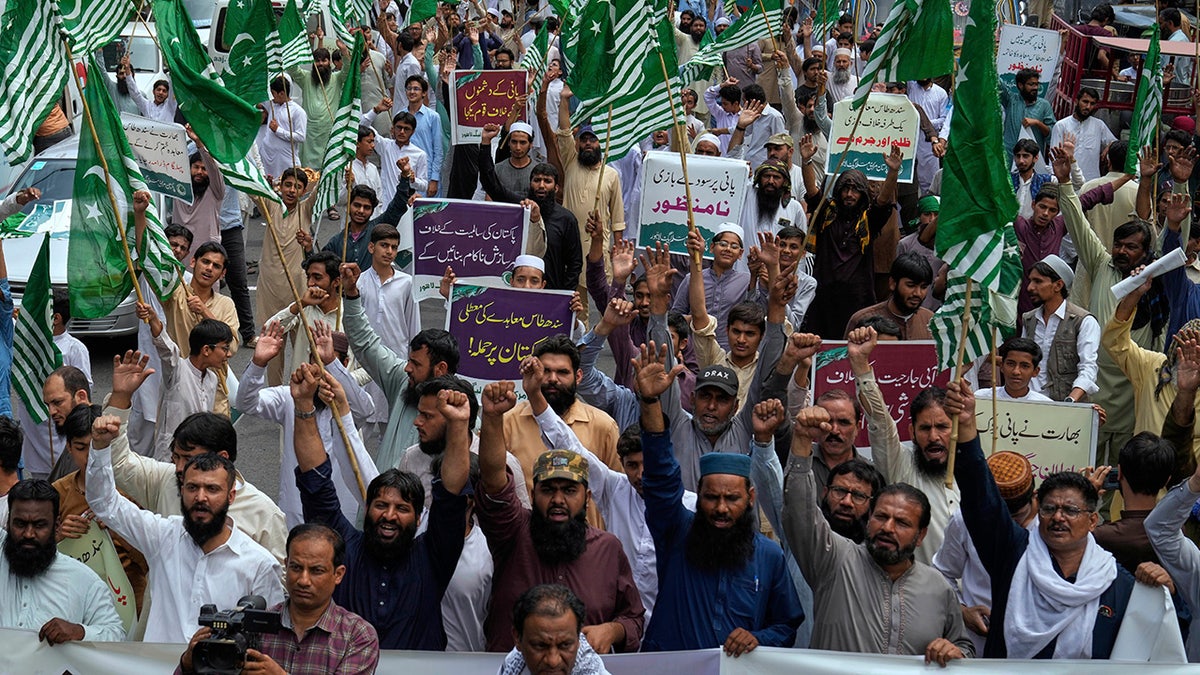
The dust in Kabul doesn’t just settle. It bites. It carries the smell of parched earth and the metallic tang of old exhaust, but lately, it has carried something heavier. The air over the capital is thick with the residue of a Tuesday that changed everything for the city’s most vulnerable. When the bombs fell near the medical corridors, they didn’t just shatter glass. They shattered the thin, fragile line between a manageable crisis and a total collapse of hope.
Imagine a nurse named Amina. She is a composite of the dozens of exhausted faces in the wards today, but her reality is no metaphor. Amina stands in a hallway where the electricity flickers like a dying pulse. She has twenty patients and three rolls of clean gauze. Her shoes crunch on the silica of broken windows. When the Pakistani airstrikes hit targets in the border provinces, the ripple effect didn’t stop at the blast radius. It surged through the logistics chains, choked the roads, and left Kabul’s specialized facilities staring at empty shelves.
A hospital without supplies is just a building where people go to wait for the inevitable.
The Geography of Despair
Politics is often a game played on maps by people in air-conditioned rooms. But on the ground, politics is the sound of a child coughing in a room with no antibiotics. The recent escalation between Islamabad and the de facto authorities in Afghanistan has turned the border into a tourniquet. It is a familiar, agonizing rhythm. Accusations fly about cross-border terrorism, jets are scrambled, and suddenly, the lifeblood of civilian trade—medicine, food, fuel—is cut off.
The airstrikes targeted what Pakistan claimed were militant hideouts in Khost and Paktika. The fallout, however, was far more indiscriminate. In the chaos that followed, the already battered Afghan healthcare system began to gasp for air. It is a system held together by string and the sheer willpower of local doctors who haven't been paid in months.
Then, the radar pings changed.
While the rhetoric at the United Nations remained frosty, a different kind of movement began at the Hindon Air Force Base near Delhi. There is a specific sound an Indian Air Force C-17 Globemaster makes when its engines spool up—a deep, chest-rattling roar that signals a shift in the local gravity. India doesn't have an official diplomatic presence in Kabul that most would recognize as "standard." No ambassadors are sipping tea in sprawling villas. Instead, there is a "technical team," a group of people whose job is to ensure that the bridge between two ancient neighbors doesn't completely crumble under the weight of modern war.
The Calculus of Compassion
Sending aid isn't as simple as clicking a button. It is a logistical nightmare involving overflight permissions, cold-chain storage for sensitive vaccines, and the navigating of a political minefield where every gesture is scrutinized for hidden agendas.
India’s response was swift. Not because the politics are easy, but because the alternative is a humanitarian void that would swallow the region whole. The crates stacked in the belly of those planes contained more than just bandages. They held life-saving medications, anti-TB drugs, and surgical equipment that had become non-existent in Kabul pharmacies within forty-eight hours of the strikes.
Consider the journey of a single vial of insulin.
To get from a laboratory in Hyderabad to Amina’s ward in Kabul, it must survive heat, turbulence, and the bureaucratic friction of three different nations. If the temperature rises above a certain point for more than a few hours, the protein denatures. It becomes useless. It becomes trash. The technical team in Kabul knows this. They wait on the tarmac as the ramp lowers, feeling the heat of the Afghan sun, racing against the clock to move the shipment into the "Indian Medical Facility" and beyond.
The "Indian Medical Facility" in Kabul isn't just a clinic. For the locals, it has become a landmark of consistency. In a city where the government changes, the flags change, and the occupiers change, the presence of Indian medical aid has remained one of the few constants over the last two decades. It is a soft power that smells like disinfectant.
The Invisible Stakes
Why does this matter to someone sitting in London, New York, or even Mumbai? Because the vacuum left by a collapsing state is never empty for long. When a father cannot find medicine for his daughter, he doesn't care about the nuances of international law or border disputes. He cares about the person who hands him the cure.
If the international community turns its back, the radicalization that follows isn't born of ideology—it’s born of abandonment. India’s decision to rush this emergency aid is a recognition of that reality. It is a defensive maneuver dressed in a white lab coat. By stabilizing the hospitals, they are subtly stabilizing the street.
The statistics are grim. According to recent humanitarian assessments, nearly half of Afghanistan’s population faces acute hunger. The healthcare sector is 80% dependent on foreign assistance. When that assistance is interrupted by airstrikes and border closures, the mortality rate doesn't just climb; it leaps.
A Different Kind of Border
There is a profound irony in the way aid moves. While the bombs move from South to North, the medicine moves from East to West. The skies over Afghanistan are crowded with different intentions.
The Pakistani strikes were a blunt instrument, a response to the killing of seven of their soldiers in a suicide bombing they blame on Afghan-based militants. It was an act of "toughness." But toughness has a high cost. It creates a secondary theater of suffering that militants often use as a recruiting tool.
India’s "Wheat and Medicine" diplomacy serves as a counter-narrative. It suggests that while the borders may be closed to people, they must remain open to humanity. It is a delicate dance. India must provide enough to prevent a catastrophe without appearing to explicitly bankroll a regime it does not officially recognize.
In the wards, these distinctions vanish.
Amina doesn't ask where the surgical kits came from. She doesn't check the flag on the side of the crate. She only sees that the bleeding can now be stopped. She sees that the boy in Bed 4 will live to see Wednesday.
The tension in the room relaxes, if only by a fraction of a percent. The air is still dusty. The electricity still flickers. But for the first time in three days, the pharmacy door isn't locked.
The Echo in the Hallway
We often view these events as a series of headlines—short, punchy bursts of information that we consume and forget. But for the people in the Kabul hospitals, the headline is the least important part. The important part is the sound of the crate hitting the floor.
It is a heavy, dull thud. It is the sound of a promise kept in a part of the world where promises are usually written in smoke.
The crisis isn't over. The planes will return to Delhi, the pilots will debrief, and the diplomats will go back to their carefully worded statements. The border between Pakistan and Afghanistan will remain a jagged scar on the earth, prone to reopening at the slightest provocation.
But tonight, in a dimly lit clinic on the outskirts of a broken city, a mother sits by a bed. She watches the steady drip of an IV bag. The liquid inside is clear, cool, and silent. It is the most powerful thing in the room. It is more powerful than the jets, more lasting than the explosions, and more real than the politics that tried to stop it from arriving.
The dust settles eventually. When it does, you can finally see who stayed to help clean up the glass.