In a quiet apartment in a leafy suburb of New Delhi, a phone vibrates on a granite countertop. It is a small sound. A minor mechanical hum. But for the woman reaching for it, the vibration feels like a physical blow. Her son is an IT professional in Tel Aviv. He moved there for the promise of a Mediterranean tech boom, for the hummus, and for a career that felt like it was touching the future.
Now, the future feels heavy. For a different view, read: this related article.
The screen glows with an official advisory from the Ministry of External Affairs. It is written in the clipped, sterilized language of diplomacy. It uses words like "utmost caution" and "restricted movement." It advises Indian nationals to avoid non-essential travel to Iran and Israel. To those sitting in air-conditioned offices in Delhi, it is a policy update. To the mother in the kitchen, it is a map of her son's vulnerability.
Geopolitics is rarely about maps. It is about the sudden, sharp realization that the ground beneath your feet is no longer a static thing. Further coverage on this trend has been provided by AFAR.
The Geography of Anxiety
When a government issues a travel advisory of this magnitude, it isn't just reacting to yesterday’s news. It is signaling a shift in the wind. For the thousands of Indian students, caregivers, and tech workers currently living between the Levant and the Persian Gulf, the world just became significantly smaller.
Consider the "hypothetical" case of Aarav. He is one of the many Indian workers who recently arrived in Israel under a government-to-government construction agreement. He came to build. He came because the wages promised to pay off his sister’s wedding debt back in Haryana. When the sirens wail in Ashkelon, Aarav doesn’t think about regional hegemony or the complexities of the Strait of Hormuz. He thinks about the nearest concrete shelter and whether his international calling card has enough minutes to tell his father he is safe.
The advisory isn't just a suggestion. It is a formal withdrawal of the assumption of safety. By telling citizens to register with embassies in Tehran and Tel Aviv, the state is effectively saying: We need to know where your body is, just in case we have to move it.
This is the invisible cost of global instability. We often discuss oil prices and shipping lanes when tensions rise in the Middle East. We talk about the price of a barrel of Brent crude as if it is the only metric that matters. But the real currency of this conflict is human movement.
A Tale of Two Capitals
Tehran and Tel Aviv are separated by over a thousand miles of desert and mountain, yet they are currently locked in a proximity that defies physical distance. For an Indian national in Tehran, the tension is a different flavor than for someone in Israel. In Iran, the atmosphere is one of waiting. It is the heavy, stagnant air before a summer storm. The streets of the capital remain busy, the scent of toasted saffron and diesel still hangs in the air, but there is a flicker of uncertainty in every conversation at the bazaar.
Indian citizens there—many of them scholars, merchants, or families who have called Iran home for generations—now have to weigh their heritage against their survival. They are being told to stay vigilant. But how do you stay vigilant against a ghost? How do you prepare for a conflict that exists primarily in the rhetoric of generals until the moment it suddenly doesn’t?
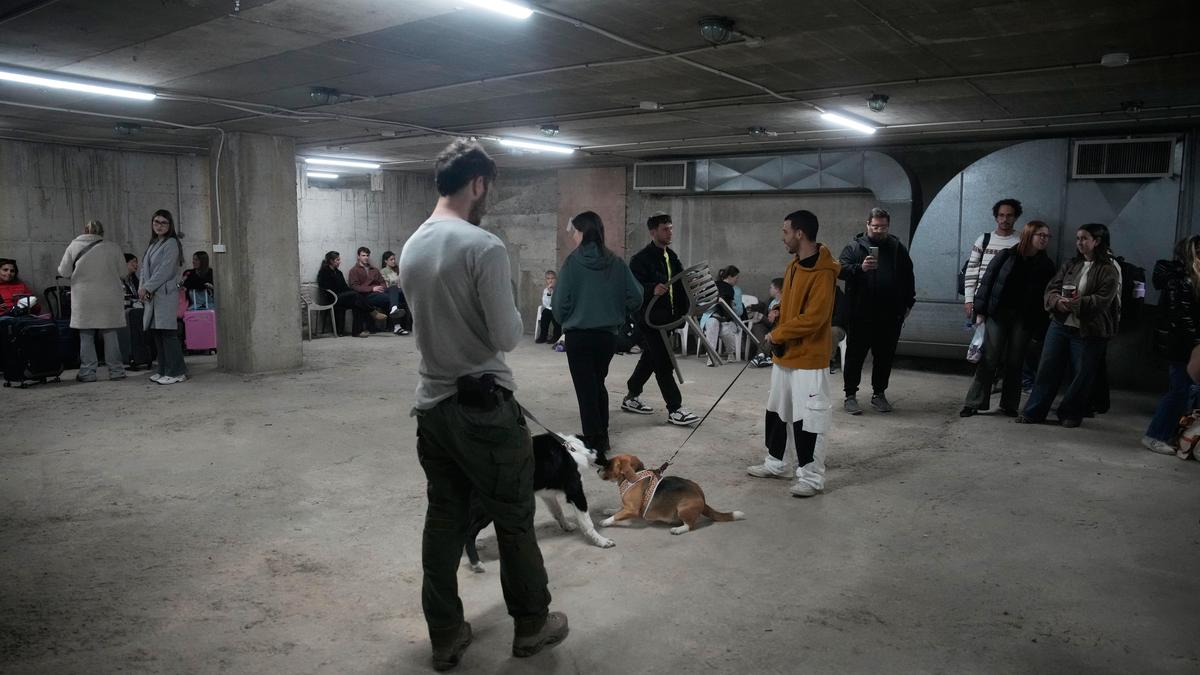
In Israel, the reality is louder. It is the rhythmic thud of interceptions in the sky. It is the sight of the Iron Dome painting white streaks across a blue canvas. The Indian community here is diverse, ranging from the long-settled Cochin Jews to the recent wave of caregivers who are the backbone of the Israeli healthcare system.
When the advisory landed, it hit these groups differently. The caregivers cannot simply "avoid movement." They have patients who rely on them for medicine, for food, for the basic dignity of a clean bed. For them, the government’s warning creates a heartbreaking friction between personal safety and professional duty.
The Logistics of a Warning
To understand the weight of this advisory, we have to look at the mechanics of how India manages its diaspora. India has one of the largest overseas populations in the world. This is a source of immense soft power, but in moments of crisis, it becomes a massive logistical vulnerability.
The Ministry of External Affairs (MEA) doesn't issue these statements lightly. They are the result of intense intelligence gathering and back-channel communication. When the government says "avoid Iran and Israel," they are seeing a board that the rest of us can only guess at.
There is a specific kind of silence that follows these announcements. It’s the silence of a canceled flight. It’s the silence of a student in Haifa looking at their half-packed suitcase, wondering if they should leave their research behind or risk staying for the final exams.
The advisory creates a ripple effect. It isn't just about those already there; it’s about the thousands who were supposed to go. The laborers waiting at the airport, the tourists who saved for years to see the ruins of Persepolis or the Old City of Jerusalem. In an instant, those dreams are put on ice. The "restricted movement" clause turns the vibrant, chaotic beauty of the Middle East into a series of red zones on a digital map.
The Human Anchor
We have a tendency to view these events as a series of chess moves between nations. We analyze the "why" and the "how" through the lens of political science. But if you sit in a recruitment center in Uttar Pradesh, the perspective shifts.
Men queue for hours for a chance to work in the very regions the government is now warning them against. Why? Because the risk of a missile is, for some, less terrifying than the certainty of poverty. This is the paradox of the advisory. It is a shield provided by the state, but for many, it feels like a barrier to the only exit strategy they have from a life of struggle.
The government is currently performing a delicate balancing act. They must protect their citizens without alienating the very nations they are warning people to avoid. Diplomatic relations are made of porcelain; once cracked, they are never quite the same. By issuing this warning, India is prioritizing the lives of its people over the optics of its foreign policy. It is a rare moment of moral clarity in the often murky world of international relations.
The Night Shift
Midnight in Tel Aviv. An Indian nurse named Sunita sits by the window of her patient’s apartment. She has read the advisory. She has seen the news of the heightened alert. She has a WhatsApp group filled with messages from other nurses, all of them sharing the same fears, the same rumors, the same prayers.
She looks at her patient, an elderly woman who remembers the wars of 1967 and 1973. The woman sleeps fitfully. Sunita knows she won’t leave. She can’t. The advisory tells her to exercise caution, but caution is a luxury when someone else’s life is in your hands.
This is the reality behind the headline. It is not just a "cautionary note." It is a disruption of the human thread that connects our globalized world. It is the friction between the safety of the individual and the instability of the collective.
The advisory will eventually be lifted. The headlines will move on to the next crisis, the next election, the next scandal. But the people who lived through this week of waiting will not forget the feeling of being caught in the gears of history. They will remember the way the world seemed to hold its breath.
They will remember the sound of the phone vibrating on the counter.
The sun rises over the Mediterranean, indifferent to the borders below or the warnings issued in distant capitals. It casts a long, golden light over the construction sites in Tel Aviv and the bustling squares of Tehran. In both places, people are waking up, checking their phones, and looking at the sky. They are looking for signs of rain, or signs of something worse.
They are moving forward, but they are doing so with their heads turned back toward the shadows. The advisory is just a piece of paper, a few lines of digital text. But for those on the ground, it is the only thing that recognizes the quiet, trembling truth of their morning.
The air remains still. For now. But the warning stands as a reminder that in our interconnected age, a tremor in one part of the world creates a fault line in another. We are all waiting for the ground to stop moving. Until then, we stay alert. We register our names. We keep our bags packed by the door, even if we have nowhere to go.
The woman in New Delhi finally picks up the phone. She doesn't read the text. She just calls her son.
"Are you there?" she asks.
"I'm here," he says.
For a moment, that is enough.
Would you like me to analyze the specific economic impact these travel advisories have on India's remittance flow from the Middle East?