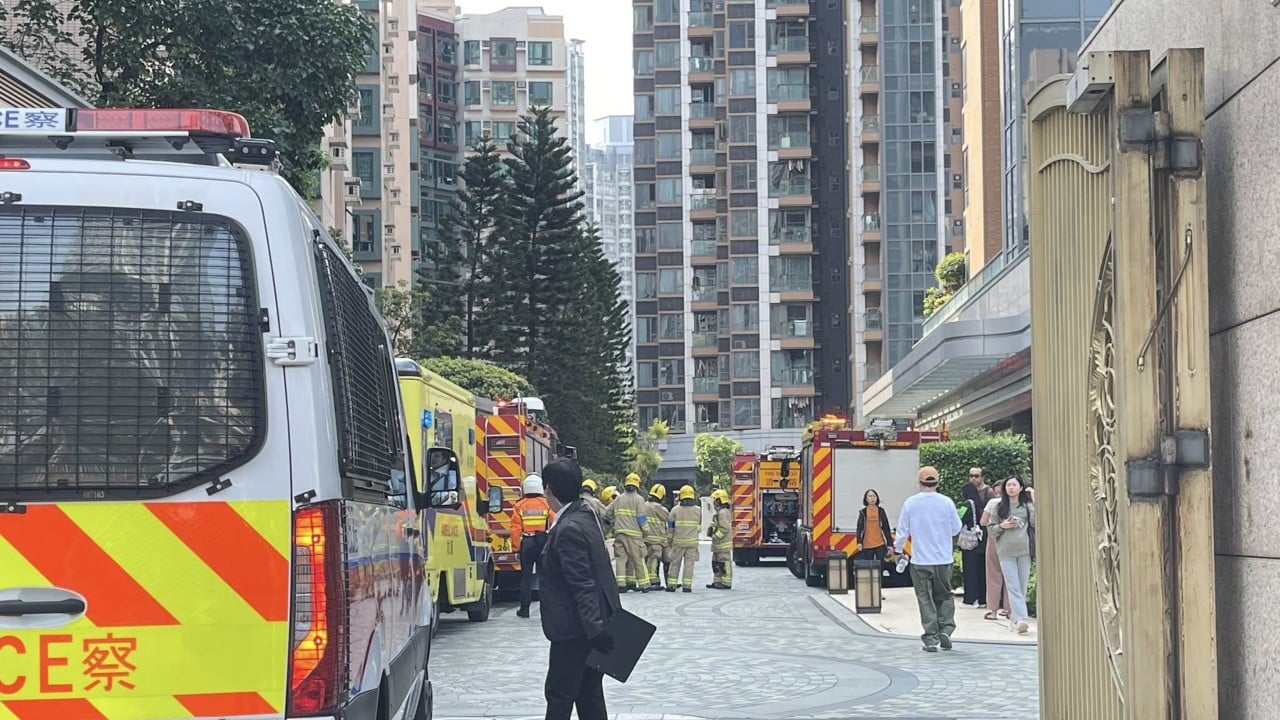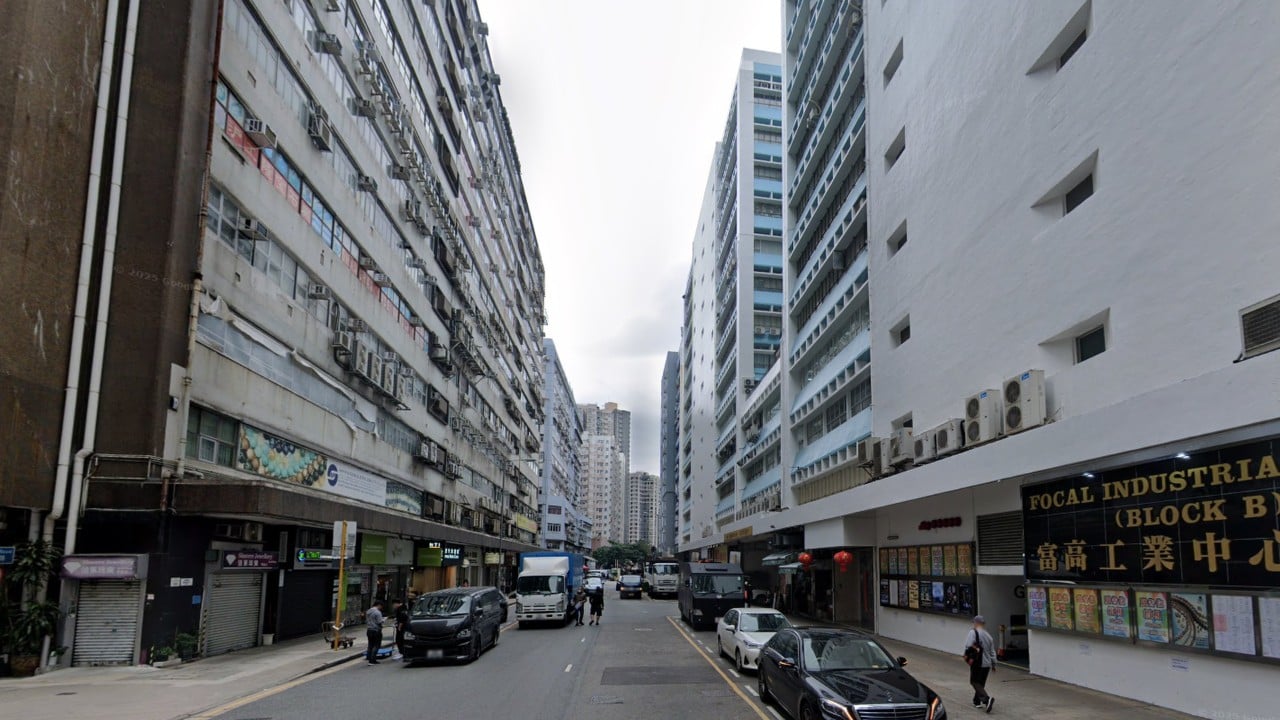
The air in Tsim Sha Tsui always smells of heavy exhaust and expensive perfume. It is a place where fortunes are made in the time it takes to ride an elevator, but on a Tuesday afternoon in early March, the scent turned to cold sweat and static.
A 43-year-old man, whose name remains shielded by the clinical shorthand of police reports, stepped into a building on Middle Road. He wasn't carrying a briefcase filled with gold bars, though he might as well have been. In his pocket, or perhaps tucked into a digital wallet on his phone, sat a fortune in cryptocurrency. In the physical world, he held the weight of silver—real, tangible slabs of metal. Together, they totaled HK$6 million. You might also find this connected article insightful: Strategic Asymmetry and the Kinetic Deconstruction of Iranian Integrated Air Defense.
Then the world narrowed to the point of a knife.
Three men. That is all it took to dismantle a life’s savings. They didn't use a sophisticated cyberattack. They didn't bypass firewalls or crack 256-bit encryption. They used the oldest tools in the human repertoire: intimidation and a blade. In an instant, the "future of finance" met the brutal reality of the street. As reported in latest coverage by Al Jazeera, the results are notable.
The Illusion of the Digital Vault
We are told that blockchain is unhackable. We are sold a vision of decentralization where no bank can freeze your assets and no government can seize your hard-earned wealth. This is the gospel of the modern investor. It feels empowering until you realize that the more "untraceable" your wealth becomes, the more attractive you are to those who operate in the shadows.
Imagine a vault. Traditionally, that vault is in a bank, guarded by armed professionals and monitored by cameras. If someone robs the bank, the FDIC or a central insurance body steps in. The loss is socialized. But when the vault is a string of alphanumeric characters in your pocket, you are the bank. You are the security guard. You are the one who has to bleed when someone comes to collect.
The victim in Tsim Sha Tsui was allegedly lured there for a transaction. In the world of high-stakes crypto, "Over-the-Counter" (OTC) trades are common. They allow big players to move large amounts of capital without triggering a price slip on public exchanges. It is a handshake deal in a digital age. But when you remove the middleman, you also remove the safety net.
The Paradox of Tangibility
There is a profound irony in this heist. The victim wasn't just carrying digital tokens; he was carrying silver.
Silver is heavy. It is honest. It occupies space and obeys the laws of gravity. Cryptocurrency is weightless. It exists as a consensus between thousands of computers. By carrying both, this man was straddling two eras of human value—the ancient and the speculative.
Why would someone carry HK$6 million through one of the most crowded districts on earth? Perhaps it was a sense of urgency. Perhaps it was a misplaced trust in the anonymity of the crowd. We often think that being surrounded by thousands of people makes us invisible. In reality, it just provides more cover for those watching us from the periphery.
The attackers knew he was coming. This wasn't a crime of opportunity; it was a targeted extraction. They knew the value of the digital keys and the physical metal. They understood that while the silver would be hard to move, the crypto could be vanished into a "mixer" or a "tumbler" within minutes, leaving the police to chase ghosts in a machine.
The Human Cost of Hype
When we read about a "HK$6 million robbery," our brains go straight to the numbers. We think about what we could buy with that money—a flat in Mid-Levels, a fleet of cars, a comfortable retirement. We rarely think about the physiological aftermath.
The victim was treated for minor injuries, but the psychological bruise of being "cleaned out" is a different kind of trauma. There is a specific, piercing brand of guilt that comes with losing crypto. Because you are your own bank, the loss feels like a personal failure. You didn't just get robbed; you failed to protect the perimeter.
This is the hidden tax on the unbanked.
The police are currently "investigating." They are scouring CCTV footage and looking for the getaway vehicle. But the stolen assets are likely already crossing digital borders that don't exist on a map. While the physical silver might turn up in a pawn shop or a smelting plant, the digital millions are probably being fragmented into a million pieces, scattered across the global ledger.
A Lesson Written in Blood and Code
We are living through a transition period where our laws and our physical safety haven't quite caught up to our technology. We treat crypto like a video game until it costs us our lives. We treat privacy like a luxury until it becomes a target on our backs.
Consider the sheer logistics of the crime. Three men, a knife, and a few minutes of terror. That is the barrier to entry for a multi-million dollar heist in 2026. You don't need to be a coder. You just need to be fast and desperate.
The Hong Kong police have warned against these types of face-to-face transactions. They suggest using reputable platforms, staying in well-lit areas, and never traveling alone with such high stakes. It sounds like basic advice—the kind your grandmother would give you—and yet, the allure of a "better deal" or a "private trade" continues to lead people into Middle Road elevators.
The vulnerability isn't in the code. It’s in the coffee shop meeting. It’s in the "friend of a friend" who knows a guy. It’s in the human desire to skip the fees and the oversight.
The Silence After the Siren
As the sun sets over Victoria Harbour, the city continues to churn. Millions of dollars move through the fiber optic cables beneath the streets every second. Most of it is safe. Most of it is boring.
But for one man, the city has become a much quieter, colder place. He is left with the memory of a blade and the crushing lightness of an empty wallet. He is a data point in a police report, a cautionary tale for the "crypto-bros," and a reminder to the rest of us that wealth is only as secure as the person holding it.
True security isn't found in a recovery seed phrase or a heavy silver bar. It is found in the awareness that the more you have, the more you have to lose—and the world is full of people who have nothing to lose at all.
The ledger may be immutable, but the human body is fragile.