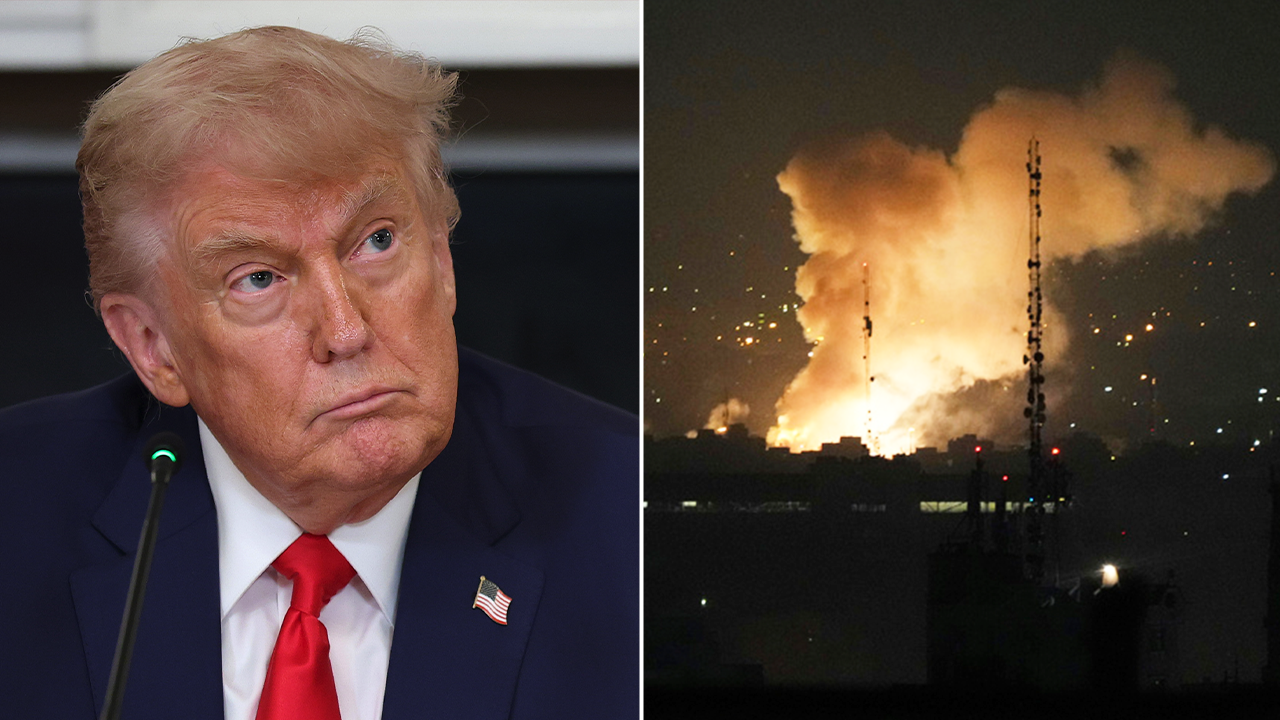
The United States is currently escalating its military and economic pressure on Iranian infrastructure, signaling a shift from reactive containment to proactive disruption. While the official narrative centers on "securing international shipping lanes," the underlying reality is a high-stakes gamble to force a diplomatic collapse or a domestic breaking point within Tehran. This isn't just about protecting tankers. It is an attempt to rewrite the power dynamics of the world’s most volatile energy artery, the Strait of Hormuz, at a time when the global economy can least afford a supply shock.
White House officials have increasingly telegraphed their intent to target the physical and financial nodes that allow Iran to project power. This includes refined petroleum storage, port facilities, and the "ghost fleet" logistics that bypass existing sanctions. However, the strategy assumes that Iran will remain predictable under pressure. History suggests otherwise. Every time the West tightens the noose on Iranian exports, the IRGC (Islamic Revolutionary Guard Corps) looks for ways to increase the cost of business for everyone else.
The Myth of a Free and Open Hormuz
For decades, the phrase "freedom of navigation" has served as the bedrock of maritime law. In the Strait of Hormuz, that concept is more of a polite fiction than a functional reality. The strait is a narrow funnel, only 21 miles wide at its tightest point, with shipping lanes that crisscross Iranian territorial waters.
Washington’s latest vow to hit Iranian infrastructure ignores the geographic reality that Iran holds the high ground. When the U.S. targets Iranian oil terminals or coastal radar sites, it isn't just hitting a sovereign nation; it is poking a hornet's nest situated directly above the world’s energy jugular. Approximately 20% of the world’s total oil consumption passes through this gap. If Tehran feels its own infrastructure is no longer safe, it has zero incentive to ensure the safety of the million-barrel-a-day flow heading to Western-aligned markets.
The U.S. is betting that technological superiority and a "coalition of the willing" can offset this geographic disadvantage. By deploying advanced drone surveillance and increased naval patrols, the Pentagon aims to create a protective bubble around commercial shipping. But a bubble is easily popped. A single sea mine or a swarm of low-cost ballistic missiles can spike global insurance premiums overnight, effectively closing the strait without Iran ever having to sink a ship.
Behind the Infrastructure Target List
The shift toward targeting "infrastructure" rather than just intercepting shipments marks a significant change in the rules of engagement. In the past, the U.S. focused on seizing illicit cargo. Now, the crosshairs are moving toward the shore.
Sources within the intelligence community suggest the primary targets are not just military installations, but "dual-use" facilities. This includes the Bandar Abbas port complex and the various loading terminals along the coast. By degrading these sites, the U.S. hopes to cripple Iran’s ability to fund its regional proxies. It is a strategy of economic strangulation by fire.
The risk here is the "asymmetric response." Iran knows it cannot win a conventional blue-water naval battle against the U.S. Fifth Fleet. Instead, it relies on a mosquito fleet of fast-attack boats and coastal batteries. If the U.S. destroys a loading pier in Kharg Island, Iran doesn't need to hit a U.S. destroyer to win. It only needs to strike a Saudi or Emirati tanker. The moment the maritime insurance market (Lloyd’s of London and others) decides the risk is too high, the Strait of Hormuz becomes a "no-go" zone for commercial traffic. The U.S. military can protect a convoy, but it cannot protect the entire global commodities market from a panic-induced meltdown.
The Multinational Push for Alternative Routes
Nations are not waiting for the U.S. and Iran to settle their score. There is a frantic, multi-billion-dollar scramble to find a way around the Hormuz chokepoint. This is the "Plan B" that remains largely invisible in mainstream reporting.
Saudi Arabia and the United Arab Emirates have spent years building pipelines that terminate outside the Persian Gulf. The East-West Pipeline in Saudi Arabia and the Habshan-Fujairah pipeline in the UAE are designed to bypass the strait entirely. Yet, these alternatives are currently insufficient. Even at full capacity, these pipelines can only handle a fraction of the volume that typically moves by sea.
Furthermore, these land-based alternatives create new vulnerabilities. A pipeline is a static target, often running through hundreds of miles of empty desert. It is far easier to sabotage a pipe than it is to track a moving ship in open water. The "Hormuz-free" future is a dream that is currently out of reach for the global energy market.
China’s Shadow Over the Strait
Beijing is the silent partner in this crisis. China is the primary buyer of Iranian "sanctioned" oil, and it has a vested interest in keeping the strait open. However, China’s definition of "open" differs from Washington’s.
While the U.S. views Iranian infrastructure as a target, China views it as a strategic asset. The 25-year cooperation agreement between Beijing and Tehran includes significant investments in the very infrastructure the U.S. is threatening to destroy. If a U.S. strike hits a facility with Chinese technicians or Chinese-owned equipment, the conflict ceases to be a regional skirmish and becomes a direct confrontation between superpowers.
Washington is counting on China to pressure Iran into de-escalation. This is a fundamental misunderstanding of the current geopolitical climate. Beijing sees the U.S. entanglement in the Middle East as a useful distraction that drains American resources away from the Pacific. They have little reason to pull Washington’s chestnuts out of the fire.
The Insurance Crisis Nobody is Talking About
We often talk about missiles and mines, but the real weapon in this conflict is the actuary’s pen. The maritime insurance industry is the silent regulator of global trade.
When the U.S. announces it will target Iranian infrastructure, the immediate effect isn't a blast—it’s a premium hike. Underwriters at the Lloyd’s Market Association have already designated the Persian Gulf as a "listed area," meaning ships must notify their insurers before entering and pay an additional premium.
If the conflict escalates to direct strikes on infrastructure, these premiums will move from "expensive" to "prohibitive." We have seen this before. During the Tanker War of the 1980s, shipping costs skyrocketed to the point where the U.S. had to reflag Kuwaiti tankers to provide them with naval protection. Today, the global economy is far more interconnected. A sustained spike in shipping costs would trigger a massive inflationary wave that would hit every grocery store in the West.
The U.S. strategy assumes that Iran will take the hit and crawl back to the negotiating table. This overlooks the internal politics of the Islamic Republic. For the hardliners in Tehran, a direct strike on their soil is a gift. It allows them to consolidate domestic support against a "foreign aggressor" and justifies further crackdowns on internal dissent.
The Limits of Kinetic Pressure
Military force is a blunt instrument for a surgical problem. The U.S. can destroy every pier and pump house on the Iranian coast, but it cannot destroy the knowledge of how to build them, nor can it destroy the geography of the strait itself.
Infrastructure can be rebuilt. Sabotage can be repaired. But the trust required for a functional global energy market is much harder to restore once it has been shattered. The current U.S. posture is forcing a choice upon the world: accept the risk of a catastrophic energy disruption, or find a way to exist without the Persian Gulf. Given that the latter is currently impossible, the world is essentially being told to buckle up.
The U.S. is gambling that its "targeted" approach will stay contained. But war is rarely contained. Once the first missile hits a coastal terminal, the "rules" of the strait are gone. Iran has spent forty years preparing for this exact scenario. They have developed a doctrine of "death by a thousand cuts," using small, cheap, and expendable assets to harass and delay.
In this environment, a billion-dollar American destroyer is at a disadvantage. It has to be right 100% of the time. The Iranian drone operator only has to be lucky once.
The Empty Promise of Security Coalitions
Washington is pushing for a wider multinational coalition to patrol the waters, but the enthusiasm among allies is lukewarm at best. European nations, still reeling from the energy shocks of the Ukraine conflict, are terrified of any action that could further destabilize oil prices. They see the U.S. "vow to target infrastructure" as a reckless escalation that they didn't sign up for.
Even regional players like Oman and Qatar are wary. They share the waters with Iran and have to live with the consequences long after the U.S. carriers rotate back to San Diego. Their "cooperation" is often more about preventing a war than winning one.
The reality of the situation is that there is no military solution to a geographic and political bottleneck. You can patrol the lanes, you can bomb the ports, and you can threaten the leadership, but as long as 20 million barrels of oil need to pass through a 21-mile gap, Iran will hold the leverage.
The U.S. is currently operating on the assumption that more pressure will eventually lead to a breakthrough. But pressure can also lead to an explosion. If Washington follows through on its threats to dismantle Iranian infrastructure, it won't just be hitting a rogue state; it will be pulling the pin on a grenade that the entire global economy is currently holding.
The focus on infrastructure is a desperate attempt to find a lever that hasn't been pulled yet. Sanctions have been exhausted. Cyberwarfare is ongoing. Now, the U.S. is returning to the old school: physical destruction. It is a path that leads directly to a closed strait and a global recession. The question isn't whether the U.S. can hit the targets. It's whether they can survive the fallout once they do.
Stop looking at the headlines about "security" and start looking at the price of Brent Crude. That is the only metric that matters in this game of chicken. If the U.S. moves from threats to action, the "security" of the strait will be the first thing to vanish.