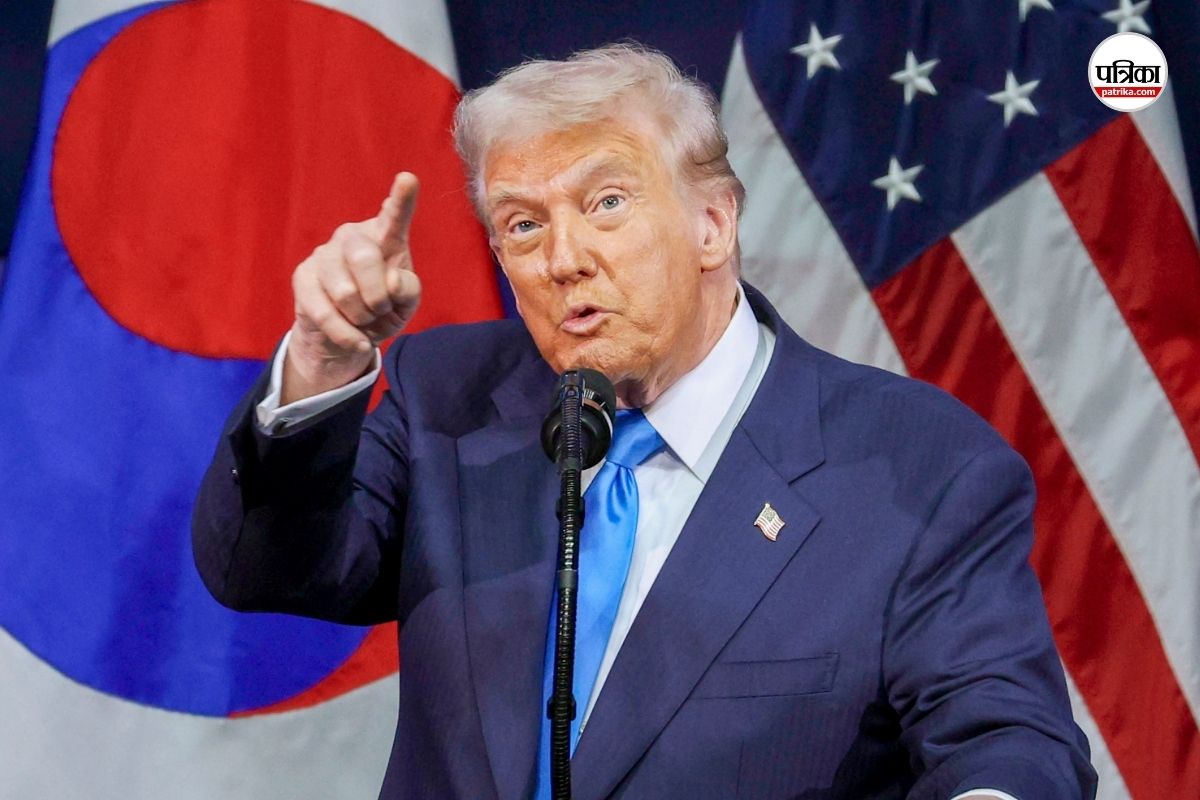
The mainstream media loves a narrative involving "permission." They want you to believe that the United States, in an act of strategic benevolence or calculated geopolitical maneuvering, "allowed" India to buy Russian oil. This is a fairy tale. It’s a convenient fiction designed to maintain the illusion of a unipolar world where Washington holds the remote control for global energy flows.
If you believe the headlines suggesting Donald Trump or the Biden administration "granted" India a waiver out of the goodness of their hearts or a desire to keep a democratic ally close, you’ve been sold a lemon. The reality is far more visceral. The U.S. didn't give India a choice; India created a reality where the U.S. had no choice but to look away. If you enjoyed this article, you might want to read: this related article.
The Myth of the American Green Light
Let’s dismantle the "waiver" nonsense immediately. In the world of high-stakes energy trading, a waiver is often just a formal name for a white flag. When the conflict in Ukraine began and Western sanctions hit Moscow, the global oil market faced a catastrophic supply shock. If India—the world's third-largest oil consumer—had stopped buying Russian crude, the global price of Brent would have gone vertical.
We aren't talking about a modest increase. We are talking about $150 or $200 per barrel. That is a global depression scenario. For another angle on this story, check out the latest coverage from The Motley Fool.
Washington knows this. The American voter cares about the price at the pump more than they care about the nuance of the Indo-Pacific strategy. If the U.S. had truly "forced" India to stop, the resulting global inflation would have incinerated any sitting administration’s approval ratings. India didn't ask for permission. India performed a service for the global economy by keeping the oil flowing, and Washington simply found a way to frame it as "strategic flexibility."
The Refining Arbitrage Nobody Talks About
The "lazy consensus" is that India is just looking for a discount. Sure, buying Urals at a $20 or $30 discount per barrel is great for the bottom line, but that’s the surface-level take. The real story is the massive technical pivot of Indian refineries.
Indian refiners, particularly private giants like Reliance Industries and Rosneft-backed Nayara Energy, possess some of the most complex refining assets on the planet. They aren't just "buying oil." They are laundering it—legally.
When Russian crude enters an Indian refinery, it is chemically transformed. It becomes gasoline, diesel, and jet fuel. Once it is refined, the "country of origin" rules change. That diesel can then be sold to—you guessed it—Europe and the United States.
I have seen traders in Singapore and Dubai laugh at the hypocrisy of this "price cap" regime. The West puts a cap on Russian crude, India buys it, refines it, and sells the finished product back to the West at a premium. The U.S. isn't "allowing" India to buy oil; the U.S. is dependent on India to keep the global diesel supply from collapsing.
The Logistics of Defiance
The West tried to control the trade through "maritime services"—insurance, shipping, and financing. They thought that if a ship didn't have London-based P&I insurance, it couldn't sail. They were wrong.
India and Russia spent the last two years building a "shadow fleet." They’ve tapped into non-Western insurance markets and used sovereign guarantees. This is a massive shift in the global financial architecture. We are witnessing the birth of a parallel energy economy that doesn't need the SWIFT system or the US Dollar.
- The Sovereign Guarantee: India simply told its insurers to back the ships.
- The Currency Pivot: Rupee-Rouble trade had its hiccups, but the use of Dirhams and Yuan has spiked.
- The Tanker Buy-up: Middlemen in G7-adjacent countries bought up aging tankers to keep the oil moving outside of Western oversight.
By the time the U.S. realized the "price cap" was a sieve, the infrastructure of defiance was already permanent. You don't "give permission" to someone who has already built a bypass around your toll booth.
Why Trump’s "Revelation" is Just Campaigning
Recent buzz around Donald Trump claiming he "disclosed" why India got a pass is typical political theater. Politicians love to take credit for things they couldn't prevent. Whether it's Trump or Biden, the math remains the same: India + Russia + Energy = Global Price Stability.
If a Republican or Democratic president tried to actually sanction Indian banks for dealing with Russia, the backlash would be a decoupling that would hurt Wall Street more than New Delhi. India is the only major growth engine left in the global economy that isn't China. You cannot sanction your only viable alternative to your primary adversary.
The Brutal Truth About "Strategic Autonomy"
The term "Strategic Autonomy" is often thrown around in think-tank papers as a polite way of saying India is a "frenemy." That’s wrong. India is a purely rational actor.
I’ve watched executives in Mumbai and New Delhi operate. They don't have an emotional attachment to the "rules-based order" when that order threatens to bankrupt their middle class. If the West wants India to stop buying Russian oil, they have to provide a cheaper, more reliable alternative. They haven't. Until the U.S. can offer $60-per-barrel Permian crude delivered to Jamnagar with the same terms as Moscow, the "permission" talk is just noise.
The Downside No One Admits
Is this strategy risk-free for India? Absolutely not.
- Infrastructure Degradation: Processing heavy Russian crude in refineries optimized for other blends can lead to faster equipment wear.
- Diplomatic Capital: While the U.S. won't sanction India today, they are keeping a ledger. This "autonomy" comes at the cost of future leverage in technology transfers (like jet engines or semiconductors).
- Over-reliance: Swapping Middle Eastern dependence for Russian dependence is just changing the name on the invoice.
Stop Asking the Wrong Questions
People keep asking: "Will the U.S. eventually stop India?"
The better question is: "Can the U.S. afford to stop India?"
The answer is a resounding no. The global energy market is an interconnected web where gravity—supply and demand—trumps politics every single time. India has effectively called the West’s bluff. They proved that the "global community" is a much smaller club than Washington likes to admit.
The next time you hear a politician or a "geopolitical expert" explain why America is being "lenient" with India, remember the diesel flowing into European trucks and the gasoline in American cars. That fuel is likely Russian in origin, Indian by birth, and Western by consumption.
The U.S. didn't give India a waiver. India gave the U.S. a way to keep the lights on without admitting the sanctions failed.
Stop looking for the "green light" from the White House. The light was never red; it was just a very expensive shade of grey that everyone agreed not to talk about too loudly.