The headlines are predictable. They speak of "narco-terrorists," "restoring order," and "security partnerships." It is the same tired script used from Plan Colombia to the Merida Initiative. If you believe the US military is entering Ecuador to stop the flow of cocaine, you have been reading the brochure instead of the balance sheet.
Washington doesn't do "missions." It does market stabilization.
The standard narrative suggests that Ecuador suddenly collapsed into a chaotic vacuum of gang violence, requiring Uncle Sam to step in with tactical gear and intelligence sharing. This is a fundamental misunderstanding of how geopolitical friction works. Ecuador isn't a victim of a drug war; it is the most efficient logistics hub in the Western Hemisphere, and the US is moving in to ensure that the "wrong" people don't control the infrastructure.
The Logistics Fallacy
The mainstream media treats drug cartels like movie villains. They aren't. They are multinational logistics firms operating in a high-risk, high-reward gray market. For decades, Ecuador was a "sink" for the trade—a quiet place to wash money and move chemicals. That changed when the Port of Guayaquil became the most vital artery for European and American cocaine markets.
When the US sends military assets to "combat" these groups, they aren't trying to eliminate the product. You cannot eliminate a multi-billion dollar demand with a few dozen Black Hawks. They are there to manage the friction.
- Supply Chain Integrity: The US military’s presence serves as a signaling mechanism to global markets. By embedding with Ecuadorian forces, the US ensures that the state—and by extension, US-aligned interests—retains control over the ports and the Pacific shipping lanes.
- Regional Containment: The goal isn't to stop the drugs; it's to ensure the violence doesn't spill over into a way that devalues neighboring assets or destabilizes dollarized economies.
I have watched this play out in three different decades. We dump hardware into a country, train a "vetted" unit that inevitably goes rogue or gets outspent by the cartels, and then act surprised when the purity of the product on the streets of Miami actually goes up. This isn't a failure of policy. It is a feature of the system.
The Dollarization Trap
Why Ecuador? Why now? Everyone points to the escape of "Fito" or the prison riots. Those are symptoms. The real driver is the U.S. Dollar.
Ecuador is a dollarized economy. This makes it the premier laundering facility for the global drug trade. When you deal in greenbacks, you remove the exchange-rate risk. The cartels don't need to worry about the Sucre collapsing; they are already playing with the world’s reserve currency.
The US military intervention is a desperate attempt to protect the integrity of the dollar in a region where Chinese influence is aggressively expanding. If the Ecuadorian state fails, the dollarization experiment fails. If that fails, the US loses its strongest economic leash in South America.
People ask: "Will US intervention lower the crime rate in Guayaquil?"
Brutally honest answer: No. It will likely increase it in the short term as power vacuums are created and contested. But the crime rate is a secondary metric for the Pentagon. The primary metric is State Continuity. They need a government functional enough to sign trade deals and keep the ports open, even if the streets are a war zone.
The "Narco-Terrorist" Rebrand
Stop using the term "narco-terrorist." It is a linguistic trick designed to bypass international law and fast-track military funding.
By labeling gangs like Los Choneros or Los Lobos as "terrorists," the Ecuadorian government (with US backing) can use wartime rules of engagement. This allows for the suspension of due process and the use of lethal force that would be illegal in a standard criminal investigation.
It is a shortcut for a weak state.
I’ve seen this "shortcut" destroy the social fabric of Mexico. When you treat a domestic policing issue as a military theater, you don't kill the cartels. You force them to evolve. They become more paramilitary, more violent, and more deeply embedded in the local economy. You aren't "cleaning up" the streets; you are professionalizing the insurgency.
The Ghost of Plan Colombia
The competitor articles love to compare this to Plan Colombia. They frame it as a success story because the FARC eventually came to the table. They conveniently forget that Colombia remains the world’s top producer of cocaine, with production levels hitting record highs in recent years.
If Plan Colombia was a "war on drugs," it was a catastrophic defeat.
If Plan Colombia was a "war to secure a strategic ally and modernize their military to US standards," it was a resounding success.
Washington is applying the same logic to Ecuador.
- The Ask: Tactical equipment, surveillance tech, and "advisors."
- The Reality: Permanent basing rights (under various euphemisms) and deep integration into the Ecuadorian security apparatus.
This is about Integrated Deterrence. It’s a fancy term for making sure that as the world moves toward a multipolar reality, the US has its boots firmly planted on the neck of the world’s most profitable illicit commodity chain.
The Counter-Intuitive Truth About Violence
We are told that military intervention brings stability. In the context of the drug trade, the opposite is true. Stability in the drug market comes from monopoly.
When a single cartel dominates a territory, violence drops because there is no one to fight. When the state (backed by the US) enters the fray and decapitates the leadership of the dominant group, the result is "atomization." The big group breaks into ten smaller, more violent groups fighting over the leftovers.
The US intervention is effectively a "Disruption Campaign." It ensures that no single local entity becomes powerful enough to dictate terms to the state or to international buyers. We don't want the "narcos" gone—we want them fragmented and manageable.
Stop Asking if it Works
The most common question on the forums and in the "People Also Ask" snippets is: "Can the US military stop the cartels in Ecuador?"
You are asking the wrong question. You are assuming the goal is a drug-free world.
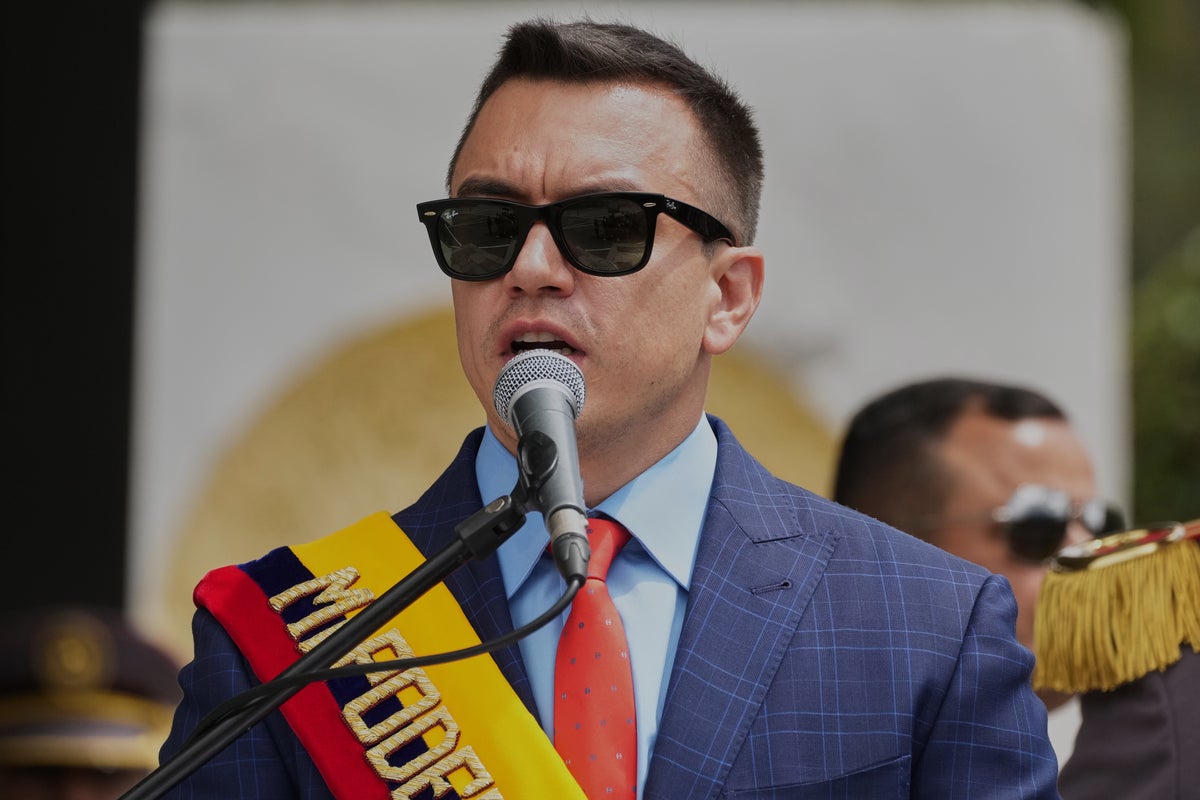
The right question is: "Does this intervention increase US leverage over the Noboa administration and the strategic ports of the Pacific?"
The answer is a resounding Yes.
If you are an investor or a policy wonk, stop looking at the drug seizures. Look at the port concessions. Look at the mineral rights. Look at the security contracts. The "War on Drugs" is just the infrastructure project that allows the real business of the empire to continue.
The downside of my perspective is that it offers no easy moral high ground. It’s cynical because the reality is cynical. We aren't the cavalry. We are the auditors. And the audit requires a heavy military presence to make sure the books—and the borders—stay open for the right players.
Everything else is just noise for the evening news.
The next time you see a photo of a US-made humvee patrolling a slum in Esmeraldas, don't think about "law and order." Think about the Suez Canal of the cocaine trade. The US isn't there to shut it down. It's there to make sure it's under new management.
Demand a briefing on the maritime security agreements, not the arrest records. That is where the real war is being won.