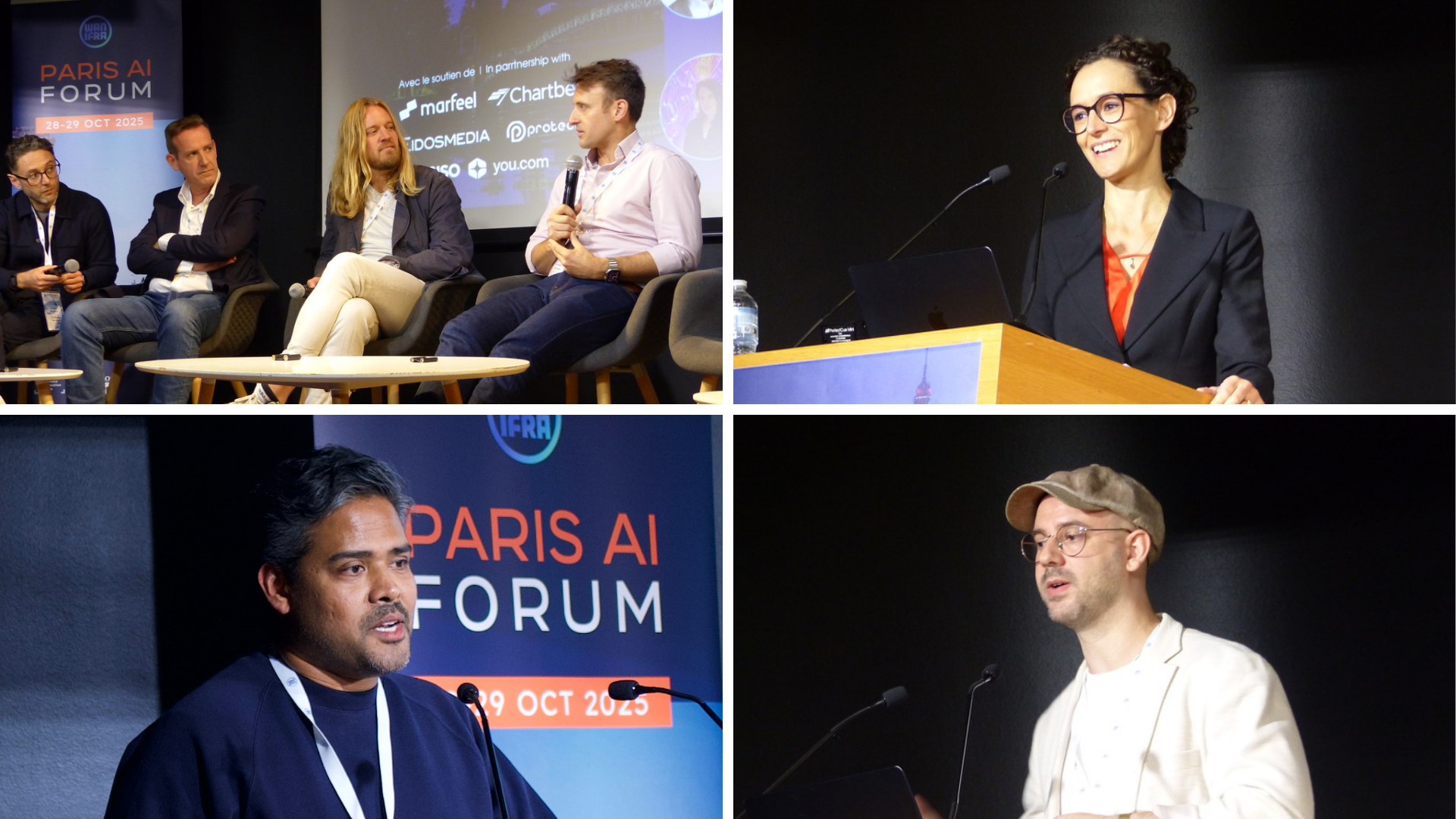
Newsrooms are messy right now. You’ve got editors who’ve been in the game for thirty years wondering if a chatbot is coming for their job, and you’ve got junior reporters trying to sneak AI-written copy past the desk. Most media organizations are stuck. They’re either paralyzed by fear or they’re throwing spaghetti at the wall to see what sticks. WAN-IFRA just stepped in to stop the bleeding with the NextGen AI Leaders Programme. It isn’t another theoretical webinar series. It’s a targeted strike designed to turn emerging news executives into people who actually know how to run a newsroom in 2026.
I’ve seen plenty of these "digital transformation" initiatives fall flat. Usually, they’re too academic. They talk about the ethics of algorithms for six hours and then leave you wondering how to actually automate a newsletter or verify a deepfake. This new program from the World Association of News Publishers feels different. It targets the "NextGen"—the mid-level editors and rising managers who are actually doing the work. These are the people who have to bridge the gap between old-school journalistic integrity and the brutal efficiency of modern tech.
What the NextGen AI Leaders Programme actually does
If you're a news executive, your plate is already overflowing. You don't have time for fluff. The NextGen AI Leaders Programme is structured as a six-month intensive. It focuses on two things that rarely get taught together: practical AI implementation and leadership psychology.
Most people think AI is a technical problem. It’s not. It’s a management problem. You can buy all the API credits in the world, but if your team is terrified or if your workflow is clunky, you’ve just wasted your budget. This programme forces participants to build a real-world project. You don't just "learn" about AI; you implement a specific tool or process in your own newsroom. This is the only way to learn. You have to break things. You have to see the errors in the output.
WAN-IFRA is bringing in mentors who have actually sat in the big chair. We’re talking about experts from major global outlets who have navigated the transition from print-heavy operations to AI-assisted digital powerhouses. This isn't about some consultant telling you to "innovate." It's about a peer telling you how they handled the union dispute when they introduced automated sports reporting.
Why mid-level managers are the secret sauce
Top-level CEOs love talking about AI in quarterly reports. Entry-level interns use it to write social posts. But the mid-level managers? They’re the ones who make or break the culture. WAN-IFRA is smart to target this group. If a section editor understands how to use a Large Language Model (LLM) to summarize boring city council transcripts, the whole team wins.
If that same editor is skeptical or uneducated on the tech, they become a bottleneck. The NextGen AI Leaders Programme aims to turn these potential bottlenecks into catalysts. They want people who can look at a 5,000-word investigation and say, "Hey, let’s use a custom GPT to check this against our style guide and suggest five different headline variations for Reddit, X, and LinkedIn."
Practical skills over empty theory
Let’s talk about what "practical skills" actually looks like in this context. It’s easy to say you’re teaching AI. It’s harder to teach the specific prompt engineering required for investigative journalism.
The program covers:
- Data analysis for reporters who hate math.
- Automating the "drudge work" like transcription and translation.
- Creating personalized content experiences for subscribers.
- Ethical frameworks that aren't just a list of "don'ts."
Journalism is built on trust. If you use AI and it hallucinates a quote, your brand is dead. The programme spends a significant amount of time on verification. How do you build a "human-in-the-loop" system that catches the machine's mistakes before they go live? That’s the difference between a leader and a hobbyist.
I've talked to editors who feel like they're falling behind every single day. The pace of change is exhausting. One week it's Sora for video, the next it's a new open-source model that outperforms GPT-4o. You can't keep up with everything. WAN-IFRA's approach helps you filter the noise. It teaches you to look for the "jobs to be done" rather than chasing every shiny new tool.
The leadership side of the equation
Being a "NextGen" leader isn't just about knowing how to code or use a no-code platform. It’s about emotional intelligence. Newsrooms are high-stress environments. Introducing AI adds a layer of existential dread.
The leadership component of this programme addresses how to manage change. How do you talk to a veteran reporter who thinks AI is the end of the craft? How do you recruit talent that is comfortable with tech but still values the five W’s?
Most journalism schools are still catching up. They’re teaching students how to write a lede, which is great, but they aren't teaching them how to manage a team of hybrid human-AI creators. WAN-IFRA is filling a massive hole in the industry's education system. They recognize that the technical stuff is actually the easy part. The hard part is getting people to change their habits.
Moving beyond the hype
We’ve moved past the "AI is magic" phase. Now we’re in the "AI is a utility" phase. It’s like electricity or the internet. You don't get points for using it; you get fired if you don't know how to use it safely and effectively.
The NextGen AI Leaders Programme emphasizes sustainability. News is a business. If AI doesn't help you find more subscribers or reduce your overhead without sacrificing quality, it's a failure. Participants are encouraged to look at the bottom line. Can we use AI to identify which readers are likely to churn? Can we use it to create "atomized" content that reaches younger audiences on platforms we usually ignore?
How to get involved and what to do next
If you're an emerging leader in a newsroom, you need to be in these rooms. Whether it's this specific WAN-IFRA program or a similar high-level cohort, the isolation of the modern newsroom is your biggest enemy. You need to know what they're doing in Singapore, London, and Bogota.
The program is global for a reason. AI doesn't care about borders, but local contexts matter. Seeing how a newsroom in a developing market uses AI to overcome resource scarcity can provide incredible insights for a well-funded Western outlet.
Stop waiting for your company to hand you an "AI strategy." Most of the time, the people at the top are just as confused as you are. They’re waiting for someone to show them the way.
Here is how you start:
- Audit your current workflow. Find the three most boring, repetitive tasks you do every week.
- Research whether a tool already exists to handle 80% of that work.
- Look into the WAN-IFRA NextGen AI Leaders Programme requirements. They usually look for a track record of leadership and a clear vision for a project.
- Pitch your boss on the ROI. Don't ask to "learn about AI." Ask to "increase our newsletter output by 30% while maintaining quality."
The industry won't wait for you to feel comfortable. The gap between the newsrooms that "get it" and those that don't is widening every month. Being a leader means stepping into that gap.


