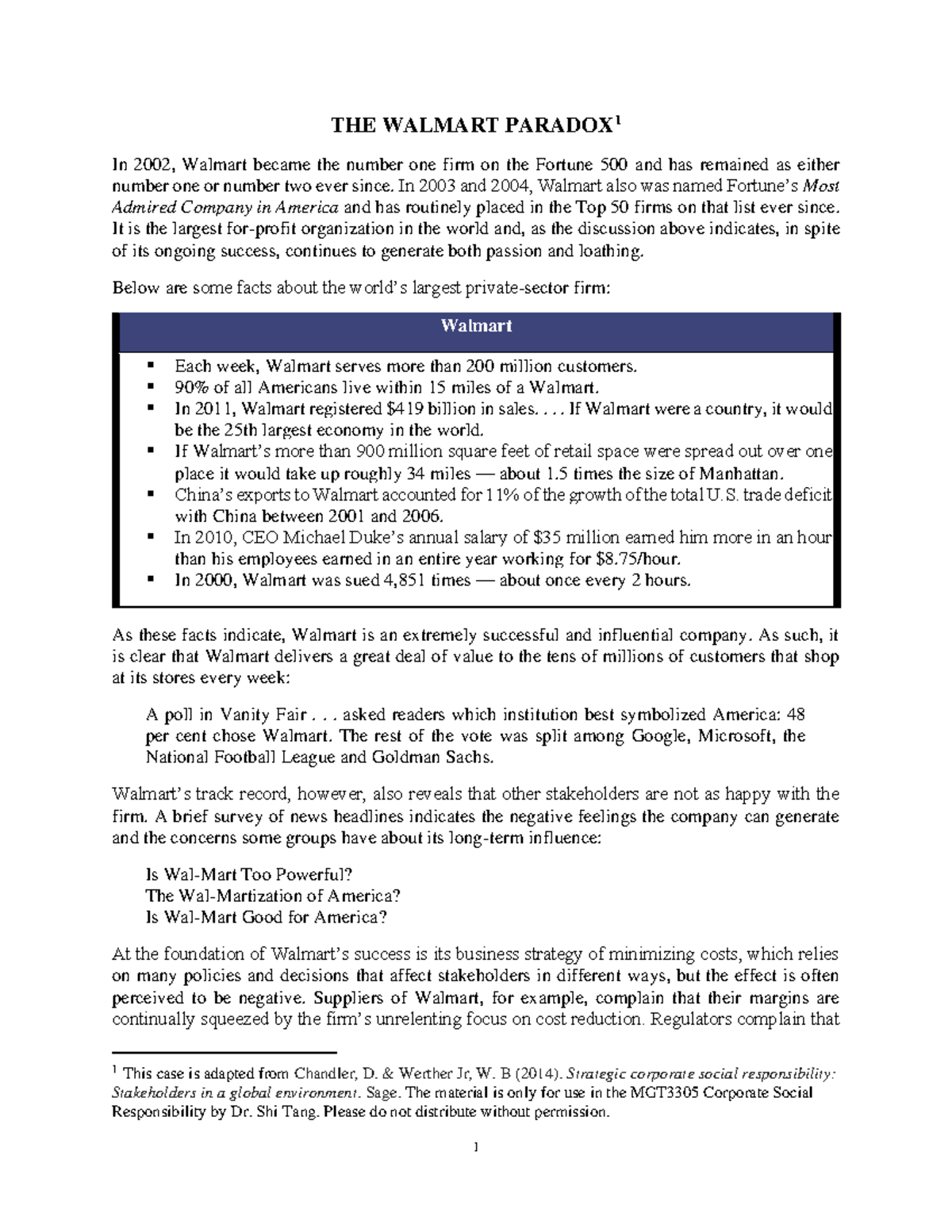
Walmart’s recent performance reveals a fundamental decoupling between consumer demand and capital efficiency. While the market focuses on the headline growth of the holiday season, the structural reality is a high-velocity revenue engine hitting a wall of diminishing marginal returns. The company is currently navigating a "Compression Paradox": it is successfully capturing a larger share of the consumer wallet, yet the cost of servicing that share—driven by the shift toward e-commerce and a price-sensitive demographic—is outpacing the benefits of scale.
The primary tension lies in the divergence between top-line strength and forward-looking guidance. Walmart’s ability to drive traffic remains unmatched, but its internal outlook suggests that the tailwinds of inflation-driven price hikes have dissipated, leaving the firm to face the raw physics of operating leverage in a cooling economy.
The Triad of Top-Line Resilience
Walmart’s growth during the final quarter of the fiscal year was not a product of general market buoyancy but rather a strategic consolidation of market share across three specific vectors.
- The Wealth Migration Effect: High-income households (those earning over $100,000 annually) contributed to nearly half of the market share gains. This is a structural shift in the customer base. As persistent inflation erodes discretionary income, "value" is no longer a niche for the low-income bracket; it has become a necessity for the middle and upper-middle classes.
- The Omnichannel Conversion Rate: The gap between physical foot traffic and digital engagement is closing. Walmart’s e-commerce growth—consistently hitting double digits—is no longer a secondary "add-on." It is now the primary mechanism for customer retention. By integrating the physical store as a micro-fulfillment center, Walmart reduced the distance between the product and the end-user, though this adds significant complexity to store-level labor models.
- Grocery Dominance as a Loss Leader: High-frequency grocery shopping acts as the gravitational pull for the Walmart ecosystem. Even when general merchandise (electronics, apparel, home goods) lags, the 2-3 times weekly grocery visit provides a constant stream of data and cross-sell opportunities.
The Cost Function of Modern Retail Fulfillment
The reason Walmart’s earnings outlook fell short of analyst estimates despite record sales is found in the shifting architecture of its fulfillment costs. The transition from a "Pallet-to-Shelf" model to a "Unit-to-Door" model fundamentally alters the unit economics of the business.
Inventory Carrying Costs and Markdown Risk
General merchandise categories carry higher margins than groceries but are subject to extreme seasonal volatility. Walmart entered the holiday period with a lean inventory position, which protected them from the massive markdowns that plagued competitors in previous years. However, "lean" is a double-edged sword. It limits the "treasure hunt" experience for shoppers, potentially capping the average basket size. The cost of holding inventory is now influenced by higher interest rates, making every square foot of the backroom more expensive to maintain than it was three years ago.
The Last-Mile Subsidy
E-commerce delivery is a subsidized convenience. Even with the growth of Walmart+, the logistics of delivery—fuel, labor, and vehicle maintenance—represent a variable cost that scales linearly with volume. Unlike fixed-cost physical stores, where the 1,000th customer is significantly more profitable than the 1st, the 1,000th delivery remains nearly as expensive as the first. This creates a "Scale Drag" where increased digital sales can actually suppress the overall operating margin if not offset by high-margin auxiliary services.
The Margin Defense Mechanism: Beyond the Shelf
To counteract the erosion of retail margins, Walmart is pivoting toward a high-margin services architecture. This is not an "expansion" of the business but a necessary defensive pivot to preserve the consolidated bottom line.
Walmart Connect and Data Monetization
The most critical component of the current strategy is the advertising arm, Walmart Connect. By leveraging point-of-sale data from millions of transactions, Walmart offers brands a closed-loop attribution model that Google or Meta cannot replicate. The margin on a dollar of advertising revenue is estimated to be 70% to 80%, compared to the 3% to 5% margin on a gallon of milk. The retail operation is increasingly becoming a low-margin "customer acquisition cost" for a high-margin data and advertising business.
Third-Party Marketplace and Fulfillment Services
By opening its digital platform to third-party sellers (3P), Walmart shifts the inventory risk to the seller while collecting a referral fee and fulfillment charges. This mimics the Amazon model, aiming to decouple revenue growth from the physical constraints of Walmart's own supply chain. The growth of the 3P marketplace is the only path to achieving a sustainable double-digit e-commerce margin.
Macroeconomic Headwinds and the Guidance Gap
The "soft" guidance provided by management reflects a clinical assessment of three macroeconomic variables that the market frequently underestimates.
- The Deflationary Trap: While consumers celebrate falling prices, for a retailer, rapid disinflation or deflation can be catastrophic for "comps" (comparable store sales). If the price of eggs drops 20%, Walmart must sell 20% more eggs just to keep revenue flat. In a saturated market, that volume increase is difficult to capture.
- The Interest Rate Lag: The full impact of restrictive monetary policy often takes 12-18 months to filter through to consumer behavior. Walmart is betting that the consumer "exhaustion" point is closer than the current employment data suggests.
- Labor Cost Stickiness: Unlike commodity prices, wages are "sticky." Walmart has had to increase its starting wages and benefits to compete in a tight labor market. These fixed costs do not retract even if sales volume dips, creating a permanent floor for operating expenses.
The Strategic Play
The divergence between Walmart’s current strength and its cautious outlook is a signal to investors that the era of "easy growth" through price inflation is over. The strategy moving forward is a brutal transition to Operational Autonomization.
To maintain its valuation, Walmart must aggressively replace variable labor costs with fixed capital investments. This means:
- Automated Market Fulfillment Centers (MFCs): Moving the picking process for online orders out of the aisles and into automated "dark" sections of the store. This reduces the friction between in-store shoppers and "personal shoppers" (employees picking online orders), which currently degrades the in-store experience.
- Predictive Inventory Routing: Using neural networks to predict hyper-local demand, ensuring that high-velocity items are staged closer to the end-user before the order is even placed, thereby reducing last-mile transit time.
- Aggressive 3P Integration: Prioritizing third-party sellers in search results to drive higher-margin commission revenue, even if it cannibalizes some of Walmart's own-brand sales.
The enterprise is no longer just a "store." It is a logistics and data grid that happens to sell groceries. The success of the next four quarters will not be measured by how many people walk through the front doors, but by how effectively Walmart can convert those visitors into data points for its advertising and marketplace ecosystems. The retail floor is now the laboratory; the digital ledger is the profit center.
Would you like me to analyze the specific impact of Walmart's recent Vizio acquisition on their advertising margin projections?