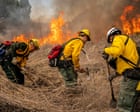
Your house is on fire. You dial 911, heart hammering against your ribs, expecting sirens within minutes. But in a growing number of American towns, those sirens might not come from the station two miles away. They might come from two towns over, arriving twenty minutes too late. This isn't a dystopian screenplay. It's the reality in 2026 as volunteer fire departments across the U.S. shutter their doors because they simply can't find anyone to put on the gear.
The numbers are brutal. Since 2008, the U.S. volunteer fire service has shed nearly a quarter of its members. We're talking about a drop from roughly 827,000 volunteers to around 635,000 today. While the workforce is evaporating, the workload is doing the exact opposite. Emergency calls have exploded by 70% in that same timeframe. You've got fewer people doing twice the work, and eventually, the rubber band snaps.
Why Small Town Safety is Evaporating
For decades, the "local fire hall" was the heartbeat of rural America. It was where you went for pancake breakfasts and where the neighbor’s kid learned what it meant to serve. That world is gone. In states like New York, the situation has hit a 40-year low. In 2025 alone, six departments in New York were forced to close. When a department closes, the protection doesn't vanish instantly, but the "response gap" widens. You're now waiting for a truck from a neighboring district that's further away, staffed by people who don't know your backroads or where the nearest hidden hydrant sits.
It’s easy to blame "lazy younger generations," but that's a cop-out. The real culprit is the modern economy. People don't work two miles from home anymore. They're commuting an hour each way to a cubicle or a warehouse. You can't just hop off the assembly line because a pager went off. Add in the skyrocketing cost of living, and most people are working two jobs just to keep the lights on. They don't have four hours on a Tuesday night to sit through a hazmat certification course.
The Training Trap and Burnout
Let’s get real about what we ask of these people. We're asking volunteers—unpaid neighbors—to maintain the same professional standards as career firefighters in big cities. That means hundreds of hours of initial training and constant recertification. In Stuyvesant, New York, fire officials have pointed out the obvious: asking a parent with a full-time job and two kids to commit to 15 weeks of night classes just to start volunteering is a massive ask.
And it’s not just about fighting fires. Only a small fraction of calls today are actually for "fire." The bulk are emergency medical services (EMS), car accidents, or opioid overdoses. In 2006, EMS calls sat at around 15 million. By 2022, they hit nearly 28 million. Volunteers who signed up to pull a hose are now spending their nights performing CPR and administering Narcan. The mental toll is staggering. We’re seeing higher rates of PTSD and depression among volunteers who don't have the institutional support or mental health resources that big-city departments provide.
The Demographic Time Bomb
If you walk into a rural station in 2026, you aren't seeing many 20-somethings. In departments protecting fewer than 2,500 people, more than a third of the force is over the age of 50. In many places, it’s the 70-year-olds holding the line. When those veterans retire or can no longer physically clear a building, there’s no one in the wings to take their place.
Transitioning to Career Departments
Some towns are trying to fix the hole by throwing money at it—shifting from volunteer to "all-career" or "combination" departments. Maumee, Ohio, and Cy-Fair, Texas, are prime examples. They realized the "paid-on-call" model was broken. They couldn't guarantee someone would be at the station at 3:00 AM on a Wednesday.
But there’s a catch. Career departments are incredibly expensive. Small-town tax bases can rarely support the $100,000+ per year (salary, benefits, and training) it costs to maintain a single full-time firefighter. When a volunteer department dies, the town's ISO rating—which dictates insurance premiums—often spikes. Suddenly, every homeowner in the zip code is paying more for insurance because the fire department "went away."
What Can Actually Be Done
We need to stop pretending that "more recruitment posters" will solve a systemic cultural and economic shift. If you want to save your local department, the strategy has to change.
- Financial Incentives: Some states are finally getting smart with tax credits for active volunteers. If you're risking your life for free, the least the state can do is knock a few thousand off your property taxes.
- Junior Firefighter Programs: Places like Kershaw County, S.C., are partnering with high schools to get kids involved before they head off to college or the workforce. It builds a "pipeline" of interest.
- PFAS-Free Gear: We have to protect the health of the people who do show up. Providing modern, carcinogen-free gear is a baseline requirement for retention.
- Administrative Support: Most volunteers hate the paperwork. Hiring one part-time "admin" to handle the bureaucracy allows the firefighters to actually focus on training and response.
If you care about the safety of your community, stop by your local station. Ask them what they need. It might not be you on a ladder; it might be you helping with their bookkeeping or social media. But don't wait until you see smoke to wonder why the sirens are taking so long.
Check your local municipality's budget to see how much they're allocating for fire services. If it hasn't changed in ten years, your safety is officially at risk. Reach out to your state representatives and demand they support SAFER grants and volunteer tax incentives. Your life literally depends on it.