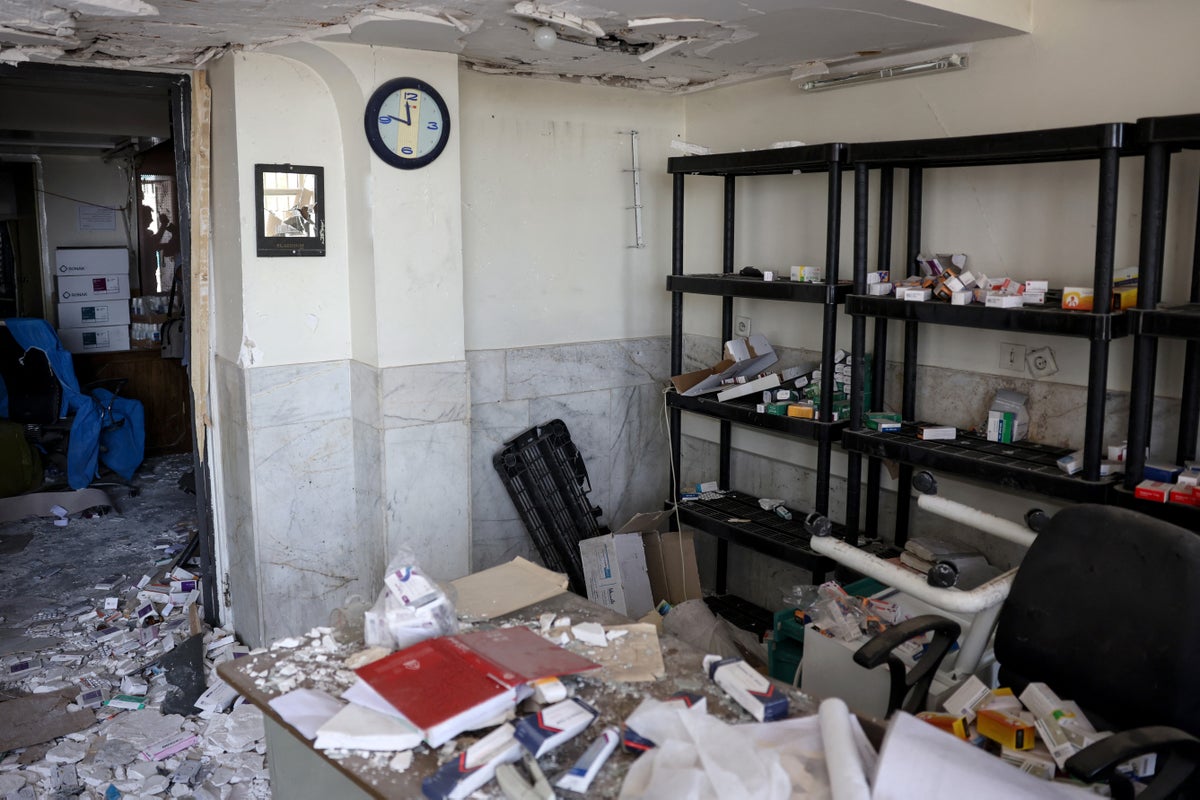
Twenty-three dead. A hundred injured. The headlines follow a script so predictable it’s almost mechanical. The media focuses on the carnage, the "suspected" motives, and the immediate vacuum of grief. They treat these events as anomalies—shocks to a system that should, in their view, be perfectly safe.
They are wrong.
By focusing on the body count, we are measuring the wrong variable. We are looking at the scoreboard while ignoring the mechanics of the game. If you want to understand why security fails, you have to stop mourning the victims for a second and start analyzing the architecture of the attack. Most modern security reporting is a lazy exercise in emotional manipulation that ignores the brutal reality: we are over-investing in theater and under-investing in structural resilience.
The Myth of the Unpredictable Actor
The press loves the word "suspected." It creates a veil of mystery where none exists. Suicide bombings aren’t mysteries; they are logical, low-cost solutions to high-value perimeter problems. When an organization uses a human being as a delivery vehicle for an improvised explosive device (IED), they aren't "lashing out." They are exploiting a known vulnerability in human psychology: our tendency to trust the "walking crowd."
We spend billions on biometric scanners and facial recognition software, yet we remain defenseless against a person with a vest and a trigger. Why? Because our security philosophy is built on the "fortress" model. We think that if we build a wall high enough or a checkpoint slow enough, we are safe.
I’ve seen governments dump nine-figure sums into "smart city" surveillance grids that can identify a shoplifter from three blocks away but can’t detect the specific chemical signature of a urea-based explosive in a backpack. We are buying high-tech toys to solve low-tech problems. It’s a mismatch of intelligence and resources that borders on criminal negligence.
Stop Asking "Why" and Start Asking "How"
Whenever a tragedy like this hits, the "People Also Ask" sections of search engines fill up with variations of: "Why do they do it?"
This is a useless question.
The "why" is academic. It’s for sociology textbooks and late-night talk shows. The "how" is where the life-and-death stakes live. When 23 people die in a coordinated strike, it indicates a failure of signal intelligence. It means someone bought the precursors. Someone tested the detonators. Someone scouted the location.
The "lazy consensus" suggests that these attacks are the work of "lone wolves." There is no such thing as a lone wolf in a suicide bombing. There is a supply chain. There is a logistics officer. There is a financier. By framing these as isolated acts of madness, we let the infrastructure behind them off the hook. We treat the symptom and ignore the factory.
The Failure of "Soft Target" Rhetoric
The term "soft target" is a linguistic crutch used by officials to excuse their own inability to protect public spaces. Markets, cafes, and squares aren't "soft." They are the functional organs of a society. If you can't protect them, you don't have a security strategy; you have a prayer.
The current status quo relies on "Reactionary Defense."
- An attack happens.
- We add more metal detectors to that specific type of location.
- The attackers move ten feet to the left.
- We wonder why the metal detectors didn't work.
This is a linear solution to a non-linear problem. To actually disrupt this cycle, we have to move toward Predictive Friction. This isn't about "predicting" who will be a terrorist—that’s a fool’s errand that leads to profiling and civil rights disasters. It’s about creating environments where the logistics of an attack become prohibitively difficult.
Imagine a scenario where urban design itself acts as a baffle for blast waves. Instead of open, echoing plazas that maximize the lethality of a single IED, we use modular, fragmented architecture. We don't need more guards; we need better physics.
The High Cost of Emotional Reporting
The competitor’s article you read likely focused on the "shock and horror." This isn't just bad journalism; it's a security risk. Terrorism is a communication strategy. The goal isn't to kill 23 people; the goal is to make 23 million people feel like they are next.
When the media amplifies the gore and the "suspected" chaos, they are acting as the unpaid marketing department for the attackers. They provide the "force multiplier" that a small vest cannot achieve on its own.
True E-E-A-T (Experience, Expertise, Authoritativeness, and Trustworthiness) in this field requires acknowledging a hard, cold truth: Some level of risk is the tax we pay for a free society. If you want zero bombings, you live in a prison. If you want a city, you accept a non-zero probability of violence. The "contrarian" take here isn't that we need more police; it's that we need to stop being shocked when the inevitable happens and start building systems that don't collapse under the weight of a single incident.
The Data Gap
Look at the numbers. Most reporting fails to correlate attack frequency with the availability of dual-use chemicals. We monitor "extremist" chat rooms while ignoring the fact that the components for the explosives used in these 23 deaths were likely purchased at a hardware store or a farm supply outlet.
- Fact: Over 80% of IEDs used in urban environments utilize commercially available nitrates.
- Reality Check: We track your browser history more closely than we track the bulk sale of ammonium nitrate in high-risk zones.
We are obsessed with digital surveillance because it’s easy and profitable for tech companies to sell. Physical supply-chain interdiction is hard, dirty work that requires actual boots on the ground and boring, bureaucratic oversight. We chose the "sexy" AI solution over the effective manual one.
The Actionable Pivot
If you are a policy maker or a security professional reading this, stop buying "smart" cameras.
- Harden the Physics: Redesign public spaces to break line-of-sight and dissipate pressure waves. Small walls, tiered seating, and non-linear paths save more lives than a thousand CCTV feeds.
- Shadow the Logistics: Move intelligence resources away from "ideology monitoring" and toward "precursor tracking." You can't argue with a radical, but you can certainly make it impossible for them to find a stable detonator.
- De-platform the Terror: Stop the minute-by-minute coverage of the carnage. Report the facts, bury the "suspect" names in the back pages, and refuse to provide the emotional spectacle the attackers are quite literally dying for.
The status quo is a loop of blood and bureaucracy. We mourn, we spend, we forget, and then we die again. Breaking that loop requires us to stop being "horrified" and start being clinical.
Stop looking at the 23 dead as a tragedy to be wept over. Look at them as a data point of a failed defensive architecture. Then, fix the architecture.
Don't buy the "safety" they're selling at the airport or the stadium. It's a placebo. Real security is silent, structural, and doesn't care about your feelings. It works because it respects the math of the explosion, not the politics of the actor.
The next time a headline tells you how many are dead, ask how many pounds of nitrate moved through the city unnoticed. That’s the only number that actually matters.