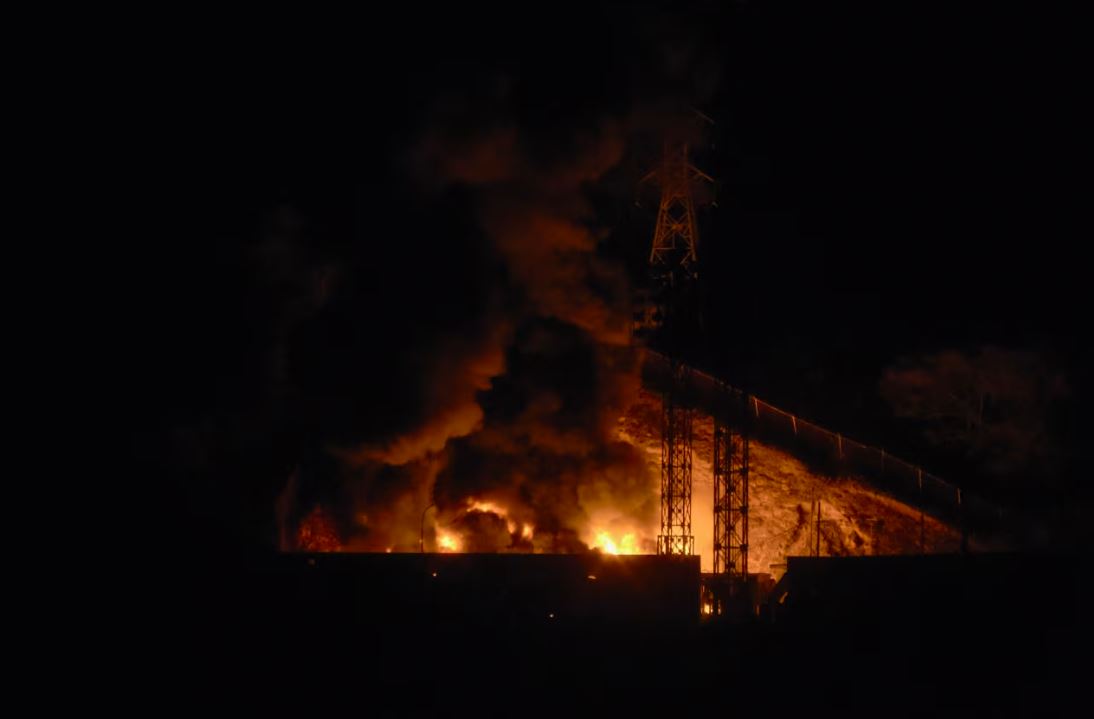
Venezuela is currently a pressure cooker of conflicting narratives and high-stakes accusations. When Interior Minister Diosdado Cabello recently claimed that at least 100 people were killed during what he described as a "US attack," he wasn't just reporting numbers. He was firing a rhetorical shot in a long-standing geopolitical war. For anyone trying to make sense of the chaos in Caracas, the challenge isn't just finding the facts. It’s navigating the massive gap between government rhetoric and international reports.
If you’re looking for a simple body count, you won't find one that everyone agrees on. The Venezuelan government frequently points to "imperialist aggression" as the root cause of its domestic turmoil. Meanwhile, Washington and various human rights organizations see a regime clinging to power through the suppression of its own citizens. This isn't just a disagreement over data. It’s a fundamental battle over who gets to define reality in South America.
Understanding the Minister’s Allegations
Diosdado Cabello has long been the "iron man" of the United Socialist Party of Venezuela (PSUV). When he speaks, he speaks for the military and security apparatus. His claim that 100 lives were lost due to US-backed intervention follows a familiar pattern. The Venezuelan leadership often frames internal protests, failed coups, or even infrastructure collapses as direct results of foreign sabotage.
In this specific instance, the "attack" referred to isn't necessarily a rain of missiles or a beach landing. Instead, the government often uses this term to describe the cumulative effect of economic sanctions, cyber warfare, or the alleged funding of paramilitary groups. To Cabello, a death caused by a lack of medicine or a riot triggered by political tension is a death at the hands of the United States. It's a broad definition. It's also a highly effective political tool.
The Reality of Post Election Violence
To get a clearer picture, we have to look at the timeline following the disputed July 2024 elections. Independent monitors and groups like Foro Penal have tracked a much different kind of violence. They don't see an external invasion. They see a domestic crackdown.
- Mass Arrests: Reports indicate over 2,400 people were detained in the weeks following the vote.
- Documented Fatalities: Human rights groups have verified roughly 25 to 30 deaths directly linked to protest suppression, a far cry from the 100 claimed by Cabello in his specific context.
- Operation Tun Tun: This is the government's "knock-knock" campaign, where security forces go door-to-door to arrest those suspected of "fascism" or "terrorism."
The discrepancy in numbers tells the real story. When the government claims 100 deaths from a "US attack," they're often grouping together security forces killed in clashes, civilians caught in the crossfire, and perhaps even fabricated figures to justify further crackdowns. It’s about creating a siege mentality. If the country is under attack, then any internal dissent looks like treason.
Sanctions and the Slow Motion Crisis
We can't talk about "attacks" without talking about the economy. The US has used the Office of Foreign Assets Control (OFAC) to hammer the Venezuelan oil sector. This is the "silent attack" that the Maduro administration points to most often.
Economists generally agree that while mismanagement and corruption gutted the Venezuelan economy first, sanctions acted as a massive accelerant. When the government says the US is "killing" people, they're referring to the collapse of the healthcare system and the resulting rise in infant mortality and chronic disease deaths. It’s a complicated argument. It shifts the blame from the Miraflores Palace to the White House.
The Role of Intelligence Agencies and Mercenaries
Part of why these claims of "attacks" gain any traction is because there have been actual, bungled attempts at armed incursions in the past. Remember Operation Gideon in 2020? A group of volunteers and two former US Green Berets tried to land on the coast to capture Maduro. It was a disaster. It was also a gift to government propagandists.
Because these events happened, Cabello can point to any new unrest and say, "See? It's happening again." This month, the Venezuelan government claimed to have seized hundreds of firearms allegedly smuggled from the US. They paraded these weapons on national television. Whether these were intended for a genuine coup or were planted by the SEBIN (Venezuela’s intelligence service) is almost impossible to verify independently. In Caracas, the truth is often whatever the person with the loudest megaphone says it is.
How to Verify Information in a Information Vacuum
If you’re trying to stay informed, you have to be cynical. You can't take a press conference from the Interior Ministry at face value. You also can't assume that every report from a DC-based think tank is 100% objective.
- Look for Cross-Referencing: If Cabello claims 100 deaths, check Proiuris or Human Rights Watch. If they aren't seeing bodies in morgues or families reporting missing persons on that scale, the number is likely political fiction.
- Follow the Money: Watch the oil markets. Usually, "attacks" are announced right when the US is considering tightening or loosening sanctions.
- Check Local Journalism: Despite the risks, outlets like Efecto Cocuyo continue to report from the ground. They often have the most granular, accurate data on what’s actually happening in the barrios.
The situation in Venezuela isn't just a local tragedy. It's a blueprint for how modern information warfare works. By inflating casualty numbers and blaming a foreign superpower, the government manages to consolidate its base and distract from the fact that the country’s infrastructure is in tatters.
Don't wait for a formal correction from the ministry. It won't come. Instead, diversify your news sources. Stop looking at Venezuela through a purely partisan lens. Understand that in a conflict this deep, the first thing to die isn't the soldiers or the protesters—it's the context. Check the daily updates from the UN Human Rights Council missions to see the verified data that actually matters.


