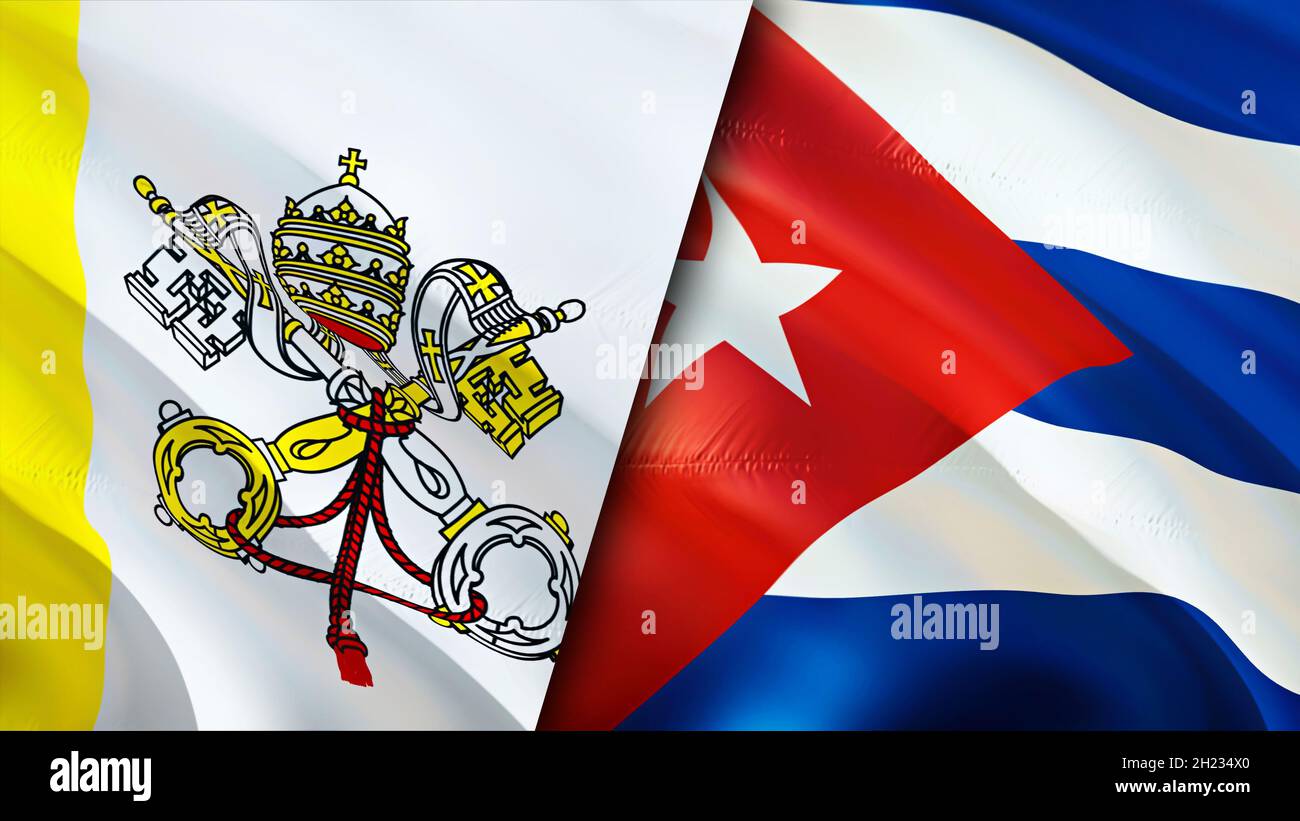
The Washington Post wants you to believe that Cuba’s recent outreach to the Vatican is a desperate plea for humanitarian relief. They paint a picture of a starving island reaching for a rosary to soften the cold heart of American sanctions. It’s a touching narrative. It’s also completely wrong.
This isn’t about bread; it’s about Brent Crude.
If you’ve spent any time analyzing the geopolitical chess board of the Caribbean, you know that Havana doesn’t do anything for "mercy." They do it for leverage. By pulling the Holy See into the middle of a bilateral energy dispute, Cuba isn’t asking for a prayer—they are conducting a sophisticated pincer movement on the Biden-Harris administration’s moral high ground.
The Myth of the "Oil Embargo"
First, let’s kill the biggest lie in the room. There is no "oil embargo" in the way the media describes it. The U.S. doesn't have a naval blockade preventing tankers from docking in Havana. Cuba can, and does, buy oil on the open market. The problem isn't that they aren't allowed to buy it; it’s that they have no money to pay for it, and their traditional sugar daddies—Russia and Venezuela—are currently preoccupied with their own existential disasters.
When the press talks about "easing the embargo," what they actually mean is "granting Cuba credit." Havana wants the U.S. to allow third-party banks to process transactions without the fear of secondary sanctions. They want the Vatican to act as a moral co-signer for a regime that has a sixty-year track record of defaulting on every debt it has ever touched.
I’ve watched analysts fall for this trap for decades. They see a diplomatic overture and think it’s a shift in policy. It’s not. It’s a liquidity play.
Why the Pope is the Perfect Proxy
Pope Francis is the ultimate "fixer" for a socialist state in crisis. He’s the first Latin American Pope, he has a documented skepticism of unfettered capitalism, and he has the ear of the Democratic establishment in Washington.
By involving the Vatican, Cuba shifts the conversation from "Should we reward a repressive regime?" to "Should we allow children to sit in the dark?"
It’s a masterclass in emotional branding. Havana knows that the U.S. State Department can ignore a letter from a Cuban minister. It’s much harder to ignore a direct appeal from the Bishop of Rome. But here is the nuance the mainstream media missed: the Vatican isn't doing this for free. The Church is playing for its own survival on the island. This is a cold, hard trade: diplomatic cover in exchange for increased religious freedom and the protection of Church assets in a post-Castro vacuum.
The Energy Grid is a Choice, Not an Accident
The "energy crisis" in Cuba is frequently blamed on the U.S. embargo. This is a convenient fiction that ignores the absolute failure of centralized planning.
Cuba’s power grid is a museum of Soviet-era inefficiency. They rely on "distributed generation"—thousands of small diesel generators—because their massive thermal power plants are literally crumbling into the sea.
- The Reality: Even if the U.S. lifted every sanction tomorrow, the lights would still go out.
- The Math: Cuba needs roughly $10 billion in infrastructure investment to modernize its grid.
- The Problem: No sane investor puts $10 billion into a country where the state can seize your assets on a whim.
The Vatican can’t fix a cracked boiler. It can’t refine heavy sour crude. What it can do is provide the political "cover" for the U.S. to grant specific licenses to Chevron or European energy giants to "assist" in humanitarian energy projects. This is the "Chevron Model" currently being tested in Venezuela. Cuba is looking at Caracas and saying, "We want that deal."
The "Sanctions Don't Work" Fallacy
You’ll hear the contrarian-lite crowd scream that "sanctions don't work." This is a half-truth that hides a deeper reality. Sanctions work exactly as intended: they restrict the resources available to a hostile government.
The argument that sanctions "only hurt the people" assumes that if the sanctions were lifted, the regime would suddenly become a benevolent distributor of wealth. History suggests otherwise. When the Obama administration eased restrictions in 2014, the lion’s share of the new revenue went directly into GAESA—the Cuban military’s massive business conglomerate.
The military owns the hotels. The military owns the stores. The military owns the port.
When you "ease the embargo" to help with oil, you aren't helping the guy driving a 1954 Chevy. You are subsidizing the fuel costs of the Ministry of the Interior so they can keep their patrol cars running.
The Hidden Hand of Moscow
Why now? Why the Vatican?
Because Russia is failing them. For years, Cuba relied on subsidized Russian oil in exchange for being a Caribbean listening post. But with the war in Ukraine draining the Kremlin’s coffers, the tankers have slowed to a trickle.
Cuba is currently facing its worst energy shortage since the "Special Period" of the 1990s. But unlike the 90s, the population has smartphones. They have TikTok. They have the ability to coordinate protests in real-time. The regime is terrified.
The Vatican outreach is a "Hail Mary" in the most literal sense. It is an attempt to bypass the hardliners in Washington by appealing to the humanitarian instincts of the international community. It is a pivot away from a bankrupt Russia toward a more "acceptable" mediator.
Stop Asking if it’s Moral—Ask if it’s Functional
People always ask: "Is the embargo moral?"
That’s the wrong question. The right question is: "Does the Cuban government have any incentive to change if we give them what they want for free?"
If the U.S. facilitates oil shipments through Vatican mediation without demanding structural changes to how Cuba manages its economy, we are simply paying for the privilege of keeping a failing system on life support. We are essentially rewarding the regime for its own incompetence.
The "insider" truth is that the U.S. is actually okay with the Vatican involvement. Why? Because it gives the White House an "out." They can say, "We aren't softening on communism; we are responding to a request from the Holy Father." It’s political theater that allows both sides to save face while changing absolutely nothing on the ground.
The Brutal Advice for Investors and Analysts
If you are looking at this "Vatican help" as a sign that Cuba is about to open up, don't hold your breath.
- Ignore the Headlines: "Talks" and "appeals" are not policy changes. Watch the Treasury Department’s OFAC (Office of Foreign Assets Control) licenses. Unless you see a specific license for oil services, nothing has changed.
- Follow the Fuel: Cuba is currently trying to court Mexico and Brazil for oil. The Vatican is the PR wing of this recruitment drive.
- The GAESA Factor: Until the Cuban military is decoupled from the economy, any "aid" or "easing" is just a direct deposit into the generals' bank accounts.
Cuba doesn't need a Pope. It needs a market. It needs property rights. It needs to stop burning its future to keep its past alive.
The Vatican isn't there to save the Cuban people. It's there to preside over the funeral of a failed economic model, hoping to inherit the congregation when the state finally collapses.
Stop reading the tea leaves of diplomatic "hope." Start looking at the balance sheets. The lights are going out in Havana because the regime ran out of other people's money, and even the Pope can't perform a miracle on a bank statement that’s $30 billion in the red.
If you want to see where Cuba is really going, stop looking at the Vatican and start looking at the price of Russian Urals. When the subsidies die, the regime dies with them. Everything else is just incense and mirrors.