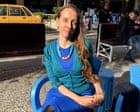
The kidnapping of American journalist Shelly Kittleson in Iraq marks a grim milestone in the deteriorating security climate for independent correspondents. On the ground in Baghdad, the news moved through backchannels before hitting the official wires. U.S. officials eventually confirmed that Kittleson, a veteran reporter known for her deep-seated knowledge of Middle Eastern paramilitary groups, had been taken. This is not just another statistic in a long-running war zone. It is a direct assault on the dwindling cadre of reporters who still venture outside the Green Zone to tell stories that the Pentagon and local governments would rather keep quiet.
Kittleson’s disappearance highlights a systemic failure. For years, she operated as a freelancer, a high-stakes gamble that thousands of journalists take to cover under-reported regions. When a staff reporter for a major network gets snatched, a machine of corporate security, insurance, and high-level diplomatic pressure grinds into gear. When an independent like Kittleson vanishes, the response is often fragmented, delayed, and hamstrung by a lack of institutional backing.
The Calculated Risk of the Baghdad Beat
Iraq is no longer the open battlefield of 2003, but it has become something arguably more dangerous for a lone Westerner: a labyrinth of competing militias and shadow actors. Kittleson spent years documenting the nuances of these factions. She understood the internal politics of the Popular Mobilization Forces (PMF) and the lingering shadow of the Islamic State.
Journalists working these beats are often forced to choose between total safety and actual access. If you stay in the fortified hotels, you get the press releases. If you want the truth, you go to the alleyways. Kittleson went to the alleyways. The mechanism of her abduction remains murky, but the timing coincides with a period of heightened tension between various armed groups and the Iraqi central government.
Kidnapping in this region serves two primary functions. It is either a commercial enterprise intended to extract a massive ransom or a political tool used to send a message to Washington. Given Kittleson’s specific body of work—which often scrutinized the very groups now holding sway in Baghdad—the political motive carries significant weight.
The Freelancer Trap
The industry relies on people like Kittleson to fill the gaps left by shrinking foreign bureaus. News outlets buy their photos, their quotes, and their courage, but they rarely provide the armor. This creates a dangerous imbalance of power.
A freelancer often pays for their own security, their own fixers, and their own insurance. When budgets are tight, security is usually the first thing to be cut. We are seeing a pattern where the "client" publications distance themselves the moment a reporter is compromised to avoid legal liability or financial responsibility. This leaves the family of the journalist and small advocacy groups to navigate the nightmare of hostage negotiations alone.
This lack of a safety net is common. Major outlets will run a freelancer's front-page story on Monday and then claim they have no "official" connection to them on Tuesday when a ransom demand arrives. It is a cynical calculation that places the entire burden of risk on the individual.
The Role of Local Fixers and Betrayal
In any conflict zone, a journalist is only as good as their fixer. These local guides provide the linguistic and cultural bridge necessary to survive. However, the fixer-journalist relationship is under immense pressure in Iraq.
Local staff face threats that Westerners do not. Their families are vulnerable. Often, a kidnapping is not the result of a random patrol stumbling upon a target. It is a pre-planned event facilitated by someone within the inner circle who was coerced or bought. Investigating Kittleson’s case requires looking at who knew her schedule and who stood to gain from her removal from the field.
Intelligence Gaps and Diplomatic Deadlocks
The U.S. State Department’s "no concessions" policy remains the standard, but it is a policy that often feels like a death sentence to the families involved. While the official line is that the United States does not pay ransoms, the reality is a messy web of third-party negotiators and back-alley deals.
The problem with Kittleson’s case is the lack of a clear "owner" of the problem. Because she was not on a government mission or a corporate assignment, her file sits between desks. Intelligence agencies may have signals indicating her location, but authorizing a rescue operation involves a political cost that many in Washington are hesitant to pay. A botched rescue is a PR disaster; a missing freelancer is a slow-burning tragedy that eventually fades from the headlines.
The Evolution of the Hostage Economy
Hostage-taking has evolved from the crude tactics of the early 2000s into a sophisticated industry. Groups now use digital forensics to vet their captives. They check social media, past articles, and even private communications to determine a captive's value.
If Kittleson’s captors have accessed her digital footprint, they will find a woman who knew too much. That knowledge, which made her a brilliant journalist, now makes her a dangerous liability in the eyes of a militia. In the hostage economy, information is a currency that can either buy your freedom or ensure your silence.
The Silence of the Iraqi State
The Iraqi government’s response has been characteristically muted. For the Prime Minister’s office, acknowledging the kidnapping of an American journalist by a militia is an admission of a lack of sovereignty. If the state cannot protect a high-profile Westerner, it cannot claim to have control over its own streets.
This silence emboldens the kidnappers. They operate with a sense of impunity, knowing that the local police are either too afraid or too integrated with the militias to interfere. For years, the international community has pumped billions into "stabilizing" Iraq, yet a veteran journalist can still be erased from a street corner in broad daylight without a single arrest being made.
Why This Matters Beyond the Bylines
When a reporter like Kittleson is taken, it creates a "chilling effect" that is hard to quantify but easy to feel. Other journalists pack their bags. They stop asking the hard questions. They stop visiting the provinces. The result is a total information blackout in areas that desperately need oversight.
We are entering an era where the cost of truth is becoming too high for individuals to bear. If the industry continues to outsource its most dangerous work to freelancers without providing the necessary support structures, there will be no one left to cover the next war.
The disappearance of Shelly Kittleson is a warning. It is a signal that the rules of engagement for the press have been rewritten by those who have no interest in the truth. The U.S. government and the news organizations that benefited from her work must do more than offer "thoughts and prayers" or "confirm reports." They must recognize that their reliance on the freelance model has created a permanent class of vulnerable truth-tellers.
If the world allows Kittleson to become another "cold case" in the archives of the Iraq War, it isn't just one woman who is lost. It is the very idea that an independent observer can walk into the heart of a conflict and come back with the truth. The vacuum left behind will be filled by propaganda, and in that silence, the militias and the corrupt will thrive.
The clock is ticking in Baghdad. Every hour of official hesitation is an hour of leverage for those who hold her. The diplomatic theater needs to end, and a concerted, high-pressure effort to secure her release must become a priority, regardless of her employment status. Justice in this case isn't just about bringing a citizen home; it's about proving that the press is not a soft target.