The Tourist Trap of Ecological Collapse
Stop calling it a "natural wonder."
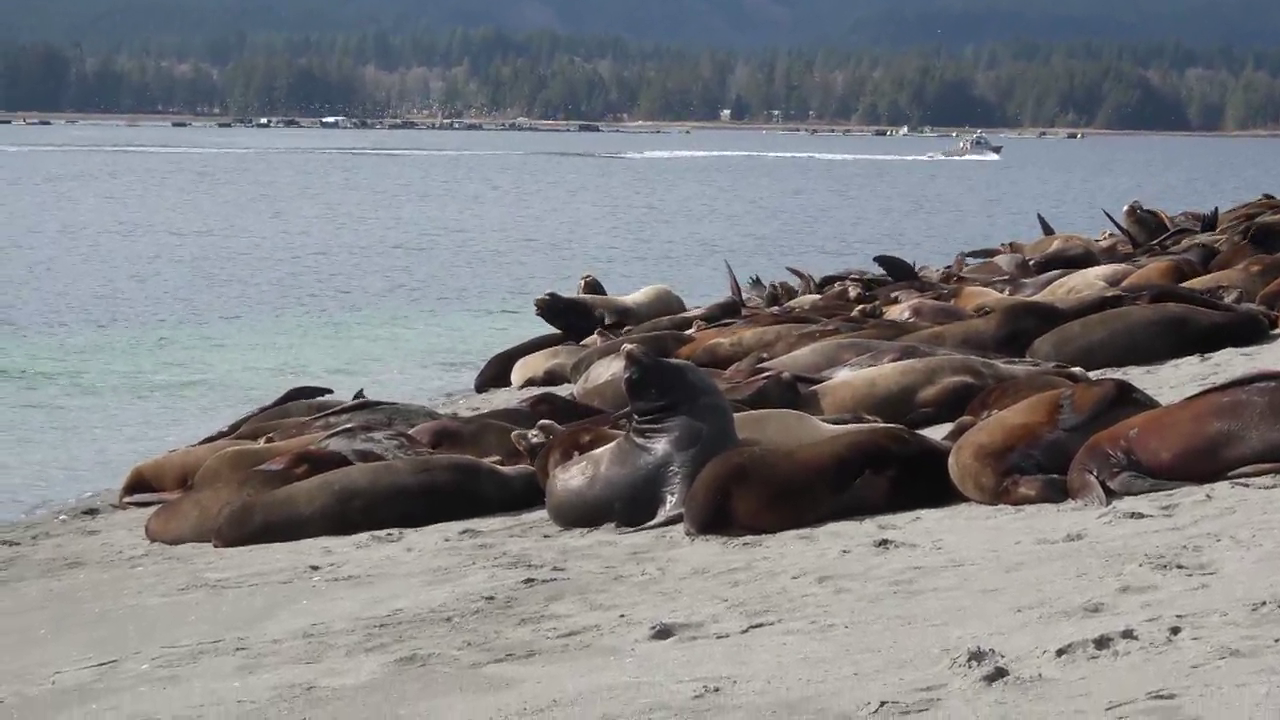
When hundreds of Steller and California sea lions descend on a Vancouver Island beach, the local news cycle treats it like a Disney movie. Tourists flock to the shoreline with long lenses. They talk about the "majesty" of the barking masses. They marvel at the sheer scale of the gathering.
They are missing the point entirely.
This isn't a celebration of wildlife. It’s a crowded waiting room for a buffet that is running out of food. In the industry, we call this "spatial aggregation due to resource depletion." To the layman, it's a neon sign flashing "System Failure."
The Myth of the Healthy Population
The standard narrative suggests that more sea lions on a beach equals a thriving species. It’s a lazy assumption.
High-density gatherings of apex pinnipeds are often a desperate response to shifting prey distributions. If the herring and salmon were where they were supposed to be, these animals wouldn't be hauling out in massive, noisy colonies on public-facing beaches. They’d be scattered, hunting, and maintaining the energy levels required for survival.
When you see a thousand sea lions on one stretch of sand, you aren't looking at a boom. You’re looking at a localized bottleneck.
The Bio-Energetic Reality
Sea lions aren't lounging because they're lazy. They are resting because they have to minimize caloric burn.
The North Pacific is warming. The "Blob"—a massive expanse of warm water that has plagued the West Coast periodically over the last decade—has wreaked havoc on the nutrient density of the ocean.
- Prey Quality: The fatty, calorie-dense forage fish are being replaced by smaller, "junk food" species.
- Foraging Effort: Sea lions are traveling further and diving deeper for less reward.
- Rest Intervals: The beach "takeovers" are essentially recovery wards for exhausted hunters.
When you crowd these animals together on a Vancouver Island beach, you increase the risk of disease transmission and pup mortality. But sure, take another selfie.
Why "Protection" is Often Performance
The public loves the Marine Mammal Protection Act (MMPA). They think it’s a shield. In reality, it has become a bureaucratic wall that prevents sensible ecosystem management.
I have spent years watching policy-makers ignore the cascading effects of pinniped overpopulation in specific estuaries. We have created a situation where we protect the predator at the absolute expense of the prey.
The Salmon Problem
While you’re watching the sea lions on the beach, the Pacific Northwest salmon populations are being decimated at the "pinch points."
Every sea lion on that beach represents a massive daily caloric requirement. Where does that come from? It comes from the dwindling runs of Chinook and Steelhead. By allowing sea lion populations to artificially congregate in areas where salmon must pass, we are effectively feeding an endangered species to a non-endangered one.
It is a conservation paradox. We are so afraid of "managing" the charismatic megafauna that we sit back and watch them eat the foundation of the coastal ecosystem.
The Danger of Human Habituation
The Vancouver Island "takeover" is a failure of boundaries.
When sea lions occupy human-centric spaces—docks, marinas, and popular public beaches—the risk of habituation skyrockets. A habituated sea lion is a dead sea lion.
Why the "Cute" Narrative Kills
- Food Conditioning: People start feeding them. It’s inevitable.
- Agression: A 2,000-pound Steller sea lion is not a pet. It is a highly territorial, incredibly powerful animal.
- Lethal Removal: Once an animal loses its fear of humans, it eventually creates a situation that necessitates its destruction.
By framing these events as "spectacles" for the travel industry, we encourage people to get too close. We prioritize the "experience" over the biological necessity of keeping these worlds separate.
The Harsh Economics of the Beach
Let's talk about the cost.
When hundreds of sea lions occupy a beach or a local marina, the economic impact is real and rarely discussed in the fluff pieces.
- Property Damage: Docks are literally sunk under the weight of these animals.
- Fisheries Conflict: Local small-scale fishers lose their gear and their catch.
- Infrastructure: The cleanup of biological waste (guano) and the repair of coastal structures costs municipalities hundreds of thousands of dollars.
The "look at the pretty animals" crowd rarely has to pay the bill for the structural damage these "takeovers" leave behind.
The Nuance You Missed: It’s Not About "Too Many" Sea Lions
The contrarian truth isn't that we have too many sea lions. It’s that we have a fractured ocean that can no longer support their natural dispersal.
If the ocean were healthy, these sea lions wouldn't be your neighbors. They’d be miles offshore, following the cold-water currents and the deep-sea schools of fish.
The Data Check
| Metric | Historical Norm | Current Observation |
|---|---|---|
| Distribution | Wide, offshore-heavy | Concentrated, coastal-heavy |
| Prey Availability | High-fat herring/salmon | Low-fat incidental species |
| Human Conflict | Minimal | Escalating |
We are seeing a massive shift in behavior that mirrors the urbanization of terrestrial wildlife. A sea lion on a Vancouver Island beach is the marine equivalent of a coyote in a subway station. It’s not "nature returning"; it’s nature trying to survive the wreckage we’ve made of its home.
Stop Romanticizing the Struggle
The next time you see a headline about sea lions "claiming" a beach, don't share it with a heart emoji.
Recognize it for what it is: a warning.
We are witnessing the desperate huddling of a species that is being squeezed by rising temperatures, disappearing food sources, and a regulatory framework that values optics over ecological balance.
If you actually care about the sea lions, stop cheering for the takeover. Start asking why they have nowhere else to go.
Put down the camera and look at the water. It’s empty. That’s why the beach is full.
Go home.