Residents in Port Arthur didn't need a news alert to know something went wrong at the Valero refinery. They felt it. A massive boom rocked the area, followed by the sight of black smoke billowing from the facility. It's the kind of moment that makes your heart drop if you live anywhere near the Texas Gulf Coast. When an explosion hits a major refinery, the immediate concern isn't just the fire. It's what's in the air.
Local authorities didn't waste time. They issued a shelter-in-place order for everyone nearby. If you've never been through one, it’s a jarring experience. You’re told to stay inside, kill the AC, and tape up your windows. It’s a low-tech solution for a high-tech disaster. This specific incident at the Valero Port Arthur refinery reminds us that despite all the talk of "modernized" energy, the risks to local communities remain incredibly raw.
Why shelter in place is the first move
When a refinery unit blows, emergency mangers have to assume the worst about air quality. You aren't just dealing with smoke. Refineries process crude oil into gasoline, diesel, and jet fuel using a cocktail of chemicals. Some of those, like hydrogen fluoride or sulfur dioxide, are nasty if they get into your lungs.
Sheltering in place is about creating a temporary barrier. By turning off your HVAC system, you stop the house from sucking in outside air. It bought the Port Arthur Fire Department time to get their monitors out. They had to check if the "plume"—that’s the cloud of smoke and gas—carried anything lethal. In this case, the fire occurred in a specific unit of the plant, and crews worked fast to isolate the fuel source.
If you're ever in this spot, don't wait for a second siren. Get inside. Use duct tape and plastic sheeting if you have it. It sounds primitive, but it’s the standard recommendation from the Occupational Safety and Health Administration (OSHA) because it works for short-term releases.
The Valero Port Arthur track record
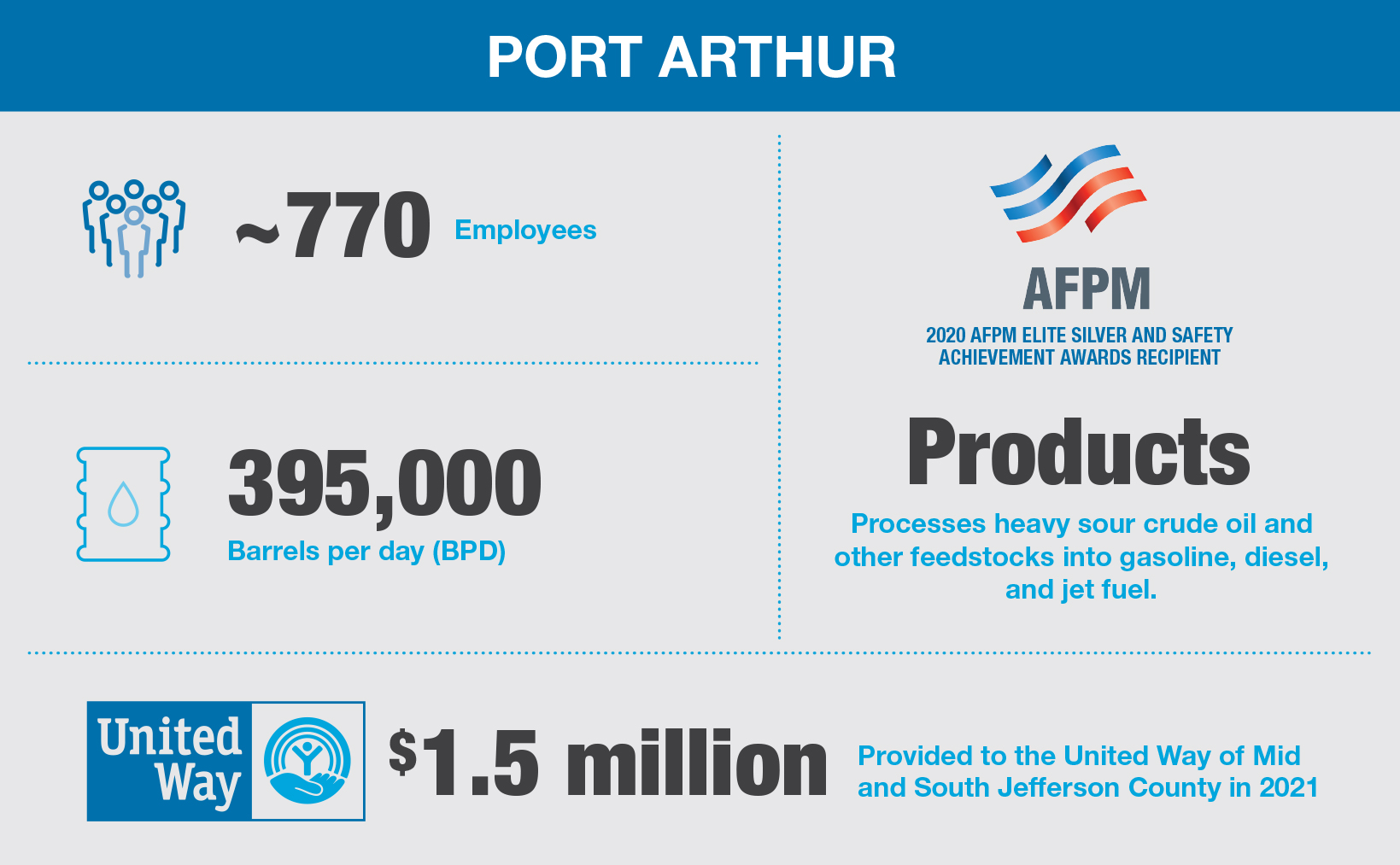
Valero’s Port Arthur facility is a monster. It handles about 335,000 barrels of crude oil every single day. When you operate at that scale, the margin for error is razor-thin. This isn't the first time this specific site has been in the headlines. Over the years, environmental groups and the Environmental Protection Agency (EPA) have kept a close watch on the Golden Triangle—the area including Beaumont, Port Arthur, and Orange.
The reality of living in a refinery town is a trade-off. These plants provide thousands of high-paying jobs and fuel the local economy. But they also come with a "flare-up" culture. Seeing a flame at the top of a stack is normal. Seeing a fireball and feeling a shockwave is not.
Texas has some of the most relaxed industrial regulations in the country. That's a fact. While the Texas Commission on Environmental Quality (TCEQ) monitors these events, critics argue the fines handed out after explosions are just a "cost of doing business" for multi-billion dollar corporations. When a refinery makes millions in profit every day, a six-figure fine for a safety lapse doesn't exactly hurt the bottom line.
Investigating the root cause
What actually caused the boom? Usually, these incidents track back to one of three things. It's either mechanical failure, a sensor glitch, or human error during a "turnaround." A turnaround is when a unit is shut down for maintenance. It's actually the most dangerous time in a refinery’s life cycle. You have hundreds of extra contractors on-site, equipment being opened up, and pressures being shifted.
Investigating an explosion like this takes months. The Chemical Safety Board (CSB) often steps in for major events. They don't just look at what broke. They look at the culture of the company. Did they skip a pipe inspection to save a few days of production? Was a warning light ignored because it had been "ghosting" for weeks?
We know the fire was contained relatively quickly this time. That suggests the automatic shut-off valves worked. If they hadn't, we'd be looking at a multi-day blaze that could have leveled the entire North End of the city.
Impact on the local community and environment
Port Arthur is a city that has been beaten down by both nature and industry. It’s a majority-minority community that sits on the front lines of climate change and industrial pollution. When an explosion happens here, it's not just a news story. It's a health crisis.
Even after the "all clear" is given, the "fallout" remains. Think about the soot. That black smoke eventually settles. It lands on cars, in playgrounds, and in garden soil. This particulate matter can trigger asthma attacks and long-term respiratory issues.
Community advocates like those at the Hilton Kelley’s Community In-Power & Development Association (CIDA) have fought for years for better monitoring. They want "fenceline monitoring" that’s transparent and real-time. Basically, if the plant leaks, the public should know exactly what it is within minutes, not days.
Moving forward after the blast
The shelter-in-place has since been lifted, but the anxiety hasn't. If you live in the Port Arthur area, you need to stay proactive. Don't just assume the air is fine because the smoke cleared.
- Check your local air quality sensors. Sites like AirNow.gov provide data, but local "fenceline" monitors often give more granular detail.
- Document everything. If you have soot on your property or experienced a cough immediately after the blast, write it down.
- Stay tuned to the official Valero community line. They are required to provide certain updates to the public during the recovery phase.
Refineries are a necessity for our current way of life, but they shouldn't be a death sentence for the people living next door. This latest explosion is a wake-up call that "safety first" has to be more than just a slogan on a breakroom poster. It’s time for more rigorous, unannounced inspections and real consequences for safety failures.
If you're in the area, keep your emergency kit ready. This probably won't be the last time a siren goes off in the Golden Triangle.