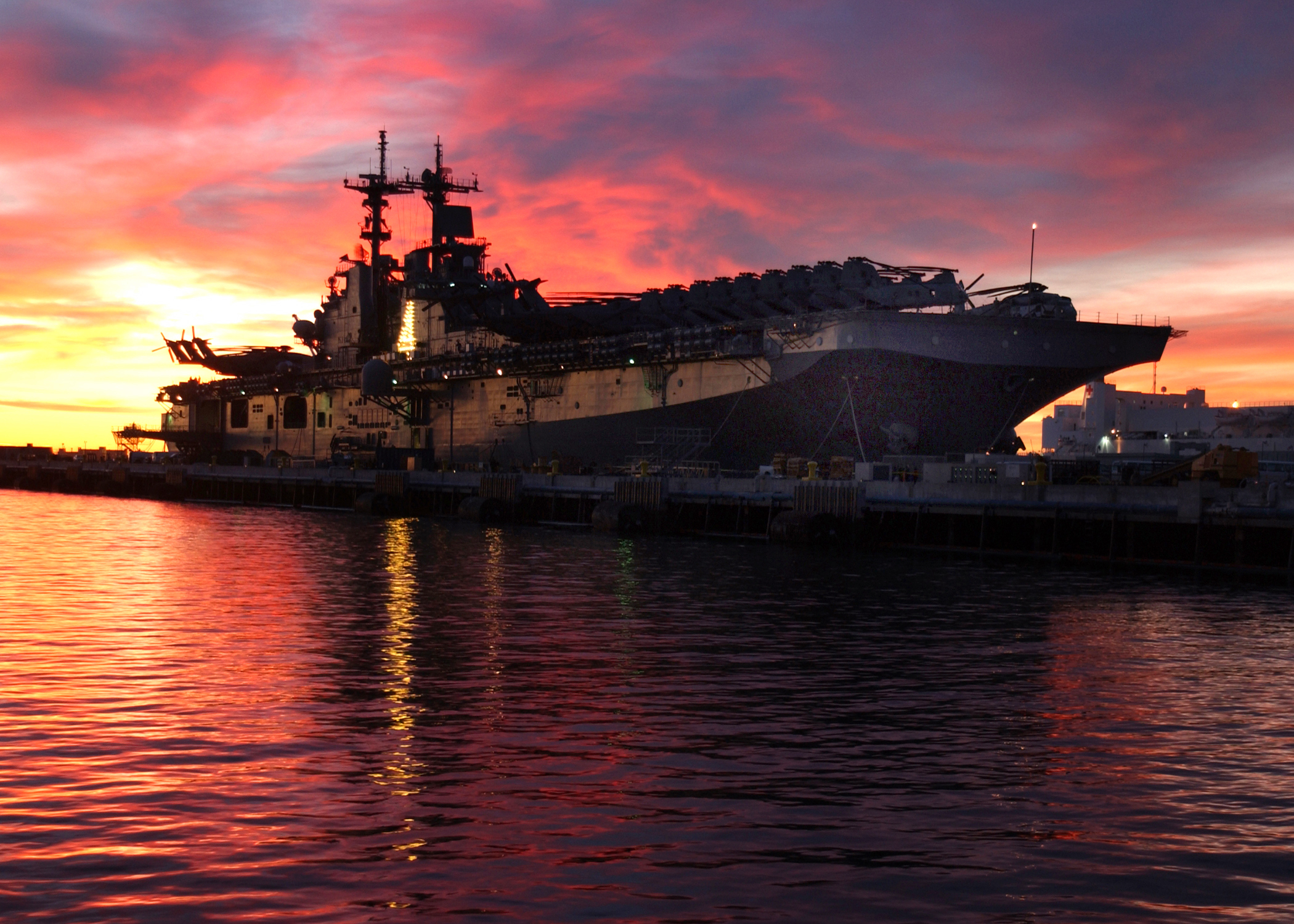
The Middle East isn't getting quieter. If you've been watching the headlines, you've probably seen reports that the USS Boxer and two other massive warships are steaming toward the waters near Iran. This isn't just a routine patrol or a "show of force" that we can ignore. We’re talking about 2,500 Marines from the 15th Marine Expeditionary Unit (MEU) who are now positioned in one of the most volatile maritime corridors on the planet.
You have to look at the timing. Tensions between Washington and Tehran are at a boiling point, fueled by proxy attacks, drone strikes, and the constant threat of a closed Strait of Hormuz. When the Pentagon moves an Amphibious Ready Group (ARG), they aren't just sending boats. They're sending a floating base capable of launching air strikes, conducting beach landings, and carrying out complex evacuations. It's a massive logistical chess move that signals the U.S. is bracing for a scenario that goes beyond simple posturing. Also making waves in related news: Finland Is Not Keeping Calm And The West Is Misreading The Silence.
Why the USS Boxer Deployment Changes the Math
The USS Boxer is an amphibious assault ship, but that title doesn't really do it justice. It’s essentially a small aircraft carrier designed specifically for the Marine Corps. It carries Harrier jets, attack helicopters, and those 2,500 Marines who are trained for "forcible entry." That's military speak for hitting a beach or a port even when the other side says no.
Moving this specific type of ship into the "Iran war zone"—a term often used for the Persian Gulf and the Gulf of Oman—tells us the U.S. is worried about more than just missiles. They’re preparing for ground-level contingencies. If an embassy needs to be evacuated or if a merchant ship gets seized by the Islamic Revolutionary Guard Corps (IRGC), these are the people who go in. Further insights regarding the matter are explored by Reuters.
Recent history shows us that the IRGC hasn't been shy about using fast boats and drones to harass commercial shipping. By placing the Boxer alongside the USS Lewis B. Puller and other supporting vessels, the Navy creates a multi-layered defense. The Puller acts as a mobile base for special operations, while the Boxer provides the heavy muscle. It's a combination that makes it much harder for Iran to claim "accidental" interference with global trade.
The Reality of 2,500 Marines on the Move
We often hear numbers like "2,500 troops" and they lose their meaning. Think about the scale here. That’s an entire Marine Expeditionary Unit. These units are self-sustaining. They bring their own tanks, their own artillery, and their own air support. They don't need a friendly country to give them a runway or a pier. They can operate in the middle of the ocean for months.
I've seen these deployments play out before. Usually, there's a lot of talk about "regional stability" and "freedom of navigation." But let's be real. This is about deterrence through the threat of immediate violence. If you’re Iran, you see 2,500 highly trained combatants sitting a few miles off your coast, and it changes how you weigh the risk of your next move.
The 15th MEU in particular is known for being a rapid-response force. They’ve spent the last several months training in the Indo-Pacific and are now being diverted. This shift in resources from one side of the globe to the other suggests that the Pentagon's intelligence on Iranian intentions has shifted from "yellow" to "red."
Breaking Down the Warships in the Group
The Boxer isn't traveling alone. It’s part of a group that creates a massive footprint. While reports highlight the Boxer, the accompanying ships are just as critical for a potential conflict.
- USS Boxer (LHD-4): The flagship. It’s the heart of the operation, holding the bulk of the aircraft and the Marines.
- USS Lewis B. Puller (ESB-3): An "Expeditionary Sea Base." Think of it as a giant floating parking lot and staging area for minesweepers and Special Forces.
- Supporting Destroyers: While often left out of the main headlines, Arleigh Burke-class destroyers usually provide the "shield" for these larger, slower ships, using Aegis missile defense systems to knock down incoming threats.
This grouping is designed to handle "asymmetric warfare." Iran doesn't try to fight the U.S. Navy ship-for-ship. They use hundreds of small, fast boats and "suicide" drones. The Boxer’s deck is packed with helicopters like the AH-1Z Viper, which are specifically designed to pick off those small boats before they can get close.
What This Means for Global Oil and Trade
The Strait of Hormuz is a choke point. Roughly 20% of the world's oil passes through it. If a conflict breaks out, or if Iran even hints at mining the waters, gas prices in the U.S. and Europe will spike instantly.
The presence of the Boxer group is supposed to keep those lanes open. But there’s a flip side. Every time the U.S. adds more hardware to the region, it gives the hardliners in Tehran an excuse to ramp up their own activities. It’s a classic security dilemma. You build up to feel safe, which makes your neighbor feel unsafe, so they build up, and eventually, someone's finger twitches on a trigger.
International shipping companies are already on edge. Many have started hiring private security or rerouting ships, which adds massive costs to global trade. The U.S. Navy’s arrival is a signal to these companies that the government is willing to pick up the tab for security, but it also confirms that the risk is very, very real.
The Intelligence Behind the Move
Why now? The Pentagon doesn't just wake up and decide to move 2,500 Marines because the weather is nice. This move is driven by specific, often classified, threat streams. We know that Iranian-backed groups have been more active in Iraq, Syria, and Yemen. We also know that Iran’s nuclear program continues to advance.
Some analysts argue this is a preemptive move to prevent Iran from taking advantage of distractions elsewhere in the world. If the U.S. is focused on Eastern Europe or the South China Sea, Tehran might think it has a window to push its luck. The Boxer is a reminder that the U.S. can still walk and chew gum at the same time.
Misconceptions About Marine Deployments
A common mistake people make is thinking that 2,500 Marines means an "invasion" is coming. That’s not how modern naval strategy works. These Marines are there for "surgical" operations.
- Non-Combatant Evacuation (NEO): If a local conflict gets out of hand, they pull out American citizens.
- Visit, Board, Search, and Seizure (VBSS): They retake ships that have been hijacked.
- Tactical Recovery of Aircraft and Personnel (TRAP): If a pilot goes down, they go get them.
It's about having a toolkit. The Boxer provides 2,500 different ways to solve a problem that doesn't necessarily involve a full-scale war.
How to Track This Situation
Don't just look at the big news sites. Keep an eye on maritime tracking data and U.S. Naval Institute (USNI) reports. These often show where the ships are actually positioned long before a formal press release comes out.
Watch for the rhetoric coming out of the Iranian Foreign Ministry. If they start talking about "illegal presence" or "defensive maneuvers," you know the pressure is working. Also, look at the price of Brent Crude oil. It’s often a more accurate "fear meter" than any political pundit.
If you’re worried about how this affects you, start by looking at your local energy costs and the stability of international shipping stocks. This deployment is a massive investment of taxpayer money and military risk. It’s designed to keep the status quo, but in a region this tense, the status quo is a fragile thing.
Keep your eyes on the Boxer’s position relative to the Persian Gulf. If it enters the Gulf, the temperature has officially hit a record high. If it stays in the North Arabian Sea, it’s a controlled pressure tactic. Understanding that distinction is the difference between falling for clickbait and actually knowing what’s going on.