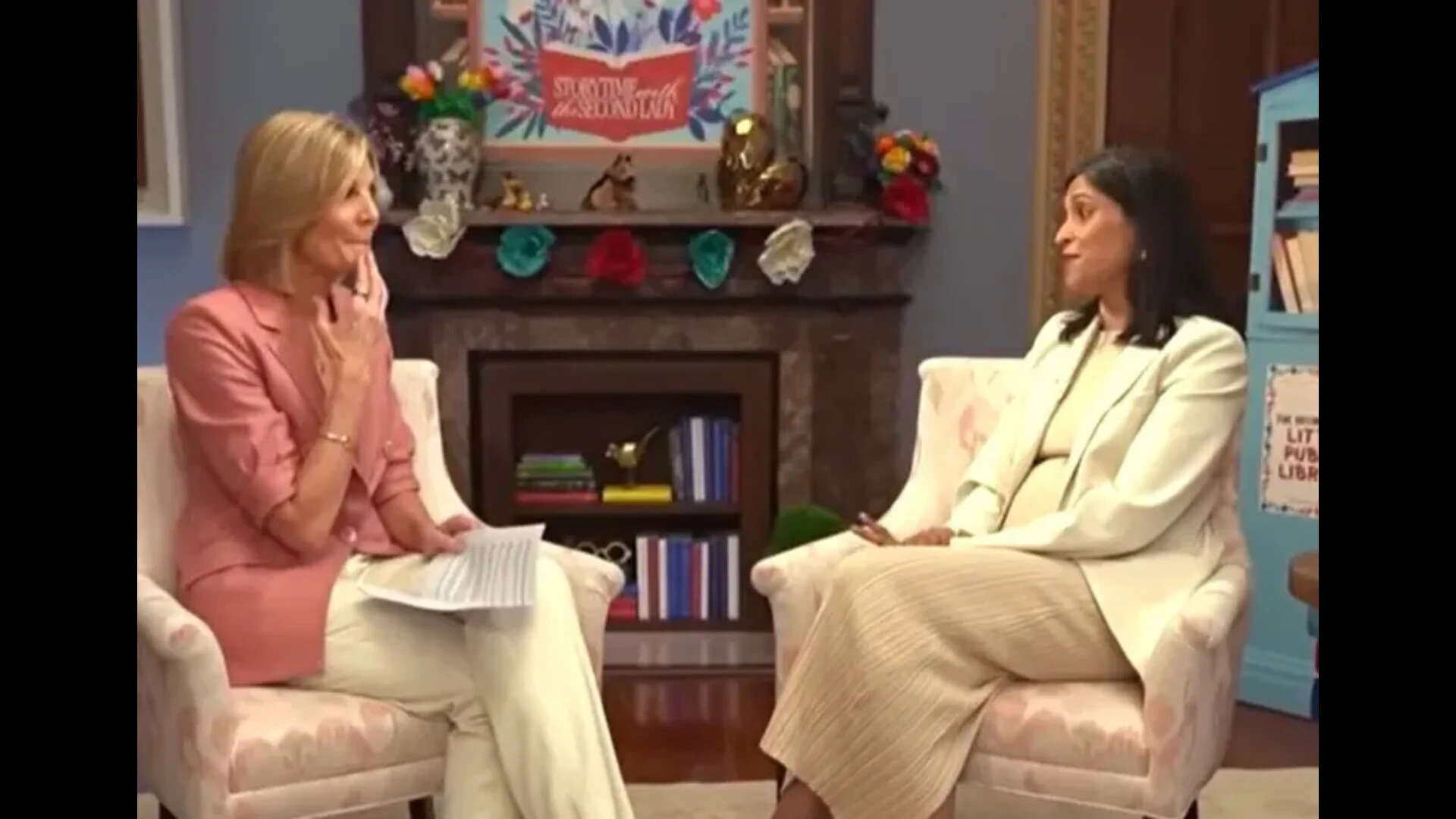
Usha Vance didn't plan on being a mother of four. Growing up in a household with just one sibling, the math of a large family wasn't part of her original blueprint. Yet, here we are. The news that the Second Lady is expecting a fourth child has sparked a massive amount of chatter about career, tradition, and the logistics of modern parenting. It's not just about another baby. It’s about a high-achieving woman choosing a path that many in her social and professional circles have spent decades moving away from.
Most people get the "big family" narrative wrong. They assume it's either a lack of planning or a strictly religious mandate. With Usha Vance, the story is more nuanced. It’s a deliberate choice made by a litigator and policy-shaper who understands exactly how much work is involved.
Moving past the family of two mindset
When you grow up in a small family, you get used to a certain level of quiet. You get used to resources—time, money, attention—being split into neat, manageable halves. Usha Vance has been vocal about this transition. Going from the controlled environment of a two-child upbringing to the controlled chaos of four kids is a massive psychological leap.
It isn't just about needing a bigger car. It’s about a total shift in how you view your role in the world. For many women in high-pressure careers, the "family of two" model is the gold standard because it feels sustainable. You can still make partner at a firm. You can still travel. You can still maintain a sense of self that isn't entirely consumed by domesticity.
Breaking that mold takes a specific kind of confidence. Vance’s decision suggests that the trade-offs we've been told are mandatory might be more flexible than we think. She isn't just adding a seat to the table; she’s redesigning the whole room.
The logistics of a fourth child in the public eye
Let's talk about the reality of what this looks like. Most families stop at two because the third child is the "disruptor." The third child means you're officially outnumbered. You can no longer play man-to-man defense; you have to switch to zone.
A fourth child, however, is a different beast. By the time the fourth arrives, the family unit functions more like a small organization. The older children start to take on roles. The parents have already seen every virus, dealt with every tantrum, and navigated the school systems.
For the Vances, this is happening under a literal microscope. While most parents worry about daycare costs, they're navigating the Secret Service and campaign trails. But the core challenge remains the same as it is for any family in 2026. How do you maintain a marriage and a career when the laundry never ends?
Data from the Pew Research Center shows that while the "ideal" family size in the U.S. has stayed around two or three children for decades, there's been a slight uptick in highly educated women having larger families. It's a "U-shaped" trend. The very wealthy and those with strong support networks are starting to lean back into the idea of a full house.
Why the choice matters for modern women
There’s a lot of pressure on women like Usha Vance to "have it all" in a very specific, sanitized way. Usually, that means one or two kids, a spotless home, and a high-ranking job. When a woman in her position chooses a fourth child, it sends a signal.
It says that family size doesn't have to be a barrier to intellectual or professional life. Honestly, it’s a bit of a power move. It rejects the idea that a woman’s capacity is a finite pie that gets smaller with every child.
Critics will point to her access to help. And sure, having resources makes a huge difference. But money doesn't wake up at 3:00 AM to soothe a teething infant. It doesn't replace the emotional labor of raising a human being. The decision to go for number four is an emotional and philosophical one, not just a financial one.
Breaking the "only two" cycle
- Check your assumptions. We often limit our family goals based on what we saw growing up. If you had one sibling, three feels like a crowd. If you had five, three feels like a vacation.
- Evaluate your support system. It’s not just about paid help. It’s about community, grandparents, and friends who actually show up.
- Ignore the "career suicide" myth. High-level performance is about efficiency and delegation. Many of the most successful people I know are also the busiest at home. They have to be disciplined.
The impact on the national conversation
We’re currently seeing a massive shift in how we talk about "pro-family" policies. Whether you agree with the Vance's politics or not, their personal life puts these issues front and center. When the Second Lady is pregnant, the conversation about maternity leave, childcare, and the cost of living becomes personal.
It forces people to look at the "why" behind declining birth rates. People aren't having fewer kids because they hate children. They're having fewer kids because they’re tired and broke. By visibly choosing a large family, the Vances are leaning into a traditionalist aesthetic, but doing it in a very modern, high-powered context.
This isn't your grandmother’s big family. This is a family where the mother is a Yale Law grad and a former clerk for Supreme Court justices. That juxtaposition is what makes people uncomfortable—and what makes it so interesting. It breaks the stereotype that large families are only for those who don't have other options.
What you can learn from the Vance family expansion
You don't need to be heading to the White House to take something away from this. The lesson here is about intentionality. Don't let your past—the "family of two" you grew up in—dictate your future if you want something different.
If you're on the fence about expanding your family, stop looking at the spreadsheets for a second. Spreadsheets will always tell you that kids are a bad investment. They’re expensive, they’re loud, and they ruin your sleep. But life isn't a spreadsheet.
Look at your capacity for chaos. Look at your desire for a noisy, vibrant dinner table twenty years from now. If that’s what you want, the logistics usually find a way to follow the will. Usha Vance is proving that even in the highest-stakes environment imaginable, there’s room for one more.
Stop waiting for the "perfect" time. It doesn't exist. If you want a bigger family, start building the support network you need today. Reach out to your village. Set boundaries at work now. Build the life that fits the family you want, rather than trying to squeeze a family into a life that was never designed for them. Focus on the long game. The years of diapers are short; the decades of family are long.