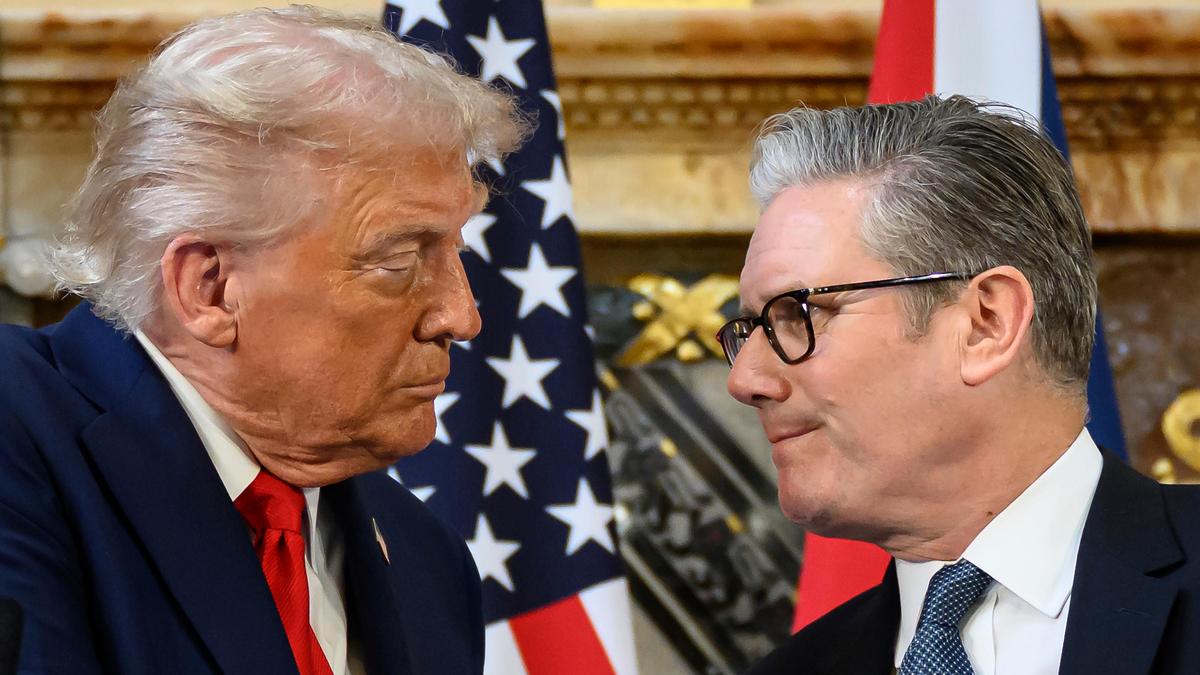
The "Special Relationship" between the U.S. and the U.K. has always been more of a romanticized myth than a hard-and-fast treaty, but right now, it’s looking more like a messy divorce. This week, Donald Trump didn’t hold back. In a series of phone interviews from the White House, he basically told the British public that the bond isn't what it used to be. The spark is gone.
The immediate trigger? A massive diplomatic fallout over military strikes against Iran. While Trump and Israel pushed for aggressive action, Prime Minister Keir Starmer hesitated. He didn't just hesitate; he initially blocked the U.S. from using British military bases in Cyprus and at Diego Garcia for offensive strikes. Trump’s response was vintage: "This is not Winston Churchill that we’re dealing with."
If you're wondering why the vibe has shifted so drastically, you have to look at the tension between Starmer’s "international law" approach and Trump’s "America First" steamroller. Starmer eventually blinked, allowing some "defensive" use of bases after an Iranian drone targeted a British installation, but for Trump, the damage was done. He’s already moved on to new favorites, explicitly praising France and Germany for being more "helpful."
The Iran Crisis and the Ghost of Iraq
The core of the current friction is a fundamental disagreement on how to handle the Middle East. Trump is currently engaged in what some call a war of regime change against Iran. Starmer, haunted by the political wreckage of Tony Blair’s support for the 2003 Iraq War, is trying to walk a tightrope. He told Parliament this week that he doesn't believe in "regime change from the skies."
This isn't just a polite difference of opinion. It’s a strategic bottleneck. Trump is furious that it took "three or four days" to secure landing rights at Diego Garcia. In a high-stakes military operation, three days is an eternity. For a president who treats foreign policy like a transactional business deal, the U.K. provided a late, low-quality service.
- The Cyprus Standoff: Starmer refused to let the U.S. launch offensive sorties from RAF Akrotiri.
- The Diego Garcia Delay: Access was eventually granted but restricted to "defensive" purposes.
- The French Surprise: Historically prickly France has actually been more aligned with Trump’s recent military moves, leaving London looking isolated.
Trade Wars and the Death of the Free Trade Deal
If you thought a shared language would protect the U.K. from Trump’s tariff obsession, you haven't been paying attention to 2026. The U.S. Supreme Court recently threw a wrench in Trump's plan to use emergency powers for broad tariffs, but he’s already pivoted to other legal loopholes.
The dream of a post-Brexit "massive" free trade deal with the U.S. is effectively dead. Trump isn't looking to give the U.K. a "friend" discount. In fact, he’s actively threatening allies. He just vowed to cut off all trade with Spain because they refused to allow strikes from the Rota naval base. The U.K. isn't in that "embargo" bucket yet, but the threat is clear: play ball or get taxed out of the American market.
British ministers like Darren Jones are trying to play it cool, saying the relationship remains "crucial." But behind the scenes, there’s a realization that the U.K. has very little leverage. Trump has noted that the U.K. "has absolutely nothing that we need" in the context of the current military standoff, a bruising assessment for a country that prides itself on being Washington's indispensable partner.
Why Starmer is Stuck in the Middle
Keir Starmer is trying to do something nearly impossible. He wants to rebuild ties with the European Union while maintaining a "warm" relationship with a deeply unpredictable Trump. It’s not working.
Trump’s inner circle sees Starmer’s government as too tied to international institutions and "woke" European sensibilities. The sovereignty deal over the Chagos Islands—where the U.K. returned the islands to Mauritius but kept a lease on the base—has particularly annoyed Trump. He called it a "stupid" move and views it as a sign of British weakness.
The 5 Percent NATO Demand
Adding fuel to the fire is the new NATO spending reality. While many European countries have scrambled to hit 3.5% or even 5% of GDP on defense to stay in Trump’s good graces, the U.K. is struggling with a stagnant economy and a massive budget black hole.
- Trump is demanding 5% from "rich" allies.
- The U.K. is currently aiming for 2.5%, with vague promises of 3.5% in the future.
- This "under-spending" makes the U.K. an easy target for Trump’s next social media broadside.
The Special Relationship is Now Just a Relationship
The term "Special Relationship" was coined by Churchill to describe a unique bond of blood and history. Trump’s version is much simpler: "What have you done for me lately?"
He’s currently more impressed by German Chancellor Friedrich Merz and the French government's pragmatism. For the first time in decades, the U.K. isn't the first call the White House makes when things go south. It’s a humiliating downgrade for Downing Street, and there’s no easy way back.
If you’re watching this play out, don't expect a sudden reconciliation. Trump doesn't do "sorry." He does "deals." Until Starmer is willing to commit British troops or bases to Trump’s vision for the Middle East, the cold shoulder from Washington is going to get a lot colder.
What you should do next:
Watch the upcoming meeting between Foreign Secretary David Lammy and Marco Rubio. If that meeting ends without a joint statement on "shared military objectives," you can bet that the U.K. is officially moving into the "tier two" ally category. Check your investment portfolios for U.K.-based exporters; if Trump follows through on his "Spain-style" threats against uncooperative allies, British goods could be hit with 10% to 20% tariffs by mid-summer.


