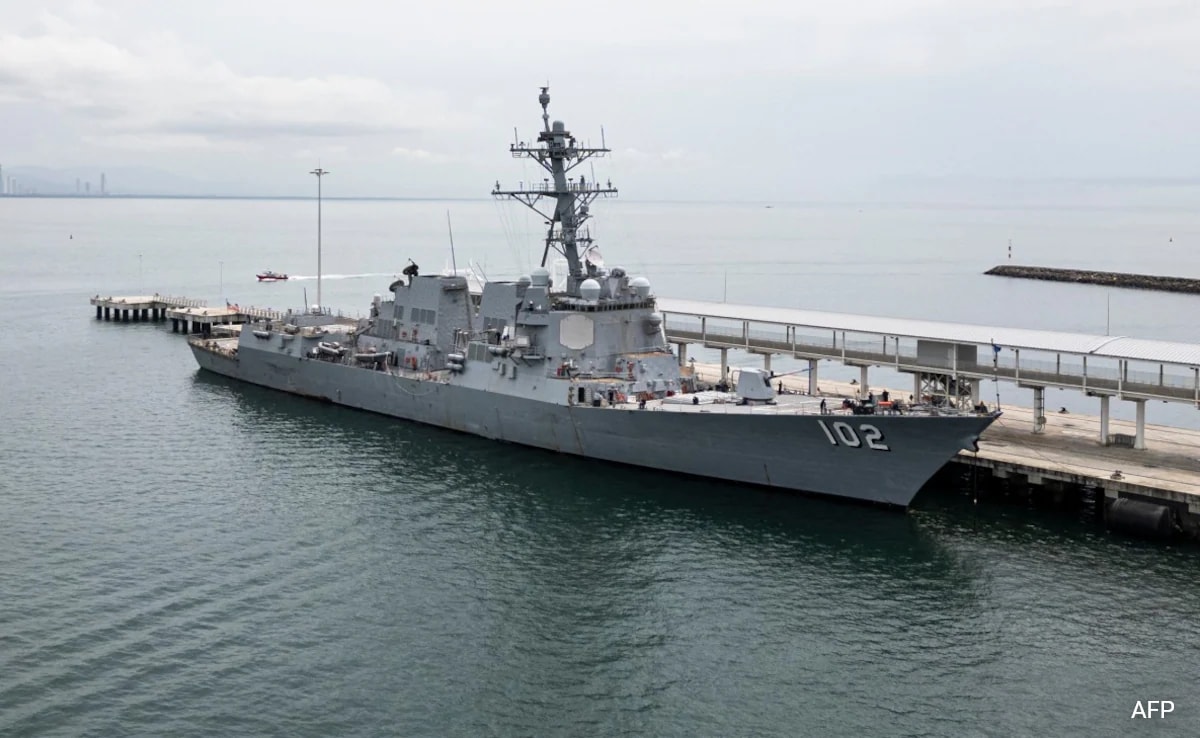
The United States is officially putting boots on the ground in Nigeria. This isn't a massive invasion or a shift into a full-scale war, but the deployment of 200 elite troops marks a major change in how Washington handles West African instability. If you've been following the rise of insurgent groups across the Sahel, you know the situation has been sliding toward chaos for years. Now, the Pentagon is stepping in with a specialized force to help the Nigerian military get a handle on a conflict that’s starting to bleed across borders.
It's a calculated move. For a long time, the US preferred to stay at arm's length, providing "over the horizon" support or drone surveillance from distant bases. That clearly didn't work. Nigeria, the continent's most populous nation and its largest economy, is currently grappling with a multi-headed hydra of violence. You have Boko Haram in the northeast, various factions of the Islamic State West Africa Province (ISWAP) gaining ground, and "bandits" in the northwest who are increasingly looking and acting like organized terrorists. Read more on a connected issue: this related article.
The mission behind the 200 troop deployment
The primary goal for these 200 soldiers isn't to lead the charge into the Sambisa Forest. Instead, they’re there to provide high-level intelligence, surveillance, and tactical training. Think of them as the technical backbone for Nigerian operations. They’ll be working out of a secure coordination center, likely near Abuja or Maiduguri, focusing on "train and equip" programs that have been stalled or underfunded in previous years.
Nigeria's military is large, but it’s stretched thin. It’s fighting on too many fronts at once. By sending specialized personnel, the US aims to fix the massive gap in real-time intelligence. In many of these skirmishes, Nigerian troops are essentially flying blind. They lack the sophisticated signal intelligence (SIGINT) and night-vision capabilities that Western forces take for granted. This deployment is designed to bridge that gap so the Nigerian Army can actually find the enemy before they're ambushed. Additional reporting by USA Today explores similar views on the subject.
Why West Africa is becoming the new global center for terror
You might wonder why the US cares so much about a conflict thousands of miles away. The reality is that the center of gravity for global jihadist movements has shifted. While the world was focused on the Middle East, West Africa became the most active theater for extremist groups.
Data from the Global Terrorism Index consistently shows that the Sahel region now accounts for more terrorism-related deaths than any other part of the world. Groups like ISWAP aren't just local gangs anymore; they’re sophisticated franchises of global networks. They control territory, they tax local populations, and they've started to coordinate with groups in Mali, Burkina Faso, and Niger. If Nigeria collapses or becomes a failed state, the entire Atlantic coast of Africa is at risk. That's a nightmare scenario for global trade and regional security.
The Leahy Law and the friction of cooperation
It hasn't been an easy partnership. For years, the US restricted military aid to Nigeria because of the Leahy Law. This law prohibits the US from providing equipment or training to foreign military units that have committed "gross violations of human rights." The Nigerian military has a messy record. There have been credible reports of extrajudicial killings and the accidental bombing of refugee camps.
However, the tide has turned. The US government seems to have decided that the risk of a regional terrorist caliphate outweighs the concerns about the Nigerian military’s internal issues. We saw this shift start with the sale of A-29 Super Tucano aircraft, and this 200-troop deployment is the logical next step. It’s a sign that the Biden administration—and the Pentagon leadership—believes engagement is better than isolation if they want to influence how the Nigerian military behaves on the battlefield.
Breaking down the specific threats on the ground
To understand what these 200 troops are up against, you have to look at the players. This isn't a single enemy.
- ISWAP (Islamic State West Africa Province): This is the most dangerous group. They’re disciplined and have a "hearts and minds" strategy that makes them harder to root out. They provide basic services in the areas they control, which wins over locals who feel abandoned by the government.
- Boko Haram: They’re more fractured now, but still incredibly violent. Their focus is often on high-profile kidnappings and suicide bombings in crowded markets.
- Armed Bandits: In the northwest, these groups are technically "criminals," but the line between crime and terror is vanishing. They’ve started using heavy weaponry and have kidnapped hundreds of school children for ransom, sometimes collaborating with ISWAP for logistics.
The US troops will likely spend a lot of time on "counter-IED" training. Roadside bombs have become a favorite tool for these insurgents, and the Nigerian military's lack of specialized mine-resistant vehicles (MRAPs) and detection equipment has led to staggering casualties.
What this means for the average Nigerian
Most Nigerians I’ve spoken with have a complicated view of this. On one hand, there’s a desperate need for security. You can't farm, you can't go to school, and you can't travel between cities without fear of being snatched off the road. The arrival of American expertise is seen by many as a long-overdue lifeline.
On the other hand, there’s a strong sense of national pride and a wariness of foreign intervention. Nobody wants their country to become a permanent battlefield for a US-led "War on Terror." There’s a fear that a US presence will only draw more foreign fighters to the region, turning Nigeria into a magnet for extremists who want to "strike the Great Satan." It’s a delicate balance that the Nigerian government has to walk to keep the public on its side.
The logistics of a small footprint
Two hundred people doesn't sound like a lot in a country of 220 million. But in the world of special operations, 200 is a significant number. These aren't just infantrymen; they’re communication experts, drone pilots, medical officers, and logistics specialists.
Their presence allows the US to maintain a "light footprint." This is the preferred model for modern US interventions. Instead of 10,000 soldiers patrolling streets, you send 200 experts who act as a force multiplier. They make the existing 10,000 Nigerian soldiers twice as effective by giving them better data and better tactics.
Real talk on the risks involved
Let's be blunt. This mission is dangerous. We saw what happened in Tongo Tongo, Niger, back in 2017 when a small US team was ambushed. Four American soldiers died. When you put troops on the ground, even in an "advisory" role, the risk of "mission creep" is real. What happens if a US unit gets pinned down during a training exercise? The US will send in a Quick Reaction Force (QRF), and suddenly, you're in a direct firefight.
The Pentagon is trying to avoid that. They're keeping these 200 troops away from the front lines as much as possible. But in a place like Borno State, the "front line" is everywhere. There is no safe zone.
Identifying the signs of success
How will we know if this deployment actually worked? Don't look for a "Mission Accomplished" banner. Look for these specific indicators over the next 12 months:
- A reduction in highway kidnappings: This would show that intelligence-sharing is helping the military secure transit corridors.
- Higher recovery rates for seized territory: If the Nigerian Army can hold towns after they clear them, it means the tactical training is sticking.
- Fewer "blue on blue" or civilian casualty incidents: Better targeting and surveillance should, in theory, lead to more precise strikes.
If the violence continues to climb and groups like ISWAP keep expanding their "taxation" zones, then 200 troops weren't enough—or the problem is too deep for military help alone to solve.
The Nigerian government needs to match this military boost with serious political reform. You can't kill your way out of an insurgency that is fueled by poverty and government neglect. The US troops can fix the tactical problems, but they can't fix the corruption in Abuja or the lack of jobs in the north.
Keep an eye on the official reports coming out of the US Africa Command (AFRICOM). They’ll likely be vague, but the level of cooperation between the two militaries will be the real story. If you’re invested in global security or the future of the African continent, this is the most important development of the year.
If you're looking to track this situation, follow the conflict maps provided by the Council on Foreign Relations (CFR) or the International Crisis Group. They provide the most objective data on troop movements and casualty counts in the region. Monitor the local Nigerian press like Premium Times or The Punch for the ground-level perspective that Western media often misses. This isn't just a headline about 200 soldiers; it's a pivot point for the security of the most important nation in Africa.


