The long-simmering "shadow war" just blew wide open. On February 28, 2026, the Middle East woke up to a reality many feared but few expected to see so soon: a coordinated, full-scale military offensive by the United States and Israel against the Iranian regime. This wasn't just another surgical strike on a proxy base in Syria or a digital hiccup in a nuclear facility. This was Operation Epic Fury (US) and Operation Roaring Lion (Israel). It changed everything.
If you're looking for the "why" behind the smoke rising over Tehran, it's not just about one missile or one threat. It's the culmination of a collapse in diplomacy that started back in early 2025. After Iran hit 60% uranium enrichment and kicked out international inspectors, the clock started ticking. Washington and Jerusalem finally decided they weren't going to wait for a nuclear-armed Tehran to become a "fait accompli."
The Morning Tehran Went Dark
The strikes began around 9:45 a.m. local time. That’s a Saturday in Iran—the start of the work week. Most military planners prefer the cover of night, but the IDF and CENTCOM went for a "dawn raid" strategy to catch the regime’s leadership while they were moving between secure locations.
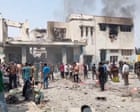
Reports and social media footage from the ground show a terrifying scene. In Tehran’s Pasteur district—home to the Presidential Palace and the Supreme National Security Council—at least seven major missile impacts were confirmed. Imagine the heart of a capital city being hit by precision-guided munitions in broad daylight. The message wasn't just "we can hit your factories"; it was "we know where you sit."
- Total Targets: Over 500 military sites across western and central Iran.
- Air Power: Israel sent roughly 200 fighter jets, the largest sortie in the IAF's history.
- US Muscle: B-2 stealth bombers targeted the most "hardened" sites, like the underground facilities at Fordow.
- Tech Firsts: The US Army reportedly used "Task Force Scorpion Strike" drones—low-cost, one-way attack bots—for the first time in a major conflict.
Khamenei and the Death of the Old Guard
The biggest bombshell isn't the destroyed radar or the smoking missile silos. It’s the confirmed death of Supreme Leader Ayatollah Ali Khamenei. For decades, Khamenei was the untouchable architect of the "Axis of Resistance." His compound in Tehran is now a pile of rubble and twisted rebar.
While the US and Israel haven't officially labeled this "regime change," the rhetoric tells a different story. President Donald Trump didn't mince words, calling on the Iranian people to "take over your government" and declaring that "the hour of your freedom is at hand." Prime Minister Netanyahu echoed this, framing the strikes as creating the "conditions" for Iranians to reclaim their country.
But don't think for a second this is a clean break. When a vacuum forms in a place like Iran, the IRGC (Islamic Revolutionary Guard Corps) usually tries to fill it with more violence, not less.
How the Region is Recoiling
The "photos and videos" you’re seeing online aren't just from Iran. The retaliation was instant and messy. Iran launched roughly 170 ballistic missiles at Israeli cities and US bases across the Gulf.
It’s a grim map right now.
- Israel: Eleven people confirmed dead as of this morning. Hospitals have moved their entire operations into underground bunkers.
- The Gulf: This is where it gets complicated. Iran didn't just target the "big enemies." They hit Kuwait, Qatar, the UAE, Bahrain, and Saudi Arabia.
- The Human Cost: In Abu Dhabi, a civilian died from shrapnel. In Dubai, a strike near the Palm Hotel injured four tourists.
The Arab world is in an impossible spot. Countries like Jordan and Bahrain are condemning the Iranian aggression as a "flagrant violation of sovereignty," yet they’re also terrified of being dragged into a permanent war. The Strait of Hormuz—the world’s most vital oil artery—is effectively closed. The IRGC has declared that traffic through the lane is "not allowed." If that holds, you're going to feel the price of this war at the gas pump by next Tuesday.
What Most People Get Wrong About This Attack
You’ll hear talking heads say this was a "surprise" move. Honestly? It wasn't. The groundwork was laid in June 2025 during a smaller 12-day skirmish. That conflict stripped away about half of Iran’s surface-to-surface missile launchers and left their air defenses looking like Swiss cheese.
As former Iranian President Hassan Rouhani reportedly said late last year, the skies over Iran had become "completely safe for the enemy." The US and Israel knew the door was open. They just waited for the right political window to kick it down.
Another misconception is that this "solves" the nuclear problem. While sites like Natanz and Isfahan are likely "largely destroyed," there's a new facility called "Pickaxe Mountain" buried so deep that even the biggest US bunker-busters might have missed the core labs. This war isn't over; it's just moving to a different phase.
What to Watch in the Next 48 Hours
The situation is moving faster than the news cycle can keep up with. You need to keep an eye on three specific things that will determine if this turns into World War III or stays a regional "decapitation" strike.
First, watch the IRGC’s "succession" plan. With Khamenei gone, does a hardline general take the reigns, or does the military crumble? Second, look at Hezbollah in Lebanon. They’ve declared "solidarity" but haven't launched a full-scale invasion of northern Israel yet. If they jump in, the body count on both sides will quadruple. Third, watch the oil markets. If the Strait of Hormuz stays closed for more than a week, global economic stability goes out the window.
Stay away from unverified Telegram clips. Most of the "explosions" being shared right now are actually old footage from the 2024 strikes or even the 2023 Gaza war. Look for satellite imagery from firms like Maxar or Planet Labs; they’re the only ones who can actually see through the regime’s media blackout.
Verify your sources. Check the official CENTCOM and IDF feeds for operational updates. If you're in the region, follow the local civil defense instructions immediately. This isn't a drill.