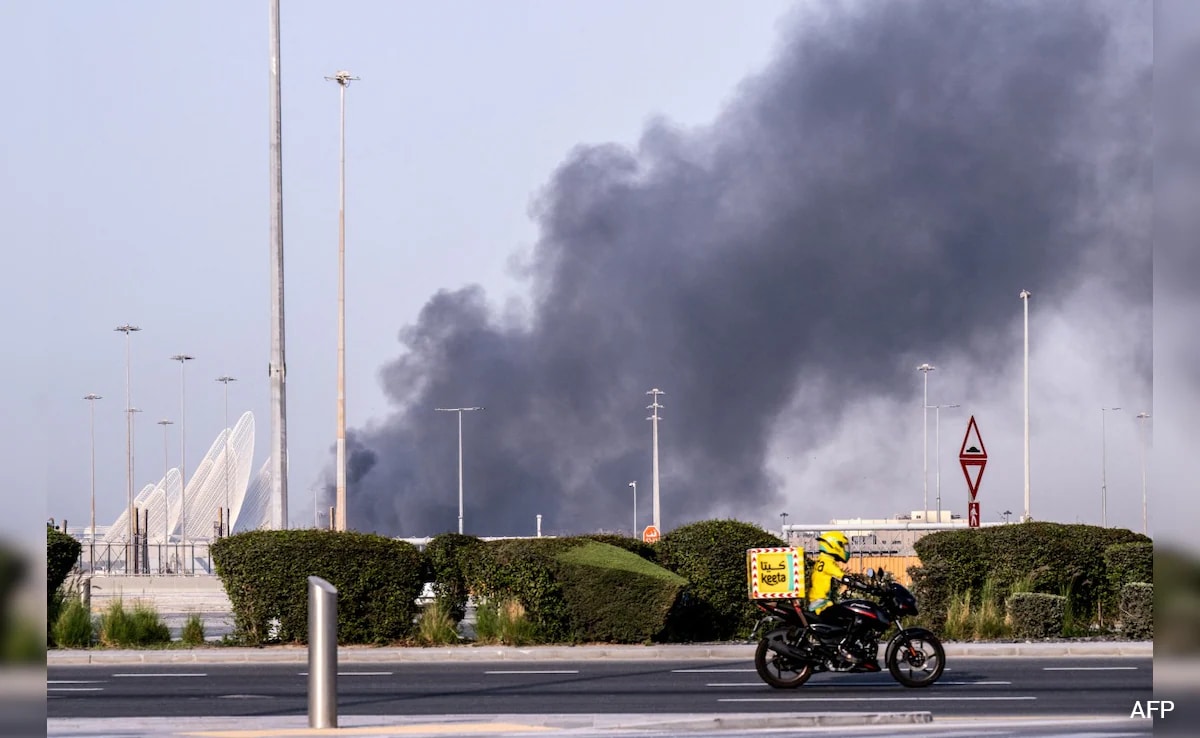
The ice in a cocktail glass clinks with a rhythmic, crystal clarity against the backdrop of a sunset that looks like spilled gold. High above the 44th floor of a Dubai Marina skyscraper, the air is thick with the scent of expensive oud and the low hum of five different languages blending into a single, cohesive murmur of relaxation. Somewhere across the water, the headlines are screaming. There are maps with red arrows, frantic pundits discussing regional "flashpoints," and a digital tide of anxiety rising in the palm of every hand holding a smartphone.
But here? Here, the only thing rising is the tide of the Arabian Gulf.
To the outside world, the Middle East is often painted as a monolith of instability, a single block of sand and tension. Yet, for the millions of travelers currently moving through the United Arab Emirates, there is a profound, almost defiant sense of normalcy. It isn't a head-in-the-sand ignorance. It is something much more calculated and, in many ways, more impressive. It is the architecture of peace in a restless neighborhood.
Consider Sarah. She is a hypothetical but highly representative composite of the modern traveler—a marketing executive from London who spent six months saving for a ten-day escape with her family. When she saw the news alerts on her phone at Heathrow, she felt that familiar, cold prickle of doubt. Should she cancel? Is it worth the risk?
Now, she is sitting on a white-sand beach on Saadiyat Island, watching her daughter build a sandcastle. The fear she felt in London has evaporated, replaced by the sheer, tangible weight of safety. "You look around," she might say, "and you realize the distance between the headlines and the reality is an ocean wide."
The Infrastructure of Certainty
The UAE has mastered a specific type of alchemy: the ability to turn a volatile geographical position into a global sanctuary. This isn't an accident of history. It is the result of decades spent building a brand that is synonymous with the word safe.
For a tourist, safety isn't just about the absence of conflict. It’s about the presence of order. It’s the way the taxis are clean and regulated. It’s the way you can leave a laptop on a cafe table and find it there twenty minutes later. When a country spends billions ensuring that its internal clockwork runs with Swiss precision, it builds a psychological fortress that regional geopolitical tremors find hard to crack.
Statistically, the numbers back up this atmosphere of calm. Dubai International Airport (DXB) continues to see record-breaking footfall, with passenger numbers often exceeding pre-pandemic peaks. People aren't just coming; they are staying longer. They are investing. They are treating the city not as a gateway to a troubled region, but as an island of extreme stability.
The Weight of the Invisible
There is a hidden cost to this calm, of course. It requires a massive, silent effort in diplomacy and defense that the average tourist never sees. While visitors are busy marveling at the Museum of the Future or skiing on indoor slopes while it’s 40°C outside, a sophisticated apparatus is working around the clock to ensure the borders remain permeable to trade and tourism but impenetrable to chaos.
This creates a strange, dual reality. On one hand, you have the digital world—Twitter, news cycles, and diplomatic warnings. On the other, you have the physical world—the brunch crowds in Jumeirah, the bustling souks of Sharjah, and the quiet luxury of the desert resorts in Ras Al Khaimah.
The gap between these two realities is where the modern traveler lives.
"We stopped checking the news after day two," says another traveler, perhaps a young backpacker from Melbourne or a retiree from Berlin. "Back home, everyone was worried for us. But once you’re here, you realize that life doesn’t stop. The coffee is still hot. The malls are still full. The planes are still landing every minute."
Why We Stay
Why do we choose to remain in places that the world says are on the edge?
Perhaps it’s because we’ve learned that the "edge" is often a digital construct. In the 21st century, every part of the globe has its own version of a crisis. From wildfire seasons in California to political protests in Paris, the idea of an absolute, static "safe zone" is a relic of the past.
For the people on the ground in the UAE, the calmness isn’t a mask. It’s an assertion. It’s a way of saying that even in the face of uncertainty, we can build a world where the only thing you have to worry about is whether your SPF is high enough.
The sun begins to set over the Burj Khalifa. A thousand fountains begin their dance in sync with a sweeping orchestral score. The tourists, from every corner of the planet, don't look like they are bracing for impact. They are leaning in, their faces illuminated by the soft glow of a thousand smartphone screens, recording not a crisis, but a sunset.
They are here. They are safe. They are at peace.
One day, the headlines will change. The maps will be redrawn. But for now, the only thing that matters is the way the light catches the top of the world’s tallest building, a silver needle sewing together the sky and the sea.