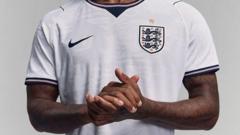
The £123 price tag for a children’s England football kit is not an anomaly of "greed" but the logical output of a high-moat, vertically integrated supply chain meeting inelastic demand. When a standard polyester garment—traditionally a low-margin commodity—scales to a triple-digit price point for a youth demographic, it signals a shift from utility-based pricing to rent-seeking on intellectual property. Understanding this pricing architecture requires deconstructing the three layers of the football apparel value chain: the licensing premium, the technical tiering strategy, and the psychological lock-in of the "tournament cycle" window.
The Triple-Layer Cost Architecture
To evaluate if prices have "gone too far," one must first isolate the manufacturing cost from the brand equity tax. The physical production of a football shirt, often utilizing recycled polyester (rPET) in Southeast Asian manufacturing hubs, represents a fraction of the retail price. The escalation occurs through specific value-add layers that the consumer is forced to subsidize.
- The Licensing Rent: The Football Association (FA) and Nike operate under a long-term technical partnership. Nike pays a significant annual sum—reported at approximately £33.4 million per year—for the exclusive right to produce this apparel. To maintain margins, Nike must amortize this fixed cost across its sales volume. The consumer is not just buying a shirt; they are paying a pro-rata share of the FA’s sponsorship revenue.
- Tiered Technical Obsolescence: Manufacturers have successfully bifurcated the market into "Stadium" (replica) and "Authentic" (player-issue) versions. By introducing high-end technical features into the authentic kit—such as advanced moisture-wicking knits or heat-pressed crests—they create a "prestige floor" for the cheaper replica version. Even though the child’s kit is a replica, its price is anchored against the £125+ adult "Pro" shirts, making £60-£70 for a single jersey feel like a compromise rather than an extravagance.
- The Ecosystem Upsell: The £123 figure frequently cited includes the full "infant" or "junior" kit: shirt, shorts, and socks. This bundling strategy prevents the price-sensitive consumer from cherry-picking items. By selling the kit as a unified SKU (Stock Keeping Unit), retailers increase the Average Order Value (AOV) by forcing the purchase of high-margin accessories like socks, which carry negligible production costs but retail for £15–£20.
The Inelasticity of the Youth Segment
Standard economic theory suggests that as price rises, demand should fall. However, the England kit operates within a "Giffen-adjacent" psychological space during major tournaments. Parents are not purchasing a garment; they are purchasing participation in a synchronized national event.
The "Fear of Missing Out" (FOMO) creates a vertical demand curve. Because the kit changes every two years, the product has a built-in expiration date. This planned obsolescence ensures that the secondary market (hand-me-downs) is less viable for those wanting the "current" look, forcing a fresh primary-market purchase every 24 months. The social cost of a child wearing an "outdated" kit during a Euro or World Cup summer acts as a powerful non-monetary tax that drives parents toward the £123 transaction.
The Retail Margin Squeeze and the Direct-to-Consumer Shift
A significant portion of the price hike is a defensive maneuver against the crumbling margins of traditional high-street retail. In a traditional model, the brand (Nike) sells to a retailer (JD Sports or Sports Direct) at a wholesale price, usually 40-50% of the RRP. The retailer then applies a "keystone" markup to cover physical overheads.
As Nike shifts toward a Direct-to-Consumer (DTC) model, they are capturing the entire margin. However, instead of passing these savings to the fan, the brand maintains the high RRP to protect its premium positioning and to avoid undercutting its remaining retail partners. This creates a price floor that is artificially high, sustained by the lack of legitimate competition. You cannot buy a "generic" England kit that carries the official crest; the monopoly on the IP (Intellectual Property) ensures that there is no downward pressure on pricing from competitors.
Supply Chain Friction and "Greenwashing" Premiums
Recent kits have emphasized the use of "100% recycled polyester." While environmentally conscious, the integration of rPET into the supply chain introduces specific costs:
- Sourcing Complexity: Clean, high-grade plastic waste suitable for high-performance textiles is more expensive to process than virgin petroleum-based polyester.
- Compliance Audits: Maintaining the "sustainable" badge requires a more rigorous audit trail through the Tier 2 and Tier 3 suppliers, adding an administrative layer to the per-unit cost.
- The "Green Premium": Brands have identified that consumers are psychologically primed to accept higher prices if the product is framed as an ethical choice, even if the actual cost increase to the manufacturer is nominal.
The Failure of the "Value" Tier
Historically, there was a gap in the market for "takedown" versions—official but simplified kits at a lower price point. The industry has systematically eliminated these to prevent "brand dilution." By removing the budget option, brands force the entire consumer base into the premium tier.
This creates a barbell effect: the very wealthy buy the full kit without friction, while the lower-income brackets are forced into the "gray market" of counterfeit goods. The rise of "high-quality" fakes from overseas platforms is the direct market response to the £123 kit. When the price of an authentic kit exceeds the marginal utility of the "feeling of authenticity," the consumer shifts to the black market. The FA and Nike are currently testing the upper limit of this elasticity, betting that the emotional weight of the Three Lions crest will outweigh the logical rejection of the price point.
Strategic Recommendation for the Rational Consumer
The only mechanism to force a pricing correction is a collective refusal to participate in the "new-kit-every-cycle" cadence. From a strategic perspective, the "sweet spot" for acquisition is the 48-hour window following a team's exit from a major tournament, where inventory becomes a liability for retailers and clearance discounts of 50-70% are standard.
For the governing bodies, the current trajectory is high-risk. By pricing out the youth demographic, they are eroding the long-term "fan-equity" that sustains the sport. A child who does not wear the shirt is less likely to form the lifelong tribal attachment that drives future ticket sales and broadcasting revenue. The short-term gain of a £123 kit sale may result in a long-term loss of a lifelong consumer.
The logical play for the FA is the introduction of a "Legacy Kit"—a high-quality, non-branded, permanent England design that does not change every two years, sold at a fixed, accessible price. Until such a product exists, the market will continue to exploit the biennial tournament fever, treating the England kit not as sportswear, but as a high-frequency subscription service to national identity.
Investigate the secondary "deadstock" markets or wait for the post-tournament liquidation. The garment's value is highest the day before the first match and decays at a rate of roughly 1% per day until it hits a 50% terminal value upon the team's elimination. Purchasing at the peak of the hype cycle is a transfer of wealth from the fan to the shareholder with zero improvement in the product's functional utility.