The room smelled of floor wax and expectant silence. When Melania Trump walked into the technology center, the air shifted, as it usually does when a former First Lady enters a space designed for data and wires. She was there for an education and technology event, a standard entry in a public figure’s calendar. But she didn't come alone. Beside her, or rather, integrated into the very fabric of the presentation, was a humanoid robot.
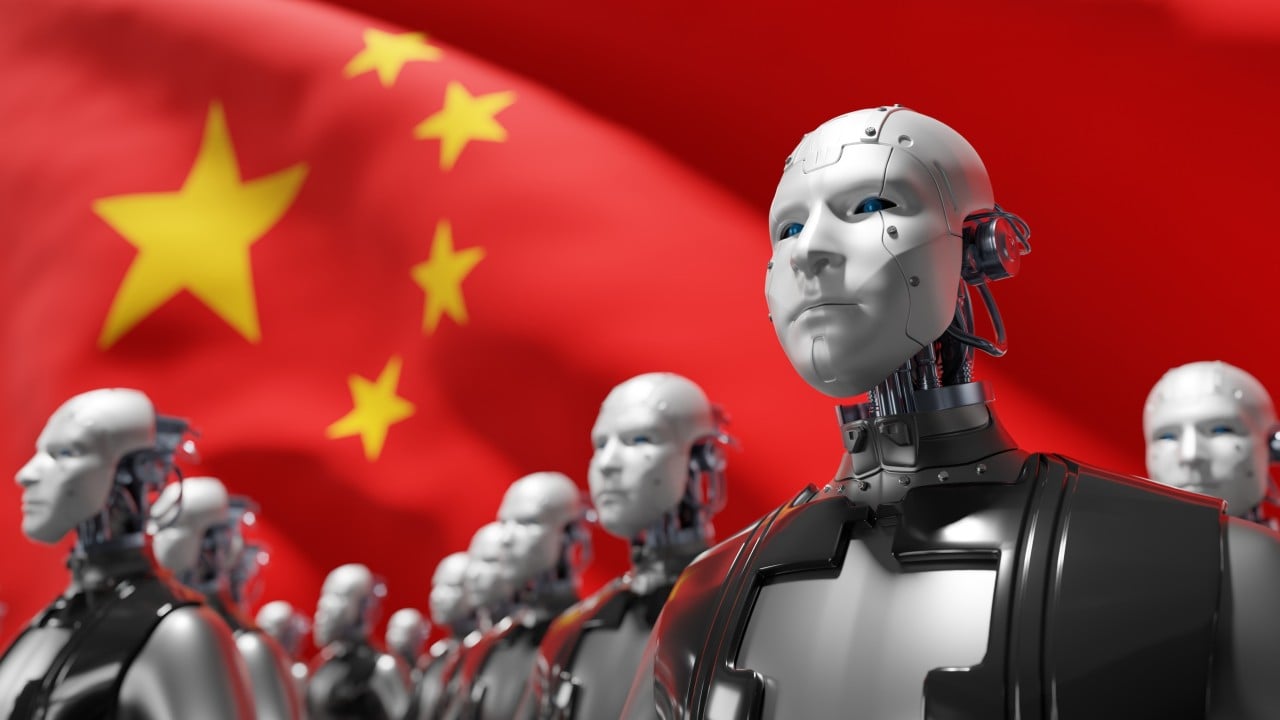
It stood as a silent sentry of the future. It didn't breathe. It didn't blink with the erratic, wet rhythm of a human eye. It simply existed, a collection of servos and sensors wrapped in a shell that looked just enough like us to be unsettling. This wasn't a vacuum cleaner with a voice or a screen on wheels. It was a mirror.
We have spent decades trying to build things that mimic our own image. We want the convenience of silicon with the warmth of a handshake. At this event, the intersection was stark. You had a woman known for her poise and a highly controlled public image standing next to a machine designed to be the ultimate controlled entity. The irony wasn't lost on the observers in the back of the room.
Education has always been the final frontier for these machines. We've accepted them in factories where they weld car frames with terrifying precision. We've accepted them in our pockets, where they sort our mail and tell us when it's going to rain. But the classroom? That is different. The classroom is a sanctuary of human development, a place where a teacher’s furrowed brow or a soft word of encouragement can change the trajectory of a life.
Imagine a student named Leo. Leo is ten. He struggles with the abstract nature of long division. In a traditional setting, he looks at his teacher, Mrs. Gable. He sees her fatigue. He sees the way she adjusts her glasses. He feels the social pressure of his peers. Now, replace Mrs. Gable with the humanoid standing next to Melania Trump.
The robot doesn't get tired. It doesn't have a "bad day" because its morning coffee was cold. It can explain the same mathematical principle 10,000 times without a hint of frustration in its synthesized voice. To a child who feels like a burden for not "getting it" fast enough, that mechanical patience is a miracle. It is a tool of radical accessibility. But as Leo looks into those optical sensors, does he feel seen? Or does he just feel processed?
Melania's presence at the event served to bridge this gap. By bringing a humanoid into the conversation of "Be Best" and educational initiatives, she signaled a shift in how the elite view the coming wave of automation. It wasn't just about coding or STEM. It was about companionship. It was about the integration of the artificial into the most sensitive parts of our social fabric.
The tech industry often talks about "frictionless" experiences. They want to remove the bumps and bruises of human interaction. A humanoid robot is the ultimate expression of that desire. It provides the appearance of a social bond without the messy reality of human needs. You don't have to worry about a robot's labor rights or its emotional burnout.
Yet, the stakes are invisible until they aren't.
During the demonstration, the robot moved its limbs with a fluid, calculated grace. It responded to prompts. it displayed information. It was impressive. It was efficient. It was also a reminder of what we are willing to outsource. When we put these machines in front of children, we aren't just giving them a high-tech tutor. We are teaching them that empathy is something that can be simulated. We are telling them that a response that looks like care is functionally the same as care itself.
There is a technical term for the revulsion some feel when looking at a robot that is "almost" human: the uncanny valley. It is that dip in our emotional response where something becomes so lifelike that its tiny, non-human errors make it seem like a moving corpse.
But there is a second, social uncanny valley we are entering. It’s the gap between our technological capability and our ethical readiness. We can build the robot. We can have a former First Lady endorse its role in education. We can even make it smile. What we haven't figured out is how to protect the human spirit from the vacuum of a mechanical childhood.
Melania Trump has often been criticized for a perceived coolness, a guarded nature that keeps the public at arm's length. In this setting, that quality made her the perfect foil for the machine. She stood there, a person who understands the power of the gaze and the weight of being watched, standing next to a device that watches everything but sees nothing.
The cameras clicked. The "Be Best" branding was visible. The message was clear: technology is a partner.
But a partner suggests an equal exchange. What does the robot get? Nothing. It processes. What does the student give? Everything. They give their attention, their data, and their developmental milestones to an algorithm.
Think of the way a mother looks at her child when they finally succeed at a difficult task. There is a physiological resonance there—a mirror neuron firestorm that bonds the two together. A humanoid robot can be programmed to tilt its head and play a "success" chime. It can even flash a green light. But the resonance is one-sided. The child is shouting into a well, and the well is echoing back exactly what the child wants to hear.
This isn't to say the technology is evil. It is inevitable. In rural areas where teachers are scarce, or for children with profound developmental disabilities who find human faces too overstimulating, these robots are lifelines. They are bridges to a world that would otherwise be closed off. The mistake we make is thinking the bridge is the destination.
The event in that polished technology center wasn't just a photo op. It was a soft launch for a new kind of existence. We are moving toward a world where the most privileged children will have human mentors, and the rest will have humanoid interfaces. The "human touch" will become a luxury good, a premium service for those who can afford the messy, expensive reality of a living person's time.
As the presentation ended, Melania Trump moved on to the next scheduled stop. The robot remained. It sat there, powered down or perhaps just in a standby loop, its sensors still humming quietly in the background. It didn't need a break. It didn't need to reflect on what had just happened.
We are the ones who have to do the reflecting. We are the ones who have to decide if a future where a child's first mentor is a plastic-and-metal facsimile of a person is a future we actually want to live in. We see the convenience. We see the "technology" and the "education" labels. But if you look closely at the space between the woman and the machine, you can see the ghost of something we’re losing.
It’s the silence after the chime. It’s the moment when the robot stops talking and the child realizes they are alone in the room with a very expensive piece of luggage. We are building the most sophisticated mirrors in history, and we shouldn't be surprised when we don't like the reflection.
The robot's eyes stayed open long after the humans left the room.