The red "On Air" light is a liar. It suggests a world of controlled timing, scripted transitions, and the polished certainty of a teleprompter. For years, Savannah Guthrie has been the person we look to when the world feels like it is spinning off its axis. She is the steady hand, the familiar voice, the one who asks the hard questions so we don't have to. But today, the most difficult question in the world is the one no one can answer.
Where is Nancy Guthrie?
It has been weeks since the 83-year-old matriarch vanished. In the clinical language of a police report, she is a "missing person." In the frantic, jagged reality of a daughter’s heart, she is a hole in the universe. We often think of grief as something that happens after a loss, a heavy stone you eventually learn to carry. But there is a different kind of pain that comes when the loss is incomplete. It is a haunting, a state of suspension where the mind becomes a torture chamber of "what ifs."
The Weight of the Unknown
Imagine waking up and reaching for your phone, expecting a mundane text about the weather or a grandson’s soccer game, only to remember that the person on the other end has drifted into a fog. Not the fog of memory, but a literal, physical absence.
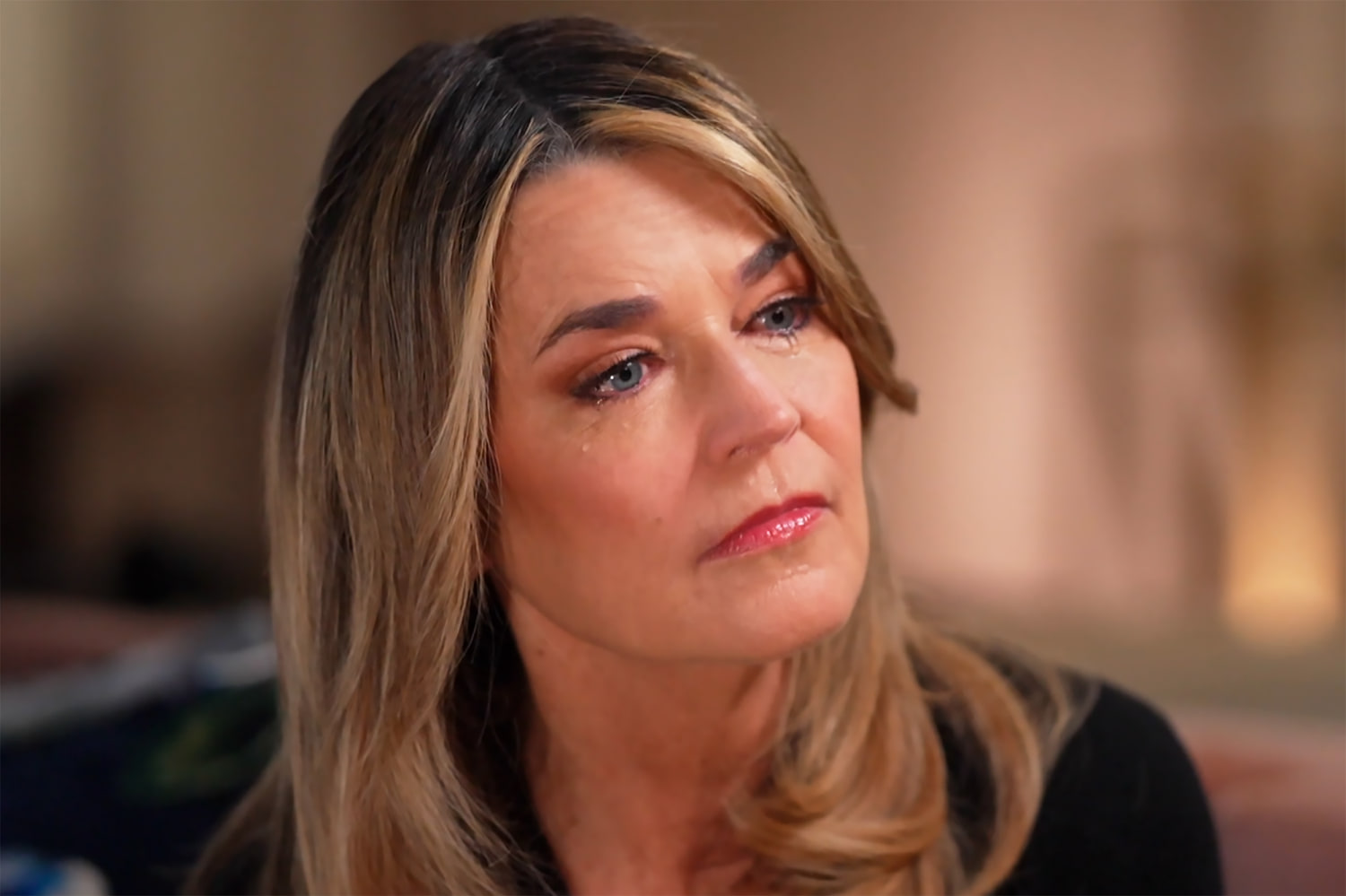
In her first interview since the nightmare began, Savannah didn't look like the titan of NBC. She looked like a woman who had forgotten how to sleep. She spoke of "agony," a word we use so often it has lost its teeth, until you see it etched into the corners of someone’s eyes. This isn't the sharp, clean break of a funeral. It is the slow, grinding attrition of a search that has no map.
The statistics of missing elderly individuals are staggering, yet they remain largely invisible until a name we recognize is attached to them. Every year, thousands of families enter this particular purgatory. According to the National Missing and Unidentified Persons System (NamUs), there are over 600,000 missing person cases reported annually in the United States. While many are resolved quickly, a significant portion involve older adults with cognitive decline or sudden medical emergencies.
But a statistic cannot describe the way a house feels when it is suddenly too quiet. It cannot capture the visceral reflex of looking at a front door, waiting for a key to turn that you know, logically, isn't coming.
The Invisible Stakes of Celebrity
There is a cruel irony in being a public figure during a private catastrophe. The very platform Savannah uses to help others now acts as a megaphone for her own desperation. She has spent her career navigating the "invisible stakes" of global politics and breaking news. Now, the stakes are local. They are as small as a pair of glasses left on a nightstand or a favorite sweater hanging in a closet.
We tend to view celebrities as being insulated from the raw, jagged edges of human suffering. We think their resources create a buffer. But money cannot buy a trail where there is none. Fame cannot make a scent last longer for a search dog. In the face of a missing loved one, the anchor of the Today show is no different than the waitress in a small town or the mechanic in the city. They are all just children looking for their parents.
Consider a hypothetical scenario, one that plays out in the minds of family members in this situation every hour. You see a woman in a beige coat at a gas station. Your heart leaps. The silhouette is right. The tilt of the head is identical. You run toward her, your breath catching in your throat, only for her to turn around and reveal a stranger’s face. That micro-second of hope followed by the crash of reality is a physical blow. Savannah is living that cycle in front of millions.
The Anatomy of Agony
The word "agony" comes from the Greek agonia, referring to a struggle or a contest. This is a contest against time, against the elements, and against the fading trail of clues.
When a person disappears, the family's world shrinks to the size of a search grid. Every creek, every wooded lot, every abandoned shed becomes a potential answer and a potential horror. There is a psychological phenomenon known as ambiguous loss. It occurs when a loved one is physically absent but psychologically present, or vice versa. It is widely considered the most stressful type of loss because it defies resolution. It freezes the grieving process. You cannot move forward because there is no finish line. You cannot look back because you are still waiting.
Savannah described her family as being "in the thick of it." That phrase suggests a dense forest, a place where you can’t see more than two feet in front of you. In this thicket, the routine of daily life feels like an insult. How do you go to work? How do you eat a meal when you don't know if your mother is hungry? How do you tuck your children into bed when the woman who tucked you in is somewhere in the dark?
The Strength in Vulnerability
There is a specific kind of bravery required to stand before a camera and admit that you are broken. In a culture that demands constant "resilience" and "moving on," Savannah’s raw honesty is a radical act. She isn't offering a polished narrative of hope. She is offering the truth of the struggle.
This transparency does something vital: it creates a bridge. By sharing her family’s private hell, she validates the experiences of every other family currently staring at an empty chair. She demotes the "perfect" persona of a news anchor and replaces it with the messy, weeping reality of a daughter.
It is a reminder that behind every headline is a human pulse. Behind every news cycle is a family trying to hold it together. The search for Nancy Guthrie isn't just a story about a missing woman; it is a story about the tether that connects us to our origins. It is about the terrifying fragility of the lives we build and the desperate, beautiful love that refuses to give up, even when the trail goes cold.
The silence is loud. It fills the rooms of the Guthrie home. It echoes in the pauses between Savannah’s words. But in that silence, there is also a fierce, quiet resolve. The "On Air" light will continue to glow, and the news will continue to break, but the real story is happening in the quiet moments between the broadcasts. It’s in the whispered prayers, the endless phone calls to investigators, and the stubborn, defiant act of keeping the porch light on.
The chair is empty, but the space it occupies is still full of a mother’s presence. And as long as that space is held, the story isn't over. It is merely waiting for the final chapter to be written.
Would you like me to look for any updates on the search efforts or provide resources for families dealing with a missing loved one?