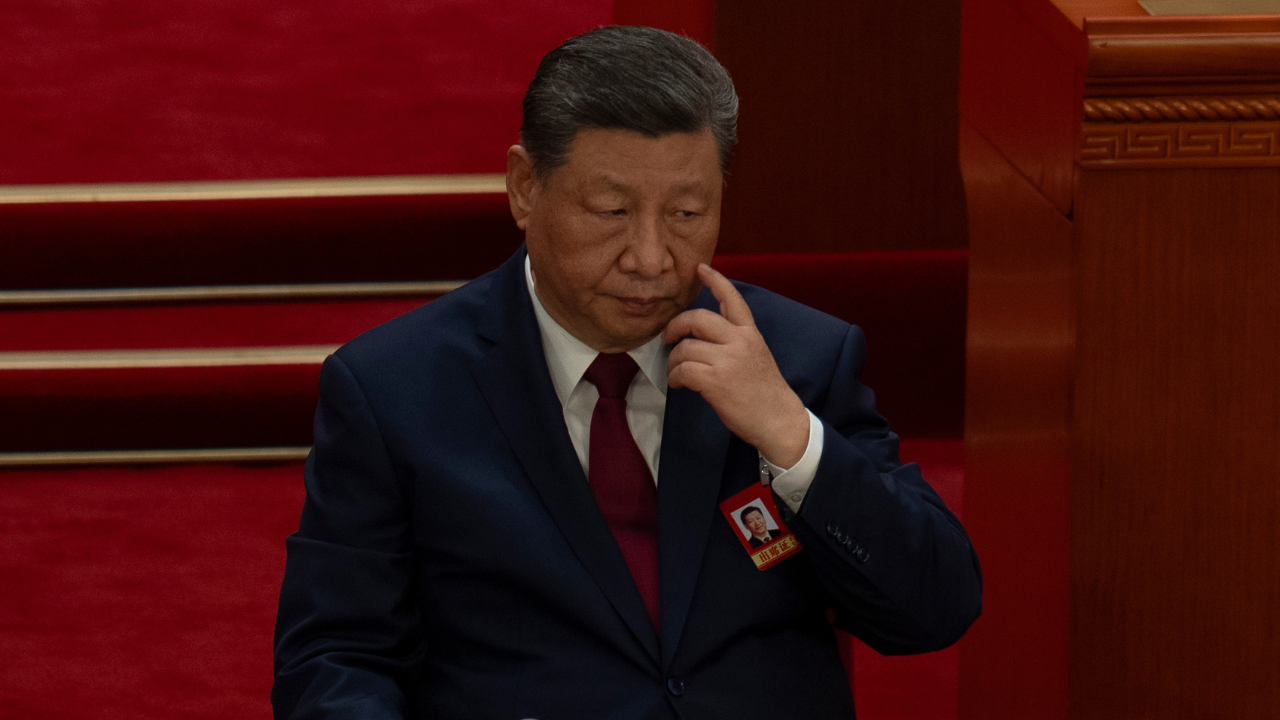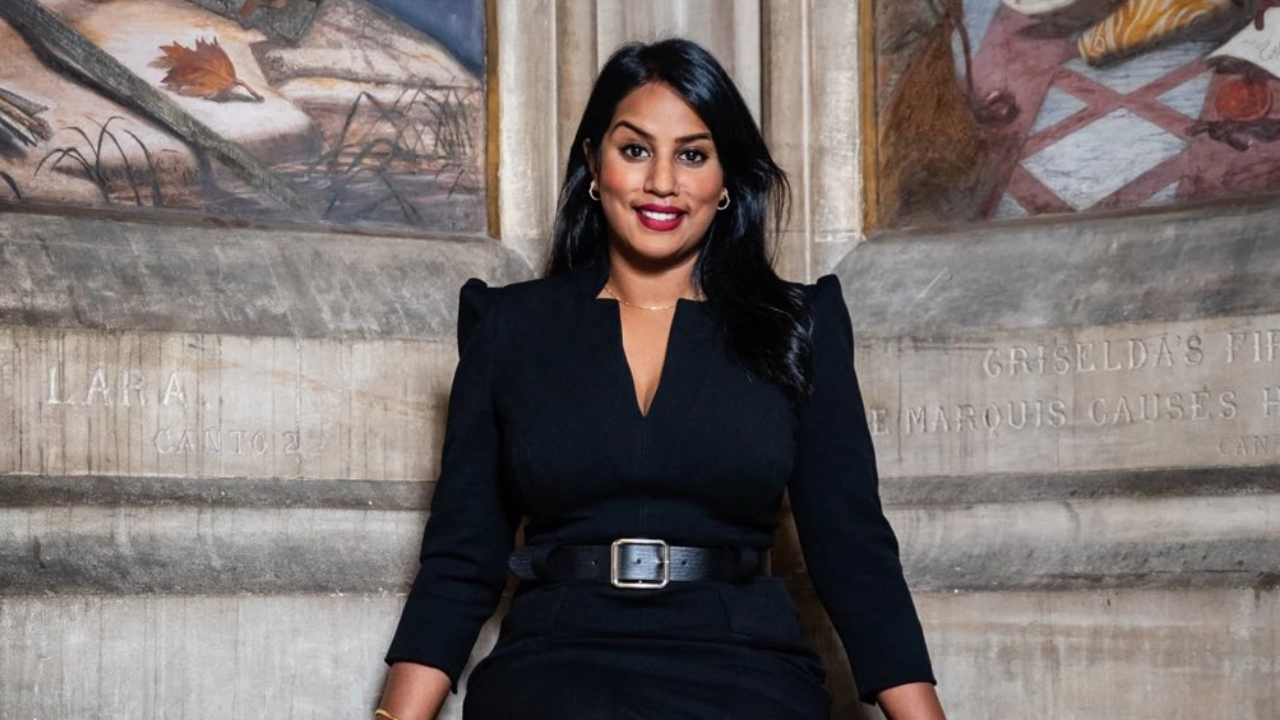
The confrontation between Stratford and Bow MP Uma Kumaran and Conservative frontbencher Nick Timothy is more than a fleeting social media spat. It represents a fundamental fracture in how the British political class handles faith, public space, and the boundaries of integration. When Kumaran accused Timothy of "blatant Islamophobia" following his criticism of an open iftar event at a football stadium, she wasn't just defending a constituent event. She was drawing a line in the sand against a specific brand of post-liberal Conservatism that views public displays of Islamic faith as a threat to national cohesion.
This clash centers on an Open Iftar held at West Ham United’s London Stadium. Nick Timothy, the former Downing Street chief of staff and current MP for West Suffolk, took to social media to question why a secular sporting venue was being used for a religious meal. His suggestion that such events are divisive triggered an immediate and fierce rebuttal from Kumaran. The fallout has forced a re-examination of what it means to be a "representative" in a modern, multi-ethnic Britain, and whether the charge of Islamophobia is being used as a shield or a necessary sword.
The Architect of the Friction
To understand why Kumaran’s response was so sharp, one must understand Nick Timothy. He is not a backbench firebrand shouting from the sidelines. He is a primary intellectual architect of the modern Conservative right. His worldview is rooted in "Erastianism"—the idea that the state should have primacy over religious institutions—and a firm belief that multiculturalism has failed by allowing "parallel lives" to flourish.
When Timothy looked at the West Ham iftar, he didn't see a community gathering. He saw a manifestation of communalism. To him, the integration of religious ritual into the infrastructure of national pastimes, like football, feels like an encroachment. His critique wasn't about the food or the timing; it was about the visibility. By questioning the appropriateness of the venue, he signaled that certain identities should remain private or confined to traditional places of worship.
This is where the friction turns into a firestorm. For Kumaran, whose constituency is one of the most diverse in the United Kingdom, the idea that a community cannot share its traditions in a shared public space is anathema to the very concept of her borough.
Who is Uma Kumaran
Uma Kumaran did not arrive at this moment by accident. As the first MP of Tamil heritage, her political identity is forged in the crucible of migration, labor rights, and local government. Before entering Parliament, she served as a caseworker and a local government professional, gaining a granular understanding of how policy affects the doorstep.
She represents a new guard of Labour MPs who are less interested in the abstract theories of multiculturalism and more focused on the lived reality of their voters. For Kumaran, an iftar at a football stadium is a sign of success. It shows that a global sport like football can act as a bridge for a community that often feels marginalized. Her swift condemnation of Timothy’s remarks was a signal to her constituents: their presence in the public square is non-negotiable.
However, the "Islamophobia" label carries immense weight. By deploying it so readily, Kumaran has stepped into a broader debate about the definition of the term. Critics of the All-Party Parliamentary Group (APPG) definition of Islamophobia argue it is too broad and can stifle legitimate criticism of religious practice. Kumaran’s supporters argue that Timothy’s specific focus on a Muslim event—while remaining silent on Christian or secular celebrations in similar venues—is proof of a double standard that targets one specific faith group.
The Stadium as a Battleground
Football stadiums in the UK have historically been sites of both intense community pride and horrific exclusion. For decades, they were the breeding grounds for far-right recruitment. The transition of these spaces into venues that host iftars, Hanukkah lightings, or Diwali celebrations is a deliberate attempt by clubs to shed that legacy.
West Ham United, a club with deep roots in the East End, has been at the forefront of this. When Nick Timothy challenged the iftar, he wasn't just challenging a religious group; he was challenging the commercial and social strategy of one of the country's biggest sporting institutions.
The Dynamics of Modern Political Outrage
The speed at which this story moved highlights a shift in political communication.
- The Original Post: Timothy’s critique was framed as a concern for social cohesion.
- The Rebuttal: Kumaran’s response was framed as a defense of local dignity.
- The Amplification: Within hours, the debate had moved from a local event to a national referendum on "British values."
There is a cynical view that both parties benefit from this conflict. For Timothy, it reinforces his credentials as a "truth-teller" on the risks of tribalism to his base. For Kumaran, it solidifies her position as a champion for minority rights and a fighter against "Tory exceptionalism." But the cost of this tactical maneuvering is a further degradation of the middle ground.
The Missing Context of Integration
Lost in the noise of the "Islamophobia" charge is the actual data on integration. Various studies, including those by the Social Integration Commission, suggest that shared experiences in neutral spaces—like football stadiums—are the most effective way to break down barriers. If the goal is truly to prevent "parallel lives," then inviting the wider community to witness and participate in an iftar is exactly what the social engineers should be encouraging.
Timothy’s argument rests on the idea that these events are exclusionary. In reality, open iftars are designed to be the opposite. They are frequently attended by non-Muslims, local politicians, and curious passers-by. By framing the event as a "demand" for special treatment, the critique misses the "open" part of the Open Iftar.
A Testing Ground for the Labour Government
This incident serves as a bellwether for how the Labour government will handle the "culture wars." Under Keir Starmer, the party has tried to distance itself from identity politics, focusing instead on "bread and butter" economic issues. Yet, when an MP like Kumaran is faced with what she perceives as a direct attack on her community's right to exist in public, she cannot remain silent.
The government’s official stance on Islamophobia remains a point of contention. While Labour has historically been more willing to adopt the APPG definition than the Conservatives, there is a lingering fear that doing so will open them up to accusations of restricting free speech. Kumaran’s intervention forces the party’s hand. It demands a clear answer: is questioning the location of a religious event a valid political opinion, or is it a dog-whistle intended to alienate?
The Geopolitics of the East End
One cannot ignore the geography. Stratford and Bow is an area defined by rapid change. From the Olympic legacy to the gentrification of Hackney Wick, the physical and social landscape is in constant flux. In this environment, symbols matter.
The West Ham stadium sits at the heart of this. It is a symbol of the "New East End." To the long-standing Muslim community in Newham and Tower Hamlets, being invited into that stadium is a mark of belonging. When a politician from a safe seat in Suffolk tells them that their presence there is a problem, it doesn't sound like an intellectual argument about secularism. It sounds like a rejection.
The Argument for Neutrality
To be fair to the counter-argument, there is a segment of the British public that feels the "secular square" is being eroded. This group argues that if we allow an iftar in a stadium, we must allow every religious or political group the same access. They fear a "balkanization" of public life where every event is categorized by faith or ethnicity rather than a shared national identity.
However, this argument often falls apart under the weight of historical precedent. British public life is deeply intertwined with religious tradition, from the King's coronation to the presence of Bishops in the House of Lords. Singling out a community meal as the breaking point for secularism feels, to many, like a selective application of principle.
Redefining the Threshold
The Kumaran-Timothy clash has moved the needle on what is considered "acceptable" political discourse regarding faith. For years, the Conservative party has struggled with its "Muslim problem," leading to the Singh Investigation which found evidence of "anti-Muslim sentiment" but stopped short of calling it institutional.
Kumaran is betting that the public mood has shifted. She is gambling that by calling out Timothy directly, she can move the conversation away from "concerns about integration" and toward "the right to belong." It is a high-stakes strategy. If she succeeds, she helps define a more inclusive version of Britishness. If she fails, she risks being labeled as another "identity politician" in a country that is increasingly weary of the label.
The reality of the situation is that these debates are rarely settled by logic. They are settled by who has the loudest platform and who can most effectively claim the mantle of "the people." By defending the West Ham iftar, Kumaran has claimed the local people. By attacking it, Timothy has claimed a specific ideological people.
The Strategy for Future Engagement
Moving forward, the question isn't whether these events should happen, but how they are defended. The "Islamophobia" tag is a powerful tool, but it is also a blunt one. For it to remain effective, it must be applied to instances where the intent to harm or marginalize is clear.
In the case of Nick Timothy, the intent is argued by his supporters as a defense of national unity. His detractors see it as a defense of a narrow, exclusionary identity. Kumaran has made her choice. She has decided that the best way to represent her constituency is to confront the architect of the opposing worldview head-on.
This isn't just about a meal in a stadium. It is about who owns the stadium, who is welcome in it, and who gets to decide the rules of the game. The "brutal truth" of this crisis is that there is no consensus on what a "shared" Britain looks like. Until that is resolved, every iftar, every parade, and every public prayer will remain a flashpoint for a deeper, more structural conflict.
Look at the voting patterns in East London and the rise of independent candidates focused on specific community issues. This is the real-world consequence of a political class that cannot agree on the basics of pluralism. Kumaran’s move is a preemptive strike against that fragmentation, an attempt to fold the Muslim community into the mainstream Labour fold before they look elsewhere for representation.
Check the local council records and the club's community outreach impact reports. You will find that these events often have the highest "intergroup" participation rates of any social programs in the borough. If Timothy’s goal is truly a more united Britain, he might find that the very events he criticizes are doing more of the heavy lifting than his policy papers ever could.
Would you like me to analyze the specific demographic shifts in Stratford and Bow that are driving this new brand of assertive representation?