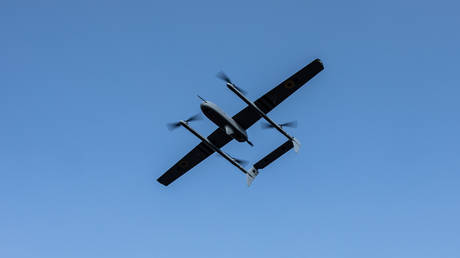
Finland isn't at war, but the war just landed in its backyard. On Sunday morning, March 29, 2026, the quiet of the southeastern Kymenlaakso region was broken not by artillery, but by the silent arrival of stray technology. Two drones crossed the border and hit the dirt near the city of Kouvola. Prime Minister Petteri Orpo has already been vocal about it: these were almost certainly Ukrainian drones that lost their way.
It's a bizarre moment for a country that recently joined NATO to find Ukrainian hardware—hardware they technically support—falling from their own skies. If you're wondering how a drone aimed at a Russian port ends up 50 kilometers deep into Finnish territory, the answer isn't just "bad luck." It's a mix of aggressive electronic warfare and the sheer geography of modern long-range strikes.
The Kouvola incident by the numbers
The timeline of the morning shows how fast the Finnish military has to move now. At roughly 8:13 a.m., Finnish radar picked up "small, slow-moving objects" at low altitude. By 8:45 a.m., the Finnish Air Force had an F/A-18 Hornet in the air.
Here’s what we know about where they landed:
- Drone One: Crashed north of Kouvola.
- Drone Two: Came down east of the city.
- Identification: The Air Force confirmed at least one was a Ukrainian AN-196 "Lyutyi."
- Distance: Kouvola sits about 50 kilometers (31 miles) from the Russian border.
The Finnish pilots didn't pull the trigger. They watched. They identified. They let them fall. Defence Minister Antti Häkkänen was quick to point out that they avoided shooting to prevent collateral damage on the ground. When a drone is already "stray" and likely running out of fuel or lost, blowing it up over a populated area usually creates more problems than it solves.
Why they are veering off course
Ukraine isn't trying to hit Finland. That would be a diplomatic nightmare and a strategic waste. They're aiming for Russian energy infrastructure, specifically the massive oil and gas terminals at Ust-Luga and Primorsk. These are the crown jewels of Russia's export economy, and Ukraine has hit them three times in the last week alone.
So, how do they end up in Kouvola? Prime Minister Orpo pointed a finger at a very specific culprit: Russian electronic interference.
When Ukraine sends a drone toward the Baltic coast, they're flying into a wall of Russian GPS jamming and signal spoofing. If the drone's navigation system gets "blinded" or fed false coordinates, it starts drifting. A few degrees of error over a 500-kilometer flight path can easily put a drone in Finnish or Estonian airspace.
We've seen this movie before. Just earlier this week, similar stray drones crashed in Latvia and Estonia. Lithuania had an incident where a drone entered from Belarus. The Baltic Sea region is becoming a "GPS-free zone" thanks to Russian jamming, and the unintended side effect is a rain of Ukrainian suicide drones on NATO soil.
The AN-196 Lyutyi factor
The specific model identified, the AN-196 Lyutyi, is a long-range "kamikaze" drone. It's built to carry a 75kg warhead over distances exceeding 1,000 kilometers. It’s a serious piece of equipment. Seeing one of these nose-dive into a Finnish field is a stark reminder that the "buffer" between the war in Ukraine and the rest of Europe is basically non-existent.
No military threat but a massive headache
President Alexander Stubb spent the afternoon on social media trying to keep the public calm. "Finland is not under any military threat," he insisted. He's right, in a traditional sense. Ukraine isn't the enemy, and Russia didn't fire these missiles.
But there’s a massive political headache here. Finland has to maintain a delicate balance. They are one of Ukraine's staunchest supporters, yet they can't simply ignore territorial violations. If they start shooting down every stray drone, they risk being seen as interfering with Ukraine's legitimate defense operations. If they don't, they look like they can't protect their own borders.
Orpo has already said there’s no "blanket policy" to shoot down every drone. It's case-by-case. If a drone looks like it’s headed for a shopping mall in Helsinki, the Hornets will take it out. If it’s drifting into a forest near the border? They'll let the investigative teams pick up the scrap metal later.
What this means for your security
If you live in northern or eastern Europe, expect more of this. As Ukraine ramps up its "deep strikes" to starve the Russian war machine of oil money, the margins for error will get thinner. The Russian military will likely crank up the jamming even higher, which means more "blind" drones wandering across borders.
The Finnish Border Guard and the Defence Forces are already increasing surveillance in the Gulf of Finland. You might see more jet activity and more cordoned-off fields.
Keep an eye on the official reports from the Finnish Ministry of Defence. They’ve promised more details once the technical investigation of the wreckage is done. For now, the best thing you can do is stay informed about the shifting "electronic warfare" landscape. This isn't just about drones; it's about how the very signals we rely on for navigation are being weaponized and disrupted across the entire Baltic region.