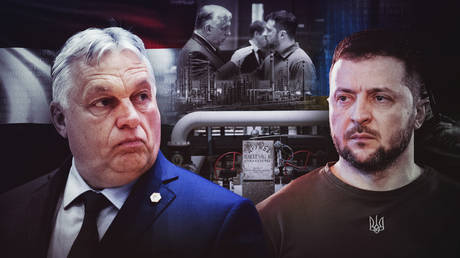
Viktor Orbán is playing a dangerous game of geopolitical chicken. While most of the European Union has lined up behind Kyiv, Hungary has carved out a lonely, often frustrating path of "strategic ambiguity." It’s not just about cheap gas or old Soviet pipelines. It’s about a deeply rooted political survival strategy that uses the Ukraine connection to consolidate power at home while keeping Brussels at arm's length.
If you’ve been following the headlines, you’ve seen the vetoes. You’ve seen the delays in aid packages and the refusal to let weapons transit Hungarian soil. But looking at this through a simple "pro-Russia" lens misses the point entirely. This is about leverage. Orbán knows that as long as he’s the friction point in EU decision-making, he has something to trade for the billions in frozen recovery funds he needs to keep the Hungarian economy afloat.
The Minority Rights Lever in Transcarpathia
One of the biggest friction points between Budapest and Kyiv involves the 150,000 ethnic Hungarians living in Ukraine's Transcarpathia region. This isn't a new argument. It didn't start in 2022. It goes back to a 2017 Ukrainian education law that restricted the use of minority languages in schools.
To Orbán, these people are a vital voting bloc. To Kyiv, the law was a tool for national integration during a time of existential threat. This cultural clash gives Hungary a "moral" high ground to stand on when they block Ukraine’s NATO aspirations. They aren't just being difficult; they claim to be protecting their kin.
It’s a powerful narrative. It resonates with the Fidesz base. It paints Orbán as the sole protector of the "Greater Hungarian" identity, a sentiment that still runs deep in the national psyche. By tying EU aid to minority rights, Budapest ensures that the Ukraine connection remains a permanent, painful thorn in the side of European unity.
Energy Dependence and the Russian Shadow
Let’s talk about the Elephant in the room: Rosatom and Gazprom. Hungary gets roughly 80% of its gas and the vast majority of its oil from Russia. While the rest of the continent scrambled to build LNG terminals and sign contracts with Norway or Qatar, Hungary doubled down on its existing infrastructure.
- The Paks II nuclear plant expansion is being funded by Russian loans.
- The Druzhba pipeline remains a lifeline for Hungarian refineries.
- Long-term contracts with Gazprom offer prices that, while not as cheap as they used to be, are still shielded from some market volatility.
You can't just flip a switch and change that. It’s a structural reality. However, it’s also a choice. Choosing to stay tethered to Moscow provides Orbán with a unique "middleman" status. He can claim he’s the only leader in Central Europe looking out for his citizens' heating bills while everyone else is "virtue signaling" at the cost of their own economies. It’s a populism masterclass.
The Domestic Victory of the Peace Narrative
During the 2022 elections, Orbán didn't run on economic reform or healthcare. He ran on a "peace vs. war" platform. He framed the opposition as warmongers who would drag Hungarian sons into Ukrainian trenches. It worked. He secured a massive supermajority because people are scared.
The Ukraine connection serves as the perfect external enemy. By painting the war as a conflict between "globalist powers" that Hungary should stay out of, Orbán creates a "Fortress Hungary" mentality. This allows the government to bypass traditional democratic checks by maintaining a state of emergency—a legal "gray zone" that has been in place since the start of the conflict.
It’s efficient. It’s effective. It keeps the public focused on the border instead of inflation or the crumbling education system.
Brussels is Losing Its Patience
The European Parliament has already labeled Hungary an "electoral autocracy." The tension is hitting a breaking point. For years, the EU used the "carrot" of development funds to keep Budapest in line. Now, they’re using the "stick" of Article 7 and the conditionality mechanism.
The Ukraine connection is where these two forces collide. When Hungary blocks a €50 billion aid package for Kyiv, it’s not really about the money. It’s a hostage situation. "Give us our frozen funds, and we’ll let the Ukraine money go through." It’s transactional politics at its most cynical level.
But this strategy has a shelf life. Poland, once Hungary’s staunchest ally in the "illiberal" bloc, has drifted away due to its own visceral opposition to Russian aggression. Hungary is losing its cover. Without a partner to help veto EU sanctions against itself, Budapest is increasingly vulnerable.
Why This Matters for the Future of NATO
Hungary was one of the last holdouts for Sweden’s NATO accession. Why? Because they could. Every delay is a chance to extract a concession, a meeting, or a photo op that suggests Orbán is a major player on the world stage.
This isn't just about ego. It’s about signaling to other "middle powers" that they don't have to follow the Washington or Brussels script. If Hungary can successfully navigate the Ukraine conflict without cutting ties with Moscow or losing its EU membership, it provides a blueprint for other populist leaders.
Breaking the Deadlock
The reality is that Hungary is too integrated into the European economy to truly leave, and the EU is too legally rigid to easily kick them out. We’re stuck in a cycle of vetoes and late-night compromises.
If you want to understand where this goes next, stop looking at the frontline in Donbas and start looking at the banking sector in Budapest. Watch the inflation rates. Watch the currency value of the Forint. When the economic cost of being Russia’s "useful idiot" outweighs the political benefit of the "peace" narrative, that’s when you’ll see a shift.
Until then, expect more of the same. More delays. More rhetoric. More using the Ukraine connection as a shield for domestic power grabs.
Immediate Steps to Monitor the Situation
- Track the Forint (HUF): The currency is the most honest indicator of how much pressure Orbán is actually under. Any sharp drop usually precedes a "compromise" with Brussels.
- Watch the Transcarpathian Legislation: If Kyiv makes even minor concessions on language rights, see if Budapest suddenly finds a reason to support the next NATO integration step.
- Monitor Energy Projects: Specifically, the progress of the Paks II nuclear plant. Any delays there usually signal a cooling of relations between Budapest and the Kremlin.
The situation is fluid, but the underlying motivation is constant. Power. Pure and simple.