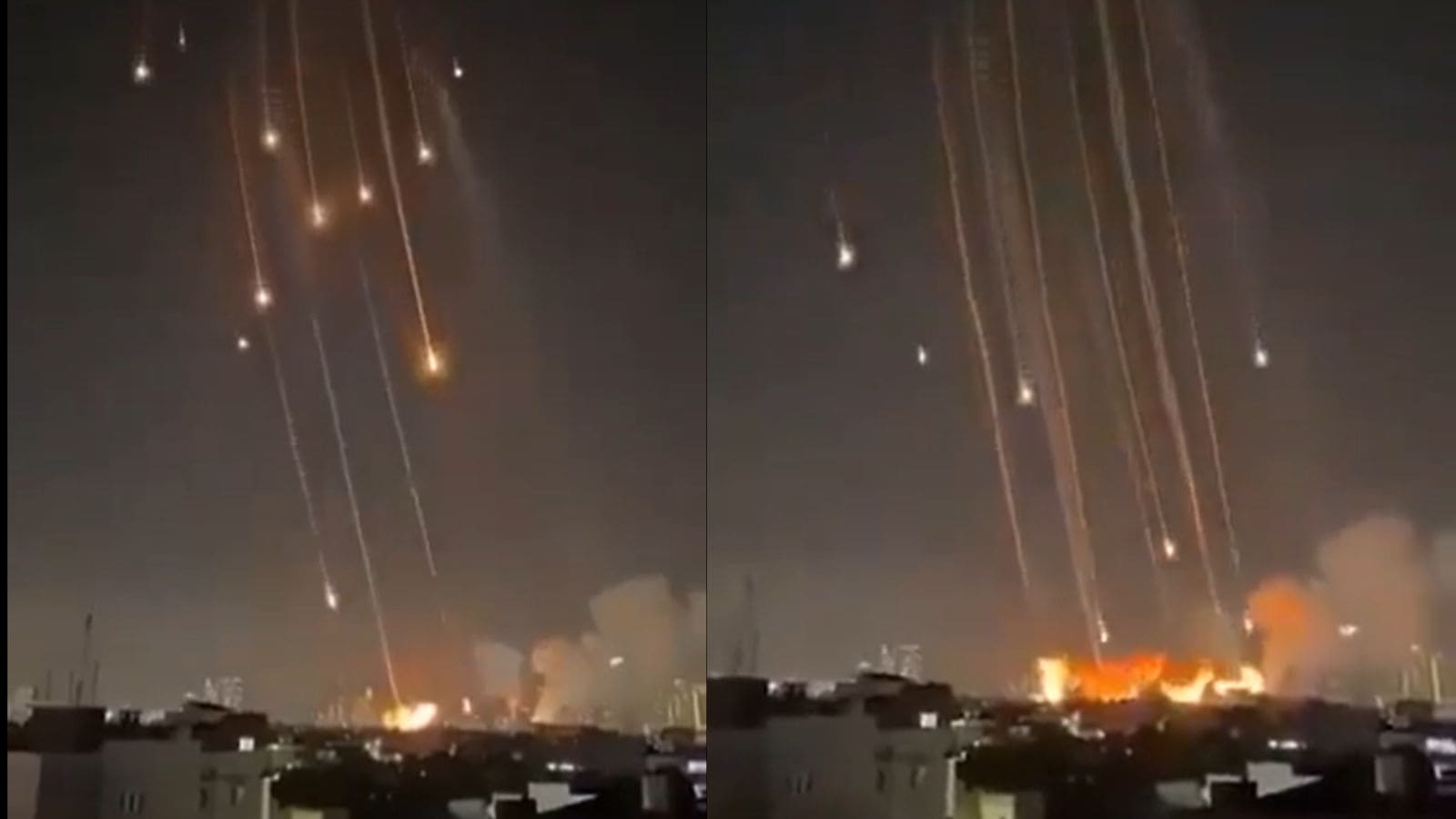
Sheikh Mohamed bin Zayed Al Nahyan has broken his silence following the recent Iranian strikes, signaling that the United Arab Emirates remains a formidable player in a volatile region. While the official rhetoric emphasizes stability and strength, the subtext reveals a massive shift in how the Emirates views its own survival. This is not just a leader reassuring his citizens; it is a calculated warning to adversaries and a message to global markets that the UAE will not be collateral damage in a regional shadow war.
The core of the President's message is simple. The UAE is "well" and, crucially, is "no easy prey." This choice of language moves beyond the typical diplomatic scripts found in the Gulf. It acknowledges a threat environment that has become increasingly direct and kinetic. By addressing the nation now, the leadership is attempting to decouple its economic reputation from the chaos of the Levant and the Persian Gulf.
A Fortress Built on Intelligence and Interception
For decades, the UAE relied on a "soft power first" strategy, using trade and tourism to build a shield of global relevance. The logic was that the world would not let a global hub burn. Recent events have proven that logic incomplete. The strikes on Iranian soil and the subsequent regional fallout have forced Abu Dhabi to showcase its hard power—specifically its multi-layered air defense systems and its intelligence network.
The Emirates has invested billions in the Terminal High Altitude Area Defense (THAAD) and Patriot batteries. However, hardware is only half the story. The real "why" behind the President's confidence lies in the country's maturing domestic defense industry. Edge Group, the state-owned defense conglomerate, has been aggressively developing autonomous systems and electronic warfare capabilities. They are moving away from being a mere customer of Western tech toward becoming a manufacturer of specialized tools designed for this specific geography.
This transition is vital. In a world where supply chains can be choked by political whims in Washington or Brussels, the UAE is betting on self-reliance. They understand that being "no easy prey" means having the ability to sustain a defense without waiting for a re-supply ship that might never arrive.
The Economic Decoupling Strategy
Investors hate uncertainty. The primary risk for the UAE has always been the perception that it is an "expensive neighborhood in a bad part of town." When missiles fly in the region, insurance premiums for tankers rise, and venture capital becomes skittish.
Sheikh Mohamed’s comments serve as a psychological floor for the markets. By stating the country is well, he is directing attention toward the Non-Oil GDP growth, which has remained resilient despite the regional heat. The UAE is trying to prove it can operate in a permanent state of high alert without it affecting the ease of doing business in Dubai or the flow of energy from Abu Dhabi.
The Geography of Risk
- The Strait of Hormuz: This remains the most sensitive choke point. Any disruption here hits the UAE's core revenue.
- The Northern Emirates: Proximity to Iranian shores makes cities like Sharjah and Ras Al Khaimah geographically vulnerable, requiring a different defensive posture than the capital.
- Cyber Warfare: The "strikes" are not always physical. The UAE faces constant digital probes aimed at its desalination plants and financial grids.
The President’s defiance is rooted in the fact that the UAE has survived previous cycles of escalation. They have seen the Tanker War of the 1980s and the regional shifts of the 2010s. Each time, the state has emerged with more sophisticated infrastructure. They aren't just reacting; they are building a "redundant" nation where one strike cannot topple the system.
The Iranian Equation and the Diplomatic Tightrope
There is an obvious tension in the UAE's stance toward Tehran. On one hand, the Emirates has restored diplomatic ties and maintains significant trade volumes with Iran. On the other, they are a primary host for Western military assets and a signatory of the Abraham Accords.
This duality is the UAE's greatest strength and its most dangerous vulnerability. The "no easy prey" comment is a direct nod to this balance. It suggests that while the UAE prefers the path of de-escalation and trade, it has no illusions about the nature of the regional power struggle. They are prepared for the "porcupine" strategy—making the cost of an attack so high that even a much larger neighbor would find the endeavor ruinous.
We are seeing a move away from "Zero Problems with Neighbors" toward a "Verified Deterrence" model. It is a grittier, more realistic approach to foreign policy that prioritizes internal hardening over external promises.
Internal Stability and the Social Contract
A nation's defense is only as strong as its internal cohesion. In the UAE, the social contract is built on a promise of safety and prosperity in exchange for political alignment. If the safety element is compromised, the entire model comes under pressure.
The President’s public comments are an essential reinforcement of this contract. By appearing steady and certain, he is preventing the kind of "capital flight of the mind" that occurs when a population begins to feel unsafe. He is signaling to the millions of expatriates who drive the economy that the state is in control. This is high-stakes PR, but it is backed by a security apparatus that is arguably the most efficient in the Middle East.
The Infrastructure of Resilience
Consider the Barakah Nuclear Energy Plant. It isn't just a power source; it is a statement of long-term intent. A country that builds nuclear infrastructure is a country that plans to be around for centuries, regardless of regional skirmishes. The same applies to the UAE’s space program and its massive investments in AI research through the Advanced Technology Research Council (ATRC). These are the "moats" that make the country difficult to disrupt.
The Reality of Modern Deterrence
Deterrence in 2026 is not just about having the biggest jets. It is about the ability to absorb a hit and keep the lights on. The UAE has spent the last decade building a "distributed" economy. While Dubai is the face of the nation, the industrial heartland in Ruwais and the logistics hubs in Fujairah provide a depth that was missing twenty years ago.
The President’s speech was short, but its implications are massive. He is telling the world that the UAE has moved past the era of being a "protected" state. It is now a "protector" state, capable of managing its own risks and dictating its own terms in a neighborhood that has no shortage of bullies. The era of the UAE as a passive observer of regional conflict is over.
If you are an investor or a policy analyst, do not look at the strikes as a sign of UAE weakness. Look at the response. Look at the lack of panic in the streets of Abu Dhabi and the continued flow of traffic through the ports. The UAE is betting that its resilience is more profitable than its neighbors' aggression.
Analyze the movement of sovereign wealth funds in the coming months. If they continue to buy up global assets while hardening their domestic infrastructure, it proves the President's words weren't just a morale booster—they were a statement of fact.