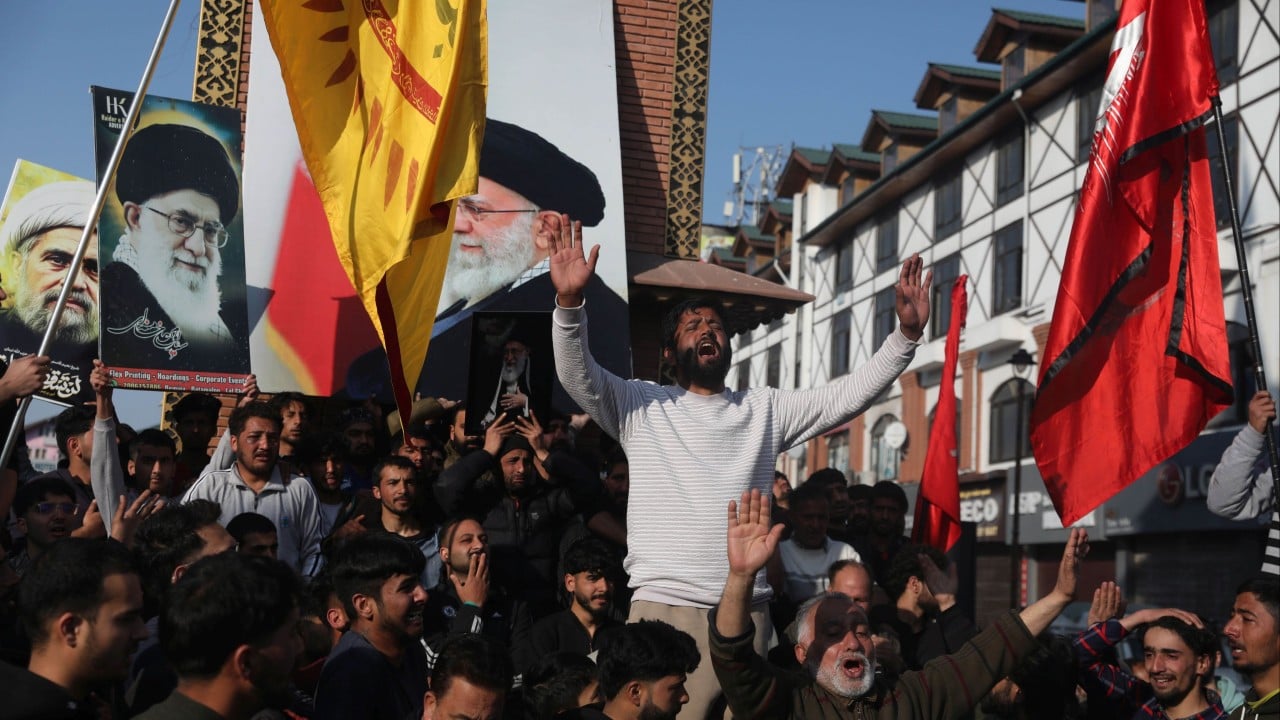
The era of the Islamic Republic, as defined by the singular, uncompromising will of Ali Khamenei, ended at 8:10 am on February 28, 2026. While the world watched smoke rise from the pulverized remains of the leadership compound in central Tehran, the 86-year-old Supreme Leader was already a ghost. Joint U.S. and Israeli airstrikes didn't just kill a man; they decapitated a theological and military apparatus that had spent nearly four decades preparing for this exact moment of vulnerability, only to find its defenses as hollow as the rhetoric of the "Axis of Resistance."
State media confirmed the death on March 1, after twenty-four hours of frantic, panicked denials. The delay wasn't just about security; it was about the vacuum. With Khamenei dead, and key figures like IRGC Commander Mohammad Pakpour and Defense Minister Aziz Nasirzadeh reportedly eliminated in the same "decapitation" salvo, the regime is currently a headless beast lashing out in its death throes.
The Architecture of a Miscalculation
For years, Khamenei banked on "strategic patience." He believed that by weaving a web of proxies—Hezbollah, Hamas, the Houthis—he could create a shield that would make a direct strike on Tehran unthinkable. He was wrong. The collapse of Hezbollah’s operational spine in late 2025 and the subsequent precision strikes on Iranian nuclear enrichment sites in June 2025 should have been the warning shots. Instead, the Supreme Leader retreated further into a cocoon of sycophants who filtered out the reality of a changing geopolitical landscape.
The U.S. and Israel didn't just stumble into this operation. It was a calculated bet that the Iranian people, exhausted by the brutal suppression of the January 2026 protests—which saw an estimated 30,000 citizens slaughtered—would not lift a finger to defend the clerics. Reports from the ground suggest they were right. As the IRGC attempts to mobilize, they are finding a population that is not mourning, but waiting.
The Succession Crisis Nobody Can Manage
Iran’s constitution dictates that a temporary council consisting of the President, the head of the Judiciary, and a jurist from the Guardian Council must manage the transition. But the constitution assumes a stable environment. It does not account for a scenario where the "deep state"—the IRGC—is also in the crosshairs.
There are three primary factions now vying for what remains of the throne:
- The Hereditary Loyalists: Supporters of Mojtaba Khamenei, the late leader's son. While he lacks the clerical "marja" status required to be a true Supreme Leader, he controls significant financial assets and has deep ties to the intelligence services.
- The Pragmatic Survivors: Led by figures like Ali Larijani, who was recently maneuvered into a more prominent role within the National Security Council. This group wants to negotiate a "controlled surrender" to save the state, if not the ideology.
- The IRGC Junta: With their top generals dead, mid-level commanders are reportedly taking matters into their own hands, ignoring orders from the civilian government and preparing for a scorched-earth defense of the capital.
The problem for all three is that the "Assembly of Experts"—the 88 clerics tasked with choosing the next leader—is currently scattered and terrified. Many are in hiding, fearing that the next wave of bunker-busters has their names on them.
A Regional Firestorm in Progress
Tehran’s response has been predictable but desperate. Missiles and drones have been launched toward Israel and Gulf neighbors including Bahrain, Kuwait, and the UAE. This is not a strategy for victory; it is a scream for relevance. By targeting global energy hubs and U.S. bases in the region, the remnants of the regime are trying to force an international ceasefire that would give them room to breathe.
It is a failing tactic. The U.S. has signaled that the objective is now "regime change," a phrase that hasn't been used with this much conviction since 2003. Unlike the Iraq invasion, however, this isn't a ground war of occupation. It is a high-tech dismantling of the regime’s ability to govern or fight.
The Brutal Reality for the Iranian Street
While the West discusses "geopolitical shifts," the people of Tehran, Mashhad, and Isfahan are facing a terrifying reality. The IRGC has reportedly deployed snipers and plainclothes operatives to prevent any spontaneous celebrations or renewed protests. The regime knows that if the street rises now, it is over.
There is a grim irony here. Khamenei spent his life obsessing over the "Global Arrogance" of the West, yet his downfall was ultimately facilitated by his own internal arrogance—the belief that he could starve and kill his own people indefinitely without consequence. The silence in the streets of Tehran tonight isn't respect; it’s the sound of a fuse burning down.
The coming days will determine if Iran transitions into a military dictatorship led by the IRGC, collapses into a multi-sided civil war, or if a new, secular leadership can emerge from the ashes of the theocracy. What is certain is that the Islamic Republic, as a revolutionary project, died in that compound alongside its master. The "octopus" has lost its head, and the tentacles are beginning to wither.