Wall Street is reading the TurboQuant news upside down. While analysts scramble to issue "buy the dip" ratings on HBM (High Bandwidth Memory) manufacturers, they are missing the fundamental shift in physics that makes their spreadsheets obsolete. They see a temporary price fluctuation. I see the beginning of the end for the "more hardware is the only way" era of Silicon Valley.
Google’s TurboQuant isn't just another optimization layer. It is a mathematical bypass for the physical constraints of data movement. The consensus says that as models get bigger, we need more RAM. The math says we’ve been lazy with the RAM we already have. In similar updates, we also covered: The Hollow Classroom and the Cost of a Digital Savior.
If you’re holding memory stocks because you think AI demand is an infinite upward line, you’re about to get hit by the efficiency wall.
The Myth of the Memory Wall
For the last three years, the industry has operated under a single, unchallenged assumption: The Memory Wall is insurmountable. Mashable has analyzed this critical subject in great detail.
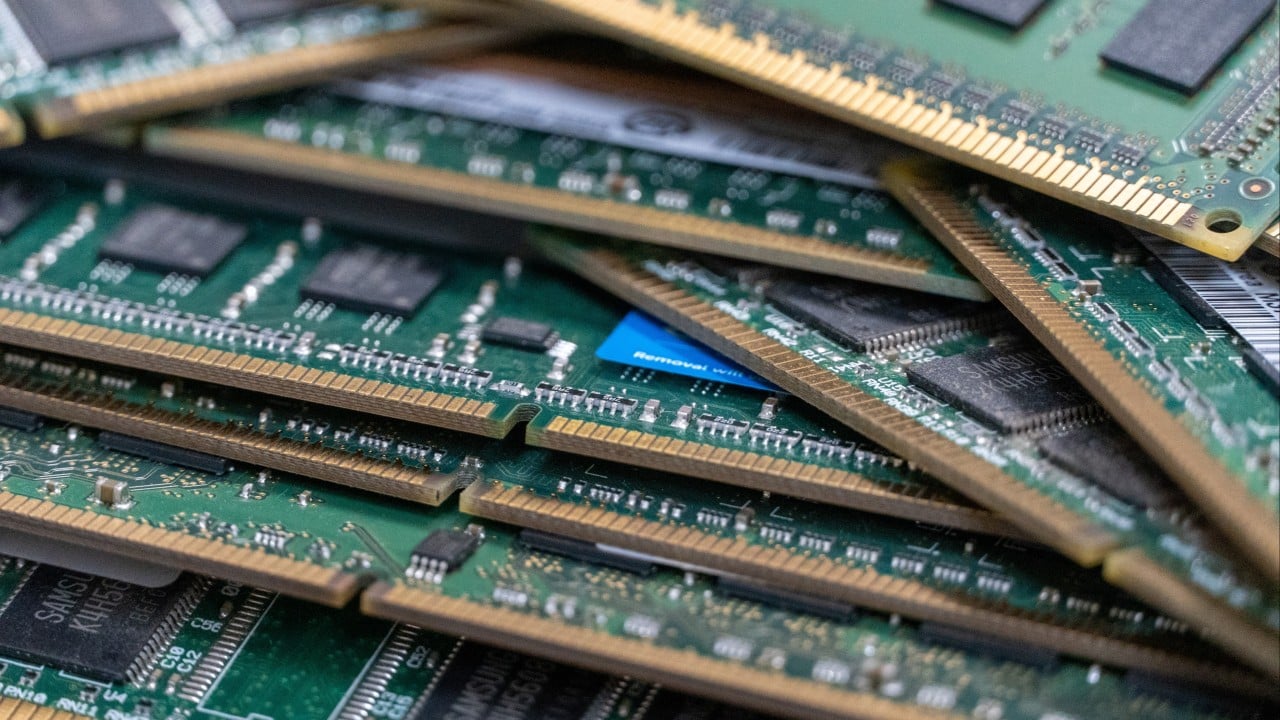
The theory was simple. Compute power (FLOPs) was growing faster than the ability to move data from memory to the processor. Therefore, companies like SK Hynix and Micron became the gatekeepers of the AI revolution. If you wanted to run a 1 trillion parameter model, you had to buy their increasingly expensive HBM3e stacks.
TurboQuant shatters this. By utilizing advanced quantization techniques—specifically pushing the boundaries of 4-bit and even 2-bit weight representations without sacrificing model perplexity—Google has figured out how to fit a gallon of water into a pint glass.
When you can compress the memory footprint of a model by $4\times$ or $8\times$ with negligible loss in accuracy, the "need" for massive hardware expansion vanishes. We aren't just making the hardware better; we are making the hardware irrelevant.
Why Buy the Dip is Financial Suicide
Analysts love the phrase "buy the dip" because it sounds brave while requiring zero original thought. They argue that even with efficiency gains, the sheer volume of new AI deployments will offset the lower memory requirement per unit.
They’re wrong. Here’s why:
- The Supply Glut is Already Baked In: Memory manufacturers have spent billions in CAPEX to ramp up HBM production based on the old "unoptimized" demand curves. If the market suddenly discovers it only needs 25% of the projected memory to run the same models, we are looking at a historic oversupply.
- The Jevons Paradox Failure: Usually, when a resource becomes more efficient, we use more of it. But in the enterprise, the bottleneck isn't just memory; it's power and cooling. If TurboQuant allows a company to run their LLM on a single existing server instead of buying a new $400,000 rack, they won't buy the rack. They will pocket the savings.
- The Software-Defined Hardware Era: We are moving away from general-purpose "big iron" toward hyper-specific kernels.
I’ve sat in rooms where C-suite executives bragged about their HBM stockpiles like they were hoarding gold during a war. That gold is turning into lead. When software can solve a hardware problem, software wins every single time because its marginal cost is zero.
The Quantization Trap
Let’s talk about the math that the "buy the dip" crowd doesn't understand. Standard FP16 (16-bit floating point) weights take up 2 bytes of memory. TurboQuant and similar architectures are proving that we can get away with INT4 or even sub-4-bit formats.
Consider the memory bandwidth requirement formula:
$$B = \frac{P \times P_b}{U}$$
Where:
- $B$ is the required bandwidth.
- $P$ is the number of parameters.
- $P_b$ is the bits per parameter.
- $U$ is the hardware utilization efficiency.
The legacy bull case assumes $P_b$ stays constant while $P$ grows. TurboQuant aggressively shrinks $P_b$. If $P_b$ drops from 16 to 2, you just reduced your hardware requirement by $87.5%$. No amount of "market growth" is going to fill that hole in the memory vendors' balance sheets.
The Hidden Cost of Being "Right"
Is there a downside to this efficiency? Absolutely. But it’s not a downside for the users; it’s a downside for the incumbents.
The "nuance" the mainstream media missed is that TurboQuant makes local, edge-based AI viable. We’ve been told that AI has to live in massive, memory-heavy data centers. But if you can squeeze a high-performing model into 8GB of VRAM, you don't need the cloud. You don't need the specialized HBM clusters. You can run it on consumer-grade silicon.
This decentralizes the power. It kills the "scarcity" premium that has been propping up the stock prices of every company with "Semiconductor" in their name.
Stop Asking if Demand is Growing
The question isn't "Will we use more AI?" The answer is yes.
The question is "Will that AI require the specific, high-margin hardware we're currently overproducing?"
If you look at the trajectory of algorithmic efficiency, the answer is a resounding no. We are learning to do more with less. In any other industry, "more with less" is called progress. In the memory industry, it's called a secular decline.
The analysts telling you to buy the dip are the same ones who told you to buy the "Globalized Supply Chain" in 2019. They are looking at the rearview mirror while the car is headed for a cliff.
If you want to bet on the future of AI, bet on the people writing the math that makes the chips look small. Don't bet on the companies baking the bricks for a building that's no longer being built.
Dump the memory. Follow the math.