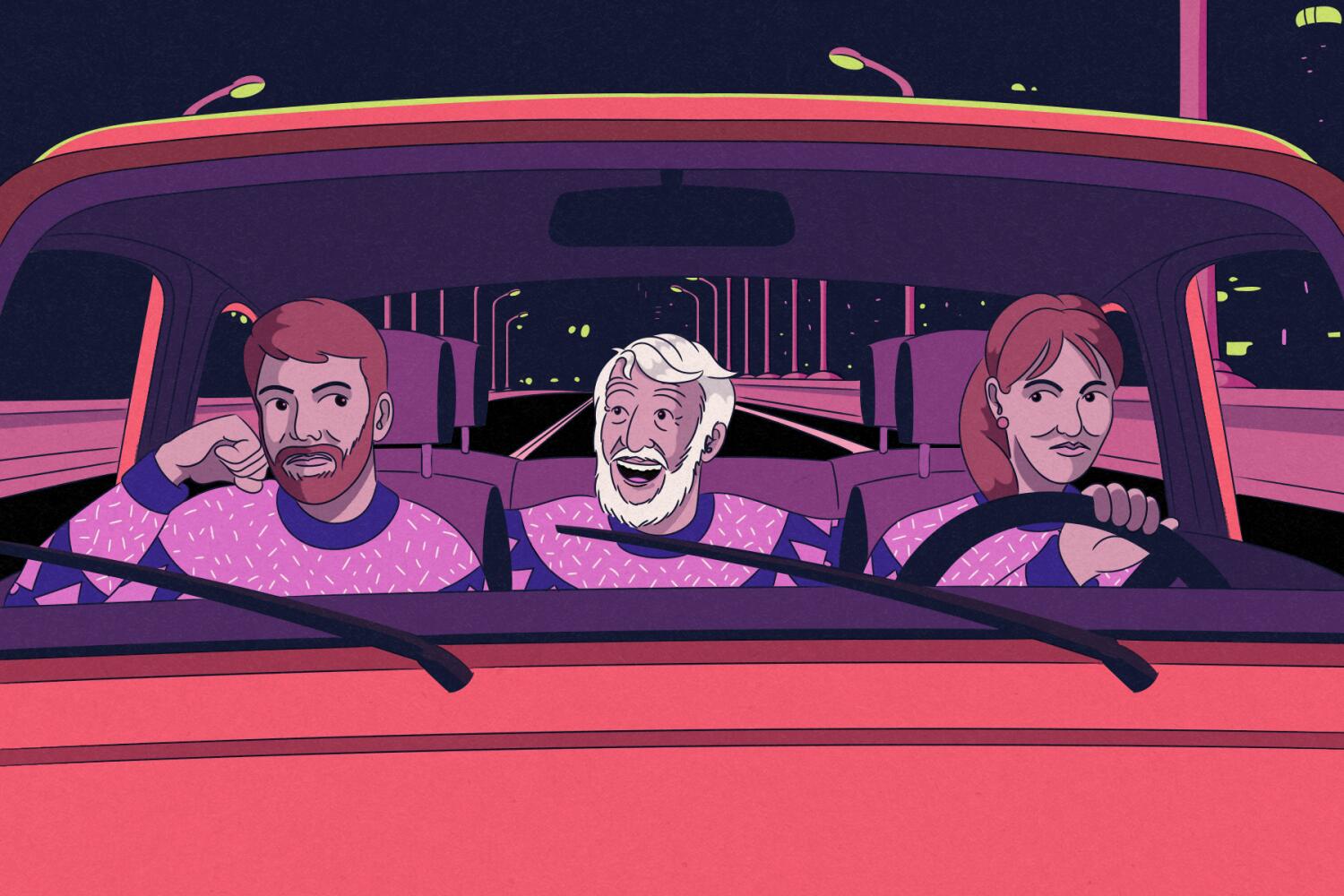
The air in the silver SUV smelled like stale peppermint and the unspoken resentment of a three-year-old mortgage. We were idling at a red light on Santa Monica Boulevard, the neon glow of a taco stand bleeding through the windshield. Most people see a red light as a pause. For us, it was a mirror.
Earlier that evening, the conversation had been about the dishwasher. Then it was about the way I left my shoes by the door. By the time we hit the 405, it had mutated into something much darker: the terrifying realization that we had become roommates who occasionally shared a bed and a Netflix password. We were at the "Critical Moment." Every couple has one. It is the invisible line in the sand where "I love you" starts to sound like a habit rather than a confession.
The statistics tell us that nearly 50% of marriages in the United States end in divorce, but the numbers don't capture the sound of a wedding ring hitting a granite countertop. They don't explain the specific, hollow ache of sitting next to someone in a car and feeling like they are three thousand miles away.
The Arithmetic of Adrift
Relationships do not usually collapse in a single, catastrophic explosion. They erode. It is a slow, rhythmic sanding down of the soul. Think of it like a shoreline. One day you have a beach, and the next, after a thousand unremarkable tides, the water is lapping at your front door.
In our case, the erosion was fueled by the "Efficiency Trap." When you first fall in love, everything is inefficient. You spend four hours talking about your favorite childhood cereal. You drive forty minutes out of your way just to bring them a specific type of coffee. You waste time. But as the years crawl by, you start to optimize. You divide chores. You sync digital calendars. You become a high-functioning logistics firm.
We had become too efficient. We had optimized the mystery right out of the room. When we looked at each other, we didn't see the person who made our hearts skip in 2019; we saw a list of unfinished tasks and a reminder of our own exhaustion.
The Hypothetical Mirror
Imagine two people—let’s call them Sarah and Marc—living in a cramped apartment in Echo Park. Sarah is a freelance designer who drinks cold brew at midnight; Marc is a high-school teacher who needs silence to grade papers. In the beginning, their differences are "quirks." Five years in, those quirks are "character flaws."
One night, Marc forgets to lock the front door. Sarah explodes. It isn't about the door. It is about the fact that she feels unprotected in every sense of the word. Marc retreats into his phone because the conflict feels like a storm he can't weather.
This is the moment of the Great Decoupling.
They are standing in the kitchen, and the silence is so heavy it feels like a third person in the room. They have two choices: they can let the silence win, or they can engage in the messy, terrifying work of being seen. To survive, Marc has to put the phone down and admit he’s overwhelmed. Sarah has to admit that her anger is actually just a mask for her fear of being forgotten.
The Chemistry of the Breaking Point
There is a biological component to this misery. When we are in the "honeymoon phase," our brains are marinating in dopamine and oxytocin. We are, quite literally, high on the other person. But the brain cannot maintain that level of chemical intensity forever. Eventually, the neurochemistry stabilizes.
This is where most people get it wrong. They mistake the end of the high for the end of the love.
When the dopamine fades, you are left with the raw materials of a human being. You are left with their morning breath, their bad moods, and their annoying habit of interrupting your stories. If you haven't built a foundation of "Cognitive Interdependence"—the psychological term for when two people's mental models of the world begin to overlap—the structure collapses.
I sat in that SUV and realized I didn't know my partner's mental model anymore. I knew her work schedule. I knew her favorite sushi order. But I didn't know what she dreamt about when she woke up at 3:00 AM.
The Cost of Staying
We often talk about the cost of divorce—the legal fees, the split assets, the logistical nightmare. We rarely talk about the cost of staying.
Staying requires a radical kind of vulnerability. It means looking at the person who knows exactly how to hurt you and saying, "I am still here." It means choosing to be bored together, to be frustrated together, and to do the dishes when you'd rather be anywhere else.
The turning point for us didn't happen with a grand gesture. There were no rose petals on the bed or surprise trips to Maui. It happened over a bag of cheap groceries.
We were standing in the kitchen, unloading milk and eggs in that same heavy silence. I reached for a carton of orange juice, and she reached for it at the same time. Our hands brushed. Usually, one of us would pull away with a polite, "Sorry."
This time, nobody moved.
I looked at her. Really looked at her. I saw the fine lines around her eyes that weren't there when we met. I saw the way she was biting her lip, a nervous habit she’s had since she was six.
"I'm scared," I said.
The words felt small. Pathetic, even. But they were the first honest thing I had said in six months.
"Me too," she whispered.
The Architecture of the Rebuild
Surviving the critical moment isn't about fixing the other person. It’s about renegotiating the contract of your existence. Most of us are operating on an "Expired Contract"—a set of expectations we agreed to when we were younger, dumber, and less tired.
We had to write a new one.
- The Death of the Mind Reader: We stopped expecting the other person to "just know" what was wrong. If you don't say it, it doesn't exist.
- Intentional Inefficiency: We started wasting time again. We took long walks with no destination. We sat on the porch and watched the neighbors. We invited the mess back in.
- The 80/20 Reality: Some days, one person only has 20% to give. The other person has to bring the 80. The goal is to make sure the total always hits 100, even if the distribution is wildly unfair for a week or a month.
It sounds simple. It is excruciatingly hard.
It is hard because it requires you to drop your defenses. It requires you to admit that you are part of the problem. In a world that prizes being "right" above all else, admitting you are wrong is a revolutionary act.
The View from the Other Side
We are still in the SUV, figuratively speaking. The light has turned green. We are moving again.
The ghost of who we used to be still haunts the backseat occasionally. We still fight about the shoes by the door. But the silence has changed. It’s no longer the silence of a void; it’s the silence of two people who have walked through the fire and decided that the burns were worth the warmth.
Love is not a state of being. It is an active verb. It is a choice you make at 6:00 PM on a rainy Tuesday when you are tired and annoyed and everything feels like a chore.
You look across the room at the person who knows your darkest secrets and your most embarrassing failures. You see the person who has seen you at your absolute worst and didn't run. And you realize that the "Critical Moment" wasn't a threat to the relationship.
It was the beginning of it.
The light is green. The road is long. The tank is half-full. We drive.