The air in Libertad is usually heavy with the scent of damp earth and the low hum of a town that exists mostly in the margins of Buenos Aires. It is a place where parents measure their success by the safety of their children’s commute. On a Tuesday morning, that safety didn't just flicker. It vanished.
A classroom is supposed to be a sanctuary of predictable noises. The scuff of a sneaker against a linoleum floor. The rhythmic click of a mechanical pencil. The muffled laughter of a thirteen-year-old who just heard a joke he shouldn't have. These are the sounds of a life beginning. But at the General San Martín Secondary School, those sounds were replaced by the sharp, metallic cracks of a handgun. If you enjoyed this piece, you should look at: this related article.
One boy. Thirteen years old. He didn't make it to the afternoon.
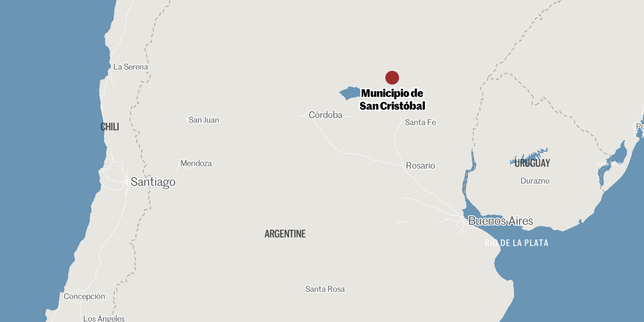
We often talk about these events in the sterile language of "incidents" and "statistics." We count the wounded—eight, in this case—and we categorize the caliber of the weapon. We look at the map of Argentina and pin a cooling red dot on the province of Buenos Aires. But statistics are a lie we tell ourselves to keep from feeling the weight of a backpack that will never be unpacked again. For another angle on this development, refer to the recent coverage from Al Jazeera.
Consider the silence that follows a gunshot in a hallway. It isn't a peaceful silence. It is a vacuum. It is the sound of dozens of children holding their breath, wondering if the next heartbeat will be their last. For the families in Libertad, that silence is now permanent. It sits at the dinner table where a chair remains empty.
The Anatomy of a Fragmented Morning
The details arrived in jagged pieces. A thirteen-year-old student, a child by every definition of the word, entered his school with a firearm. This wasn't a cinematic standoff. It was a chaotic, terrifying burst of violence that left one peer dead and eight others clutching wounds that will haunt them long after the physical scars fade.
Why does a child carry a weapon into a place of learning? To ask the question is to stare into a mirror of our own making. We want to find a single monster to blame, a solitary glitch in the system. It’s easier to believe in a "lone wolf" than to admit that our social fabric has grown thin. In the neighborhoods surrounding the capital, the pressure is constant. Economic instability, the creeping influence of local gangs, and a lack of mental health resources create a pressurized environment where a thirteen-year-old might feel that a gun is his only source of agency.
Imagine being one of the eight survivors. They aren't just "injured." They are witnesses. They are the ones who saw a friend become a headline. When they close their eyes, they won't see the "Standard News Report" version of the event. They will see the expression on their classmate's face. They will remember the smell of cordite mixing with the smell of floor wax.
The Weight of the Unseen
In the wake of the shooting, the authorities moved in with their yellow tape and their somber press releases. They spoke of "protocols" and "investigations." But protocols don't heal the psychic trauma of a community that has lost its sense of North.
The Argentine school system has long been a source of pride, a ladder for social mobility in a country that has seen its fair share of gravity. When that ladder breaks, the fall is long. This wasn't just an attack on individuals; it was an attack on the idea that a school is a neutral zone, a place where the outside world’s violence is supposed to stop at the gate.
We need to talk about the eighth child who survived with a bullet in his shoulder, and the seventh who took a fragment to the leg. We need to talk about the teacher who had to decide, in a split second, which way to push her students. These aren't just secondary characters in a tragedy. They are the living evidence of a systemic failure.
The gun used in the shooting didn't appear out of thin air. It came from a home, or a street corner, or a black market that operates with a terrifying efficiency. In Argentina, the debate over gun control is often overshadowed by more immediate concerns like inflation or political scandals. But a thirteen-year-old with a pistol is a scandal that cannot be ignored. It is a symptom of a deeper rot, a sign that the tools of death are more accessible to our youth than the tools of hope.
The Echo in the Hallway
The grief in Libertad is a physical thing. You can see it in the slumped shoulders of the fathers standing outside the hospital gates. You can hear it in the cracked voices of the mothers who are terrified to send their other children back to class.
What happens to a town when its school becomes a crime scene? The geography of the mind changes. The playground is no longer a place of play; it is a perimeter. The bell is no longer a signal of freedom; it is a trigger for anxiety.
But the real problem lies elsewhere. It’s not just about the security guards at the door or the metal detectors in the lobby. Those are band-aids on a gunshot wound. The real issue is the invisible stakes of childhood in an increasingly volatile world. We are asking children to navigate adult anxieties with adolescent brains. We are giving them the internet's infinite feed of rage and then wondering why they can't find peace in a crowded classroom.
The boy who pulled the trigger is also a tragedy. That is an uncomfortable truth. To acknowledge his humanity is not to excuse his actions, but to recognize that a thirteen-year-old is a work in progress. When a work in progress turns into a dealer of death, we have to ask where the adults were. Where were the interventions? Where was the safety net that was supposed to catch him before he fell into the abyss?
The Empty Desk
Tomorrow, the sun will rise over Libertad. The commuters will board the trains to Buenos Aires. The shops will open, and the everyday noise of survival will resume. But in one classroom, there will be an empty desk.
That desk represents more than a lost life. It represents a lost future—the poems that won't be written, the goals that won't be scored, the father that boy will never become. It is a hole in the universe that can never be filled by a police report or a televised apology.
We tell ourselves that these things happen "over there" or "to those people." We distance ourselves from the horror to keep our own world intact. But the walls are thinner than we think. The violence in a school in Argentina is a mirror of the violence in our own hearts, our own neglect, and our own refusal to see the children who are screaming for help before they ever pick up a gun.
The bells at General San Martín will eventually ring again. But they will sound different. They will sound like a warning. They will sound like a tolling for a peace that we took for granted and a boy who deserved a better story than the one we gave him.
The blood has been cleaned from the floor, but the stain remains in the air, a cold reminder that when we fail to protect the sanctuary of the classroom, we lose the very ground we stand on.