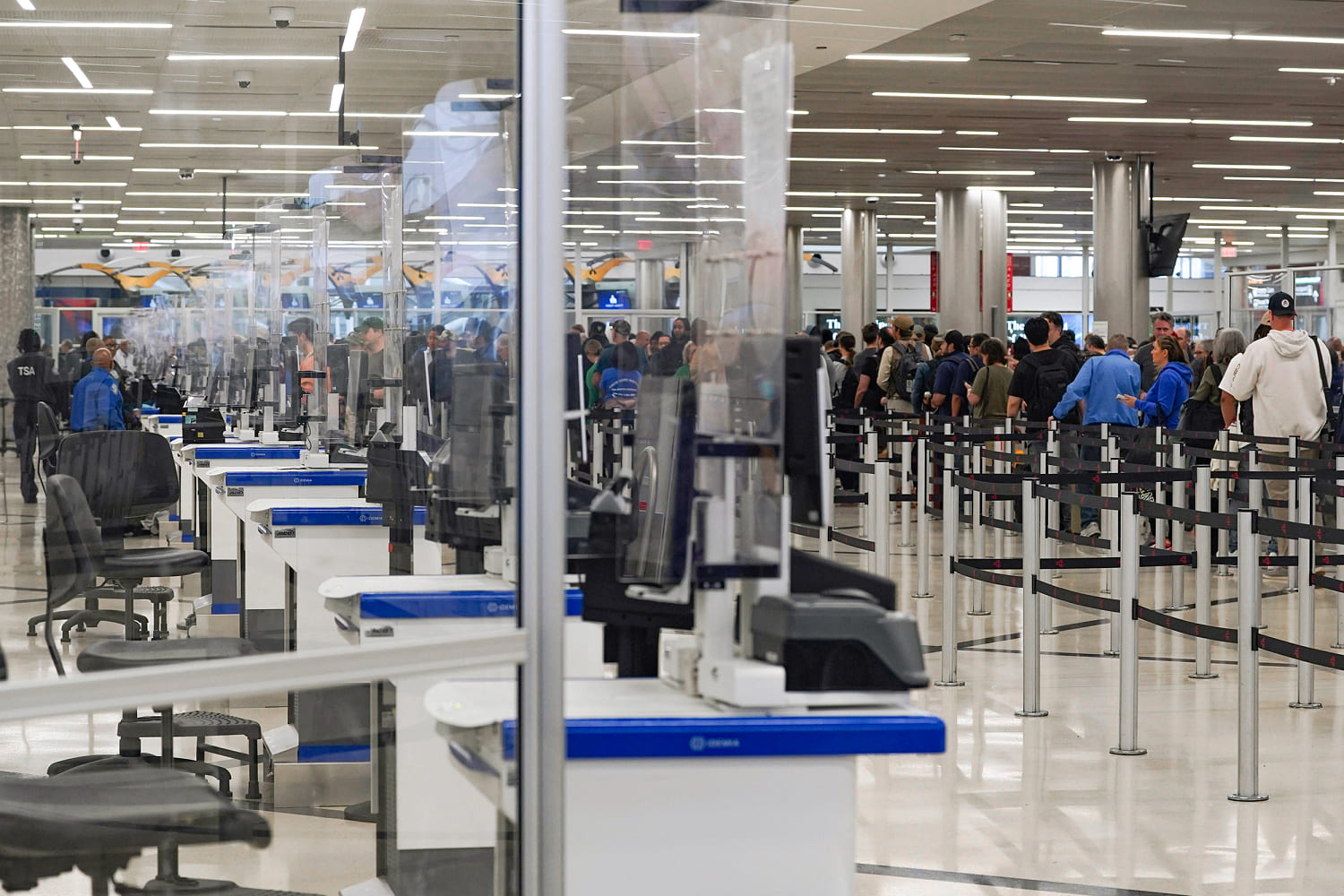
The headlines are screaming about a "crisis" because 400 TSA officers walked off the job during a government shutdown. The media wants you to be afraid. They want you to picture wide-open gates and terrorists slipping through the cracks because a few hundred people decided that working for free wasn't their idea of a good time.
They are wrong.
In fact, the departure of hundreds of Transportation Security Administration officers isn't a security failure. It is a long-overdue market correction. For two decades, we have operated under the delusion that more blue shirts equals more safety. We have equated bureaucracy with protection. We have prioritized the theater of security over the actual science of risk mitigation.
If 400 officers leaving actually made us less safe, it would imply that the system was efficient to begin with. It wasn't. It isn't.
The Security Theater Fallacy
The fundamental flaw in the "TSA exodus" narrative is the assumption that the TSA is an effective security organization. It is not. It is a massive human resources project designed to make the traveling public feel better.
I have spent years consulting for logistics firms and high-security infrastructure projects. In those worlds, we don’t measure success by how many people we have standing in a line. We measure success by the "probability of detection." When the Department of Homeland Security’s own Inspector General ran undercover tests on the TSA, the failure rate for detecting weapons and explosives was a staggering 95 percent in some trials.
Think about that.
If a private security firm failed 95 percent of its audits, it wouldn't just lose its contract; the CEO would be in front of a grand jury. Yet, when the TSA loses a few hundred employees, we are told to panic. Why? If the system already fails to catch the majority of threats, having fewer people performing those failed checks doesn't materially change your risk profile. It just shortens the line of people waiting to be scanned by a machine that likely won't alarm anyway.
The Bloat is the Vulnerability
Bureaucracy expands to meet the needs of the bureaucracy. The TSA has roughly 50,000 screeners. When you have an organization that large, you aren't hiring elite security specialists. You are hiring for volume.
High turnover is actually the only thing keeping the agency from complete stagnation. The "400 officers" figure is a drop in the bucket for an agency that already suffers from a turnover rate that would make a fast-food franchise blush. In some years, the TSA turnover rate for part-time officers has approached 20 percent.
The "crisis" isn't that people are leaving. The crisis is that we think we need 50,000 of them.
A leaner, more automated system is objectively superior. Humans are terrible at staring at X-ray monitors for eight hours. We get bored. Our brains start to fill in the gaps. We see what we expect to see, not what is actually there. This is a physiological reality of human vigilance. By clinging to a massive, human-centric workforce, the TSA ensures that the "human factor" remains the weakest link in the chain.
The False Narrative of the Shutdown
The media focuses on the shutdown because it’s a convenient political football. They argue that officers are leaving because they aren't getting paid. While that’s a legitimate grievance, it ignores the deeper rot.
Officers aren't just leaving because of a missed paycheck. They are leaving because the job is soul-crushing, the training is repetitive, and the management structure is a top-heavy nightmare of federal red tape.
When 400 people quit, it’s not a national security emergency. It’s a group of people realizing that their labor is being undervalued and their time is being wasted in a system that doesn't work. The shutdown didn't create the problem; it just stripped away the veneer of "public service" that kept people tethered to a failing model.
Why Privatization is the Only Honest Path
Critics of privatization argue that "for-profit" security will cut corners. This is a laughable stance considering the TSA is already the king of cutting corners.
Look at the Screening Partnership Program (SPP). This allows airports to opt out of federal TSA screeners and hire private contractors who are still overseen by federal standards. Airports like San Francisco (SFO) have used this for years.
The results? Private screeners are often more efficient, have lower turnover, and—crucially—provide better customer service. Why? Because a private company can fire underperformers. A private company can incentivize high detection rates. A private company is accountable to the airport authority and its shareholders, not a distant federal department that measures success by the size of its budget request.
If the mass quitting of federal officers forces more airports to look at the SPP model, we all win. We get a security layer that is actually managed like a business, with clear KPIs (Key Performance Indicators) and the ability to pivot when new threats emerge.
The Cost of the "Safety" Myth
We spend billions every year on the TSA.
- $8.2 billion was the requested budget for 2024.
- The "9/11 Security Fee" on your ticket continues to rise.
- The opportunity cost of millions of hours lost in lines is incalculable.
For that investment, we get "security theater." We get the requirement to take off our shoes because one guy failed to blow up a plane with a shoe bomb twenty years ago. We get the liquid ban because of a foiled plot from 2006. The TSA is a reactive organization. It prepares for the last war, every single time.
By losing staff, the agency is forced to prioritize. It is forced to use PreCheck more aggressively. It is forced to rely on technology like Computed Tomography (CT) scanners that provide 3D images and actually reduce the need for manual bag searches.
Less staff means the TSA has to stop pretending it can do everything and start focusing on high-risk passengers. This is known as risk-based screening. It’s what we should have been doing since 2002.
The Risk Nobody Talks About
Is there a downside to 400 officers quitting? Sure. Wait times might go up in the short term. You might miss a flight if you don't plan ahead.
But let’s be brutally honest: A longer line at the airport is an inconvenience, not a catastrophe. The media conflates "traveler annoyance" with "national vulnerability." They are not the same thing.
The real risk is maintaining the status quo. The real risk is a bloated, demoralized, and underpaid workforce that is tasked with an impossible mission using outdated methods. If a shutdown causes 400 people to realize they'd rather work elsewhere, we should thank them for their honesty. They are exposing the fragility of a system built on a house of cards.
Stop Asking for More Officers
Every time there is a "crisis" at the TSA, the public clamors for more funding and more staff. This is exactly what the bureaucracy wants. It thrives on "crises."
We don't need more officers. We need fewer, better-trained, higher-paid specialists who are supported by technology that actually works. We need to stop treating every grandmother from Des Moines like a potential insurgent.
If the TSA continues to shrink, it will be forced to evolve. It will be forced to hand over the keys to private entities that can manage the labor force effectively. It will be forced to stop the theater and start the security.
The departure of 400 officers isn't a crack in the armor. It's the sound of a bloated, inefficient machine finally starting to break down. Let it break. Only then can we build something that actually keeps us safe.
Go ahead and complain about the lines. Just don't pretend that hiring another 400 people to pat down your pockets is the solution. The solution is to lean into the exodus. Shrink the agency. Automate the process. Fire the bureaucracy.
Aviation security didn't fail because people quit. It failed the moment we decided that a federal uniform was more important than a functional system.