The F-35 Lightning II is supposed to be a ghost. You don't see it, you don't track it, and you certainly don't hit it with 1970s-era air defense systems. Yet, reports suggesting a U.S. F-35 was struck by Iranian fire have sent a shockwave through the defense community. If true, it challenges the very foundation of Western air superiority. If false, it's one of the most successful information warfare plays we've seen in years.
I’ve followed military aviation for a long time. These stories usually follow a pattern. A loud explosion, a blurry photo of smoke in the sky, and then a flood of social media accounts claiming a "super weapon" has been defeated. We need to look at the physics and the geopolitics before jumping to conclusions. Stealth isn't an invisibility cloak. It’s a mathematical advantage. But even the best math can't stop a lucky shot if a pilot gets complacent or if the sensor fusion fails at a critical moment. For another perspective, check out: this related article.
What actually happened over the Gulf
The initial reports came out of regional sources claiming that Iranian air defense batteries engaged a target near the border. Some accounts went as far as saying an F-35C, the Navy variant, was forced to make an emergency landing or was lost at sea. The Pentagon hasn't confirmed a loss. Tehran, predictably, is leaning into the narrative.
You have to understand the environment. The Persian Gulf is a crowded bathtub. It's packed with electronic noise, civilian tankers, and constant drone surveillance. An F-35 operating in this space isn't always in "full stealth" mode. Sometimes they fly with radar reflectors called Luneburg lenses. These make the jet show up on civilian radar so they don't accidentally collide with a Boeing 737. If a pilot was flying "loud" and an Iranian battery locked on, the situation changes instantly. Similar insight on the subject has been shared by NPR.
The Iranian military uses a mix of old Russian tech and home-grown systems like the Bavar-373. They’ve spent decades trying to figure out how to track low-observable aircraft. While the F-35 is designed to defeat these systems, no technology is perfect. A kinetic hit, or even a near miss from a large fragmentation warhead, could cause enough damage to jeopardize a mission.
The myth of the invincible stealth fighter
We often treat the F-35 like it’s a video game asset with a 100% survival rate. It's not. In the real world, things break. Pilots make mistakes. Maintenance crews miss small cracks in the radar-absorbent material.
I remember the 1999 shootdown of the F-117 Nighthawk over Serbia. Everyone thought that plane was untouchable. Then, a savvy commander used a long-wavelength radar to get a glimpse of the jet when its bomb bay doors opened. He fired a missile at the spot where the plane should be. It worked.
The Iranians have studied that incident more than almost anyone else. They know they don't need to see the F-35 clearly. They just need to see it enough to fill a patch of sky with lead and high explosives. If an F-35 was actually hit, it likely happened during a moment of vulnerability—either a high-angle turn that exposed a less-stealthy profile or during a refueling maneuver where the jet's signature is massive.
Why a confirmed hit would change everything
If Iran actually managed to damage an F-35, the export market for this jet would tremble. Countries like Israel, Japan, and the UK have bet their entire national defense on the idea that the F-35 can penetrate any airspace. A confirmed hit by a middle-tier power like Iran would mean:
- Stealth is no longer a primary shield but a secondary one.
- Electronic warfare and jamming become more important than airframe shape.
- The U.S. would have to rethink its "First Day of War" strategy in the Middle East.
But let's be real. If a jet was truly lost, we’d see satellite imagery of the crash site or a massive recovery operation. The U.S. Navy doesn't just leave millions of dollars of classified tech sitting on the ocean floor for the Iranians to find.
Information warfare is the new air defense
In 2026, a tweet can be more effective than a surface-to-air missile. By claiming they hit an F-35, Iran wins a psychological victory even if the missile hit a stray bird. It boosts morale at home and makes regional adversaries think twice. It sows doubt in the minds of American taxpayers who wonder why they’re paying nearly $100 million per plane if a "suspected" hit can take one out.
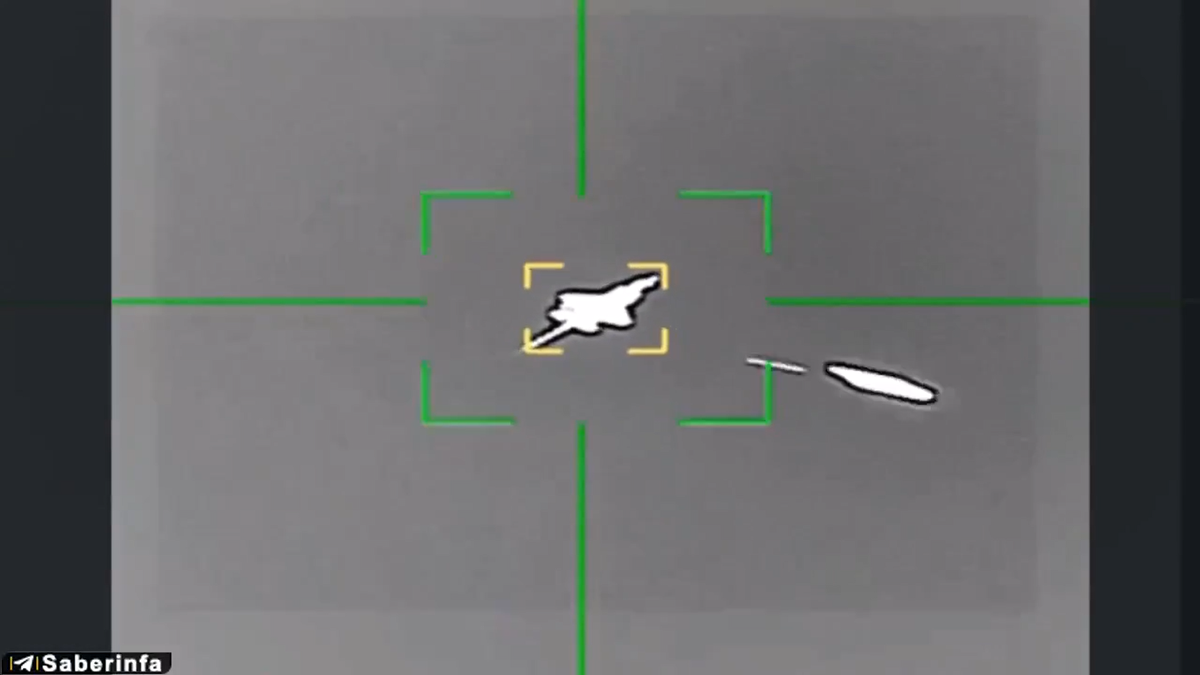
Most of these "reports" lack a smoking gun. They rely on "unnamed sources" or "unverified footage." I’ve seen clips used in these reports that turned out to be from flight simulators or old accidents in different parts of the world. It’s messy. It’s loud. And it’s exactly what happens when two high-tech militaries play chicken in a congested region.
The F-35 is a flying computer. It records everything. If there was an engagement, the data exists. The U.S. Air Force and Navy are likely dissecting the sensor logs right now. They won't tell us the truth immediately because the truth reveals their capabilities and their weaknesses.
Watching the flight trackers
If you want to know if something actually happened, stop reading the headlines and start looking at the logistics. Watch for sudden surges in carrier onboard delivery flights. Look for diverted tankers. If an F-35 was hit, the support network around it would light up.
So far, the patterns don't suggest a catastrophic loss. They suggest a tense encounter. A "hit" could mean anything from a piece of shrapnel scratching the paint to a total systems failure. In the world of high-stakes air combat, "suspected fire" is often just a polite way of saying "we're not sure what happened, but it was scary."
Keep your eyes on official tail number tracking and satellite passes over known airbases in the region. If a plane is missing from the tarmac for a week, then you have a story. Until then, treat these reports as part of the ongoing shadow war between Washington and Tehran. The F-35 is still the king of the hill, but even kings can get a bloody nose.
Verify any claims of downed aircraft by checking the Aviation Safety Network or independent satellite analysts who track carrier decks. Don't take a grainy Telegram video as gospel. Information moves fast, but hardware moves slow. If a jet is down, the physical evidence will eventually surface regardless of what the spin doctors say.