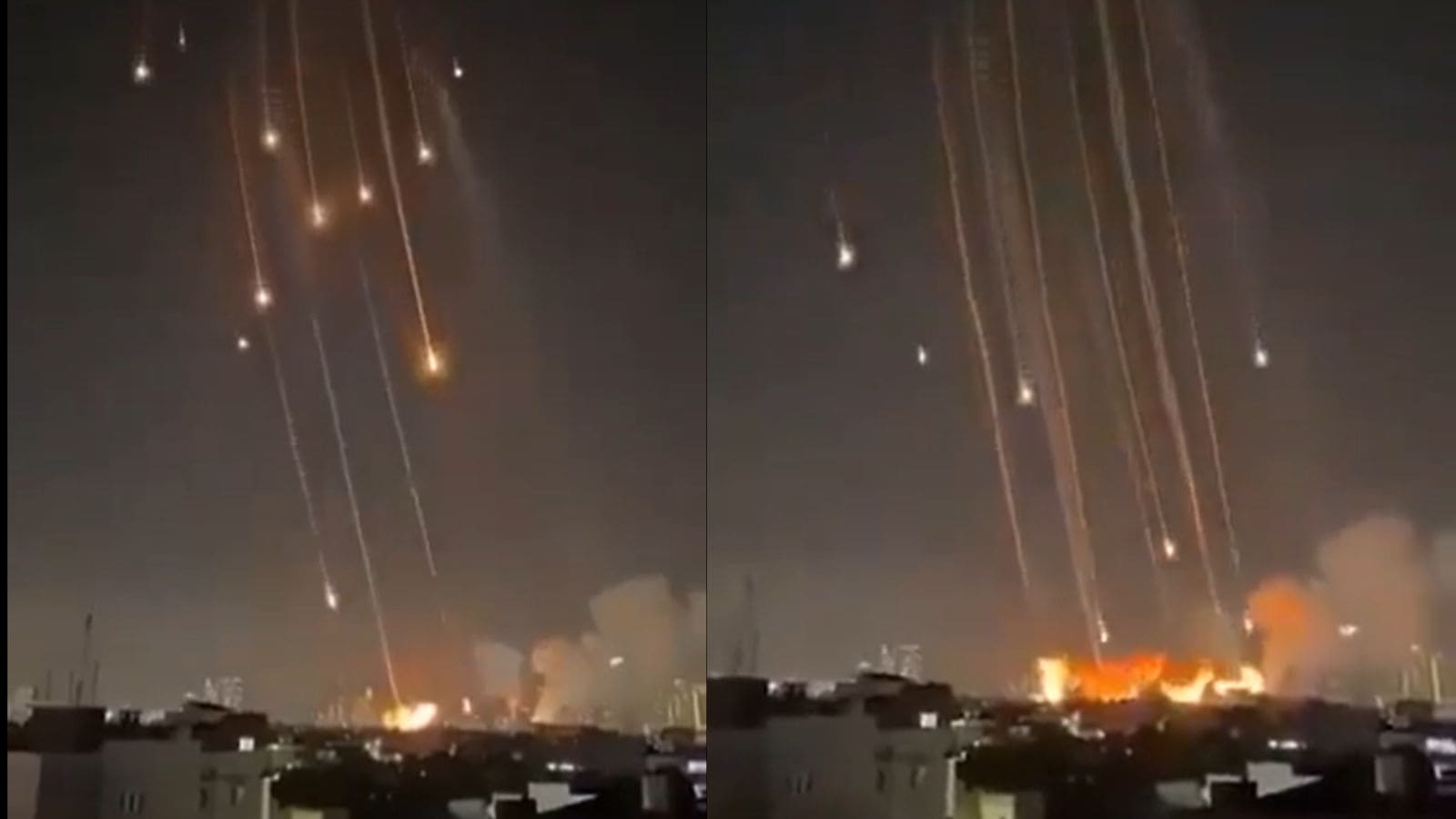
Israel's recent claims that Tehran deployed cluster bombs in the ongoing friction with the United States have reignited a global firestorm over a weapon most of the world wants banned. This isn't just about tactical strikes or military hardware. It's about a specific type of munition that leaves a lethal legacy for decades. When we talk about cluster bombs, we're talking about weapons that are notoriously imprecise and often fail to detonate on impact, turning former battlefields into active minefields.
The accusation is heavy. If Tehran actually used these during the recent escalations, it signals a shift in strategy that disregards international norms, even if neither Iran nor the United States are signatories to the primary treaty banning them. You've got to wonder why a military would choose a weapon that brings so much diplomatic baggage. The answer usually lies in "area denial" and the sheer terrifying efficiency of the submunitions.
Why Cluster Bombs Are a Humanitarian Disaster
To understand the weight of the Israeli allegations, you have to look at how these things actually work. A cluster bomb is essentially a large canister that opens mid-air. It releases dozens, sometimes hundreds, of smaller explosives called "bomblets." In theory, they're meant to wipe out a large area of enemy tanks or troops. In reality, they're a mess.
The "dud rate" is the real killer. Depending on the model and the terrain, anywhere from 5% to 40% of these bomblets don't explode when they hit the ground. They just sit there. They look like tennis balls or soda cans. Kids find them. Farmers hit them with tractors. Years after the "Iran-US war" headlines fade, these unexploded submunitions will still be waiting in the dirt.
Over 100 countries signed the 2008 Convention on Cluster Munitions. They realized the cost of cleaning these up outweighs any temporary battlefield advantage. But here’s the kicker: the biggest players—the U.S., Russia, China, Israel, and Iran—never signed it. They want to keep these "steel rain" options on the table. When Israel points the finger at Tehran for using them, they aren't just accusing them of a tactical choice; they're painting them as a rogue actor willing to leave a permanent trail of civilian casualties.
Breaking Down the Israeli Allegations
The intelligence reports coming out of Tel Aviv suggest that Iranian-made cluster munitions were deployed in specific corridors where U.S. assets were positioned. Israel claims to have physical evidence—remnants of the canisters and unexploded submunitions—that match known Iranian manufacturing patterns. Specifically, they point to the "Sadid" series or similar variants designed to be dropped from drones.
We've seen this play before. Intelligence in the Middle East is often a game of mirrors. Tehran, for its part, has dismissed these claims as "Zionist propaganda" designed to pull the United States deeper into a direct kinetic conflict. But if the fragments Israel is showing the UN are legitimate, it proves Tehran has moved beyond just supplying proxies. It shows they're willing to use high-collateral weapons directly.
The U.S. response has been uncharacteristically quiet. That might be because the Pentagon knows it has its own history with these weapons. You can't exactly take the moral high ground when you've shipped thousands of the same types of munitions to various conflict zones over the last decade. It’s a messy, hypocritical standoff where the only certain losers are the people living on the ground where these canisters open up.
The Technical Reality of Iranian Munitions
Iran's defense industry has grown significantly under decades of sanctions. They've become masters of "good enough" technology. Their cluster munitions aren't as sophisticated as the latest American versions, but they don't need to be. They're designed for mass production and saturation.
Submunition Varieties
Most Iranian designs focus on dual-purpose improved conventional munitions (DPICM). These are meant to pierce armor and spray shrapnel at the same time. If a drone drops a single canister over a motor pool, it doesn't just hit one truck. It shreds everything in a three-acre radius. This is why Israel is sounding the alarm. This isn't a precision strike; it's a "delete" button for a specific geographic square.
The Drone Connection
What makes this specific allegation different from 20th-century warfare is the delivery method. We aren't talking about B-52s dropping carpets of bombs. We're talking about Shahed-style loitering munitions or larger Mohajer drones carrying specialized dispensers. This allows for a terrifying level of "persistent presence." A drone can wait for the perfect moment to release a cluster of bomblets, making the "unintentional" civilian casualties much harder to explain away as a simple mistake.
International Law and the Gray Zone
Let's be blunt: being a "non-signatory" to a treaty doesn't give you a free pass to do whatever you want. International Humanitarian Law (IHL) still applies. The principles of distinction and proportionality are supposed to guide every strike. You can't legally use a weapon that is inherently "indiscriminate."
The argument against Tehran—and any country using cluster bombs—is that these weapons are by nature indiscriminate. You can't control where those 200 bomblets go once the wind catches them. If there's a village three hundred yards from the target, that village is in the strike zone.
Israel’s strategy in highlighting this is clear. They want to frame Tehran's military actions as war crimes in waiting. By focusing on the specific "controversial" nature of cluster bombs, they're tapping into a global sentiment that already hates these weapons. It's a smart PR move, but it's also a dangerous one. If the evidence is faked or even slightly exaggerated, it undermines the very real need to track and limit these weapons.
What Happens When the Smoke Clears
The immediate concern is the escalation of the Iran-US conflict. But the long-term concern is the "contamination" of the land. In Laos, people are still dying today from cluster bombs dropped in the 1970s. If the claims are true and these were used in the recent border skirmishes or desert engagements, we've just created a new set of "no-go zones" that will last for a generation.
Military analysts often focus on the "kill chain" or the "strategic impact." They rarely talk about the demining teams that have to go in afterward. They don't talk about the $1,000 it costs to find and destroy a single $20 bomblet. Whether it's Tehran using them or someone else, the bill always comes due, and it's never paid by the generals who ordered the strike.
If you're following this conflict, don't just look at the maps of who gained what territory. Look at the reports of "unidentified explosive remnants." That's where the real story of cluster bombs is told. The use of these weapons isn't just a tactical choice; it's a long-term debt forced upon the civilian population.
The international community needs more than just accusations from Israel. It needs independent verification on the ground. Until then, these claims remain a potent tool for political leverage. If you want to see change, start by supporting organizations like the Landmine and Cluster Munition Monitor. They do the actual work of tracking these weapons when the governments won't. The next time you see a headline about a "controversial weapon," remember that the controversy isn't just about the blast—it's about the decades of danger left behind.