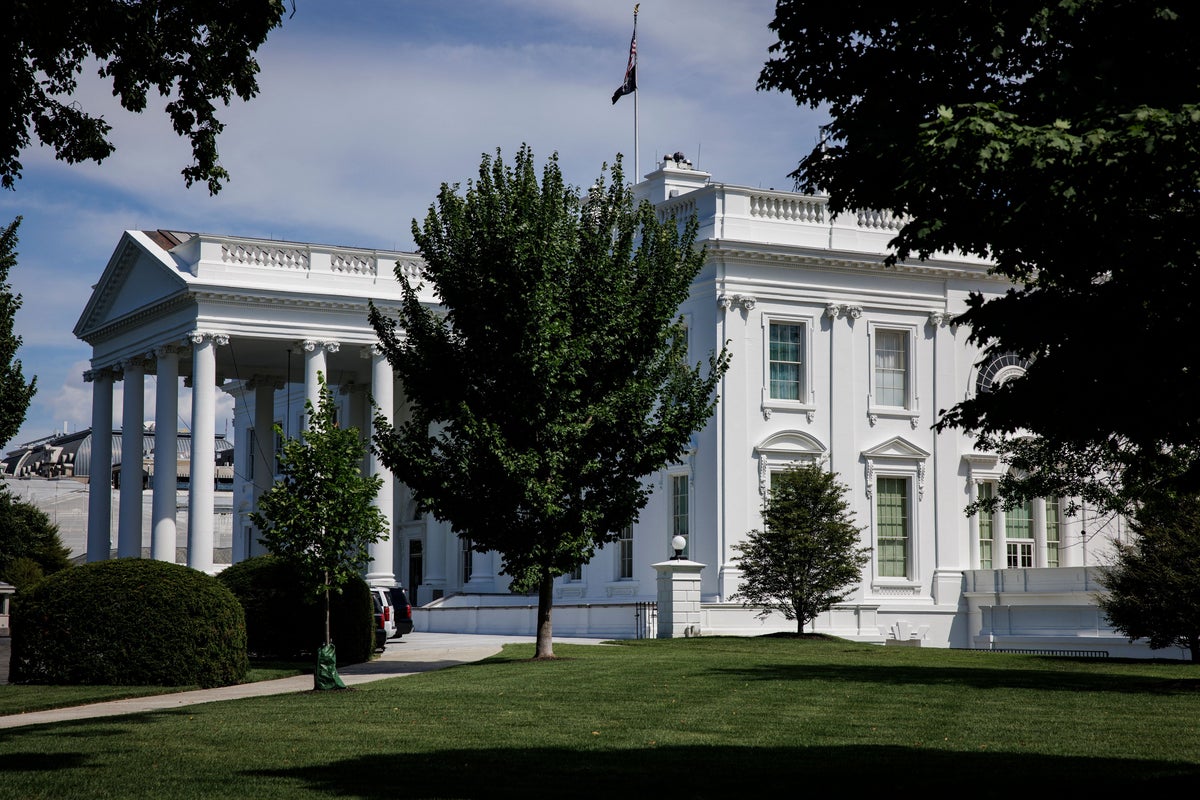
Donald Trump isn't finished with the White House. Not by a long shot. After already leveling the East Wing to make room for a massive $400 million ballroom, the administration is now eyeing the very face of the Executive Residence. The new target? The iconic 200-year-old columns that define the North Portico.
Rodney Mims Cook Jr., the Trump-appointed chair of the Commission of Fine Arts, recently went public with a pitch that has historians and architects clutching their blueprints. He wants to rip out the "dignified" Ionic columns—the ones with the scrolls—and replace them with the "showy" Corinthian style. It’s the same ornate, leaf-heavy look you’ll see at Mar-a-Lago or Trump Tower. Basically, the president wants the White House to match his personal brand, and he's starting with the front door.
The Battle of the Capitals
To the average person, a column is just a big stick holding up a roof. But in the world of classical architecture, these things have personalities. The current Ionic columns on the North Portico have stood since the days of Andrew Jackson. They’re slender and relatively restrained. Cook, however, argues that the White House is getting short-changed.
He points out that the U.S. Capitol and the Supreme Court both use Corinthian columns, which are considered the "highest order" of Greek architecture. In his view, it's "beyond me" why the White House didn't use them originally. It’s a classic Trump-era argument: if the other branches of government have the "best" and most expensive-looking columns, why doesn't the president?
Why Preservationists Are Terrified
Changing these columns isn't like swapping out a kitchen backsplash. It’s a fundamental alteration of a National Historic Landmark. Steven Semes, a professor emeritus of architecture at Notre Dame, puts it bluntly. He says the different styles are like musical scales. You can't just mix them without creating a mess. Replacing the columns would be like "surgically adding or removing a couple of inches to one of your legs." You might still be able to stand, but you're going to look and move like a "completely absurd animal."
The White House was designed by James Hoban as a Georgian mansion—a "People’s House" that was supposed to be grand but not a palace. Turning it into a Corinthian spectacle pushes it closer to the "Imperial" look that Trump clearly prefers.
The Goldening of 1600 Pennsylvania Avenue
This column talk doesn't exist in a vacuum. It’s part of a much larger, incredibly fast-moving makeover of the entire complex. If you haven't kept up with the construction noise coming from 1600 Pennsylvania Avenue lately, here’s the shortlist of what’s already happened or is currently underway:
- The East Wing is Gone: In October 2025, work crews completely demolished the East Wing. This was the home of the First Lady’s offices and the historic movie theater. It was torn down to clear space for a 90,000-square-foot ballroom.
- The $400 Million Ballroom: This new structure is roughly twice the size of the original White House. It’s going to feature bulletproof glass walls, enough space for 1,000 guests, and—you guessed it—plenty of Corinthian columns.
- The "Rose Garden Club": The historic Rose Garden, once a soft landscape of flowers and greenery, has been paved over with stone. It now features white-and-yellow-striped beach umbrellas and a high-end sound system.
- Interior "Goldening": Inside the residence, the minimalist or "Art Deco" touches of previous administrations are being swapped for gold filigree, black-and-white marble, and gilded mirrors. Even the TV remotes have reportedly been gilded.
Who Is Paying for This
The administration keeps stressing that "Patriot donors" and large corporations are footing the bill. We're talking about names like Amazon, Meta, and Google. Trump claims this saves taxpayers money, but critics aren't buying it.
Even if the construction is "free," the long-term maintenance is a nightmare. A 90,000-square-foot ballroom needs massive HVAC systems, specialized security teams, and constant upkeep. Those bills don't go to the "Patriots"—they go to you. Once the private donors walk away, the public is left holding the bag for a building that many architectural experts think shouldn't exist in the first place.
Is This Even Legal
Normally, any change to the White House has to go through a rigorous review process involving the National Capital Planning Commission (NCPC) and the Commission of Fine Arts (CFA). But Trump has been aggressive about staffing these boards with loyalists.
Last year, he removed Biden appointees from the CFA and replaced them with people like Cook, who share his "neoclassical" vision. The result is a system where the "watchdogs" are now the ones proposing the most radical changes. Lawsuits are currently flying from groups like the National Trust for Historic Preservation, but so far, they haven't been able to stop the bulldozers.
What Happens Next
The White House officially says there are "no plans" to replace the columns right now. But that’s exactly what they said about the East Wing right before the wrecking balls showed up. Cook’s proposal is a trial balloon. If the public and the political opposition don't make enough noise, expect those 200-year-old Ionic scrolls to be replaced by Corinthian acanthus leaves by the end of the year.
If you care about the architectural history of the "People's House," don't just watch the headlines. Keep an eye on the upcoming NCPC hearings in April. That’s where the next phase of this "makeover" will either be rubber-stamped or finally met with a hard "no." In the meantime, the White House is looking less like a symbol of democracy and more like a high-end resort in Palm Beach.
Stay informed by checking the public meeting schedules of the National Capital Planning Commission. You can often submit public comments online, which—believe it or not—does occasionally slow these projects down when the volume of opposition becomes too loud to ignore.