Donald Trump isn't exactly known for subtle diplomacy, but his latest pitch for a "friendly takeover" of Cuba has caught everyone off guard. While boarding Marine One on February 27, 2026, he basically told the world that the Cuban government is broke, desperate, and ready to talk. It’s a wild pivot from the usual talk of invasions or Cold War standoffs. Instead of a "Bay of Pigs" 2.0, we’re looking at what sounds more like a corporate acquisition.
You’ve got to look at the timing here. Just weeks ago, U.S. forces successfully grabbed Nicolás Maduro in Venezuela, which was Cuba’s literal lifeline for oil. Now, Havana is sitting in the dark, quite literally, with power outages and no cash. Trump smells blood in the water—or more accurately, he smells a deal. By calling it "friendly," he’s signaling to the regime that they might get to keep their skins if they open the doors to American business.
The Rubio Connection and the Secret Talks
If you think this is just a random off-the-cuff remark, you’re missing the machinery behind it. Secretary of State Marco Rubio, the son of Cuban exiles, is the one running the show at a "very high level." While the official Cuban government under Miguel Díaz-Canel is publicly playing tough, the real action is happening in the shadows.
Reports have leaked that U.S. officials met with Raúl Guillermo Rodríguez Castro—the grandson of the legendary Raúl Castro—on the sidelines of the Caricom summit. This is a massive detail. The "grandson" isn’t just family; he’s a power broker who likely understands that the old communist model is a corpse. If the U.S. is talking to the Castro inner circle while bypassing official channels, they’re looking for a "managed" collapse where the top brass gets a golden parachute in exchange for privatizing the island.
Why the Island is Failing Right Now
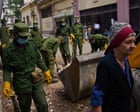
Cuba has been on the brink before, but 2026 feels different. The island is facing its worst crisis since the "Special Period" of the 90s, but this time there’s no Soviet Union or oil-rich Venezuela to bail them out.
- The Energy Blockade: Trump’s executive order from January didn't just target Cuba; it threatened tariffs on any country that sends them oil. It’s a total strangulation of their power grid.
- Zero Cash: The tourism industry, which they’ve leaned on for decades, is cratering because of the new restrictions and the general instability.
- The Maduro Factor: Without Venezuelan oil, the Cuban military—which runs most of the island's hotels and businesses—is losing its revenue stream.
Honestly, the "friendly takeover" phrase is pure Trump. It’s meant to sound less like a war and more like a real estate merger. He’s telling the Cuban people he wants to "do something positive" for the exiles in Miami who want to go back. It’s a message to the Florida voting base as much as it is to Havana.
Business Opportunity or Imperialism
There's a lot of debate about what a "takeover" actually looks like in 2026. Experts like William LeoGrande think the goal isn't necessarily toppling the regime but forcing them to allow U.S. companies to own the ports, the energy grid, and the telecoms. Think of it as the "Puerto Rico model" but with more cigars.
But don't ignore the legal side. The U.S. Supreme Court is currently hearing cases about property seized during the 1959 revolution. Companies like Exxon and the heirs to the Havana Docks are looking for billions. A "friendly takeover" might just be a way to settle those 60-year-old debts by giving American corporations a seat at the table in a new, privatized Cuban economy.
The Risks of a Forced Collapse
It's not all sunshine and golf courses. A "takeover" usually implies one side loses. While the U.S. is squeezing the life out of the Cuban economy, the humanitarian cost is skyrocketing. Critics argue that this "collective punishment" will just lead to another massive wave of migration toward Florida, which is exactly what Trump says he wants to stop.
Also, the "friendly" part is highly debatable. Just days ago, a speedboat full of armed exiles from Florida got into a shootout with the Cuban Coast Guard, leaving four dead. Havana is using this to claim the U.S. is sponsoring terrorism. Whether that's true or not, it shows how volatile the situation is. One stray bullet could turn a "friendly" talk into a very messy conflict.
What Happens Next for You
If you're following this, don't expect a formal treaty signing tomorrow. This is about leverage. Trump is using the energy blockade to see if the Cuban military will blink.
If you have business interests in the region or family on the island, keep your eye on the Treasury Department's licensing. They just authorized limited oil sales to Cuba’s "private sector." That’s the wedge. The U.S. is trying to build a middle class that owes its survival to Washington, not the Communist Party.
The next step is to watch Marco Rubio's travel schedule. If he ends up in a room with a Castro—even a grandson—the "friendly takeover" is officially in motion. You should also monitor the U.S. Supreme Court's upcoming rulings on the Libertad Act, as those decisions will set the price tag for any deal Havana tries to make. Keep your passport and your portfolio ready; the Caribbean is about to get very loud.