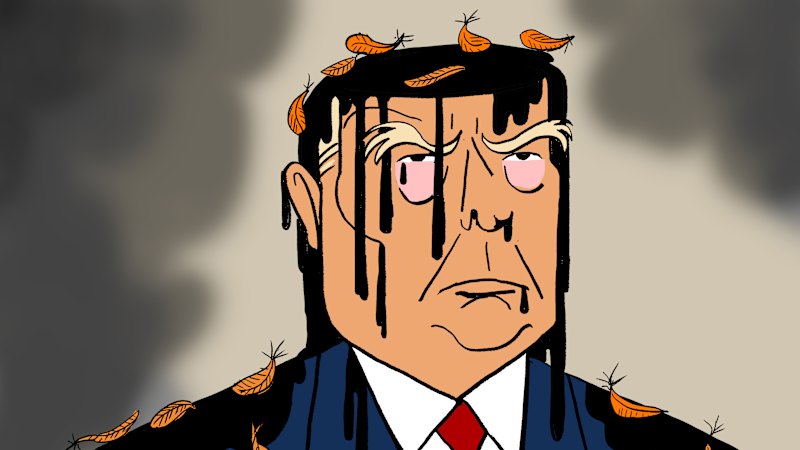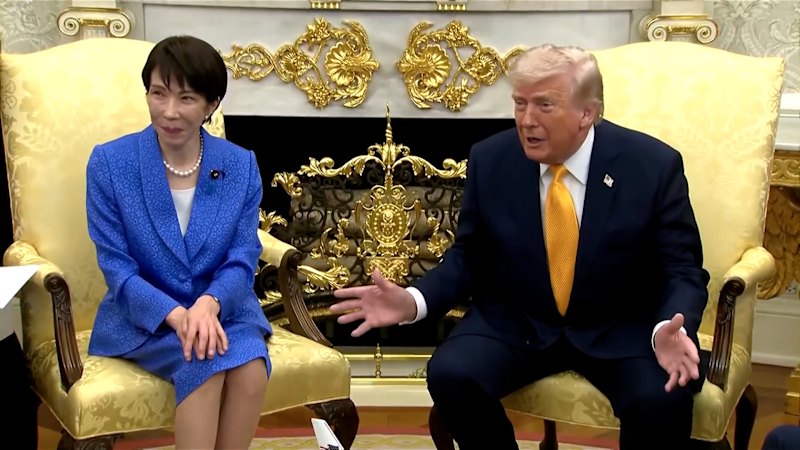
Donald Trump just reminded the world that diplomacy, in his hands, is less about scripts and more about high-stakes improvisation. On Thursday, during an Oval Office meeting with Japanese Prime Minister Sanae Takaichi, the President didn’t just defend his recent military strikes against Iran—he did it by invoking one of the most painful chapters in U.S.-Japan history.
"We wanted surprise," Trump told a room full of reporters, leaning back in his chair while Takaichi sat inches away. "Who knows better about surprise than Japan? Why didn't you tell me about Pearl Harbor, okay?"
The room went quiet for a beat before a few laughs broke the tension. Takaichi, Japan’s first female prime minister and a known security hawk, didn't laugh. She adjusted her seat, her eyes widened slightly, and she let out what sounded like a suppressed sigh. It was a classic Trump moment: blunt, historically heavy, and designed to steamroll over the delicate etiquette of international relations.
The Logic of Surprise in the Iran Conflict
The context here isn't just a random history lesson. For the last three weeks, the U.S. and Israel have been engaged in a hot war with Iran. The conflict kicked off on February 28, 2026, with a massive, unannounced aerial campaign. Since then, allies have been grumbling. They want to know why they weren't looped in before the first missiles hit.
Trump’s answer is simple. If you tell people, it’s not a surprise.
He claimed the initial 48 hours of the campaign knocked out nearly 50% of the intended targets. In his mind, that efficiency justifies the radio silence. By bringing up Pearl Harbor, he wasn't just making a joke; he was using a historical "gotcha" to shut down the idea that the U.S. owes its allies a heads-up on tactical strikes.
Takaichi’s Impossible Position
Sane Takaichi didn't travel to Washington to talk about 1941. She came to talk about the Strait of Hormuz and the skyrocketing price of oil. Japan is in a bind. They rely on that narrow waterway for the vast majority of their energy, yet their "pacifist" constitution makes joining a U.S.-led war effort a political nightmare at home.
Trump is pushing her to "step up to the plate." He’s tired of what he calls the "NATO attitude"—allies who want protection but won't put skin in the game. By ribbing her about Pearl Harbor, he’s subtly reminding her that Japan has a history of independent, decisive military action. It’s a messy, uncomfortable way to pressure a partner, but it’s how Trump operates.
- The Constitutional Hurdle: Japan's Self-Defense Forces are legally restricted. Takaichi would have to clear an "exceptionally high bar" to invoke collective self-defense for this Iran mission.
- The Public Sentiment: Polls in Tokyo show the war is deeply unpopular. Most Japanese voters want a mediator, not a combatant.
- The Trump Factor: Takaichi is a protégé of the late Shinzo Abe. She knows the "Trump Whisperer" playbook, but even Abe might have struggled with a Pearl Harbor joke in the middle of a global energy crisis.
Strategic Blunders or Deliberate Chaos
Critics are already calling the comment a "diplomatic disaster." They’ll tell you that you don't bring up the "date which will live in infamy" while asking the same country for naval support. But if you look at Trump’s track record, this isn't a bug—it’s a feature.
Last year, he told German Chancellor Friedrich Merz that D-Day was "not a pleasant day" for Germany. Earlier this week, he spent time praising Winston Churchill to the Irish Prime Minister. Trump uses history as a tool for dominance in the room. He breaks the "polite" rules of the host-guest relationship to ensure he’s the one setting the tone.
He’s also using these remarks to signal to his domestic base. He’s the "tough guy" who doesn't apologize and doesn't ask for permission. In a 2026 election cycle, that narrative is worth more to him than a perfectly worded joint communique.
What Happens to the Alliance Now
Don't expect a public rift. Japan needs the U.S. security umbrella, especially with China watching the Iran conflict closely. Takaichi will likely keep her "slight sighs" to herself and continue negotiating behind closed doors.
However, the "Pearl Harbor" logic has real-world consequences for the war in Iran. If the U.S. continues to prioritize "surprise" over "coalition building," the burden of this conflict will stay squarely on American and Israeli shoulders.
If you're watching the markets, keep an eye on the Strait of Hormuz. Trump mentioned that a nuclear reactor deal with Japan is on the table. That might be the "carrot" he’s offering to balance out the "stick" of his rhetoric.
If you want to understand where this is going, stop looking at the teleprompter and start looking at the offhand comments. They tell you exactly how the President views his "partners"—not as equals to be consulted, but as participants who should have known better than to ask for a warning.
Check the latest oil futures. If Japan doesn't commit ships to the Strait within the next 72 hours, expect the rhetoric from the Oval Office to get even sharper. You can bet Pearl Harbor won't be the last historical wound he decides to poke.