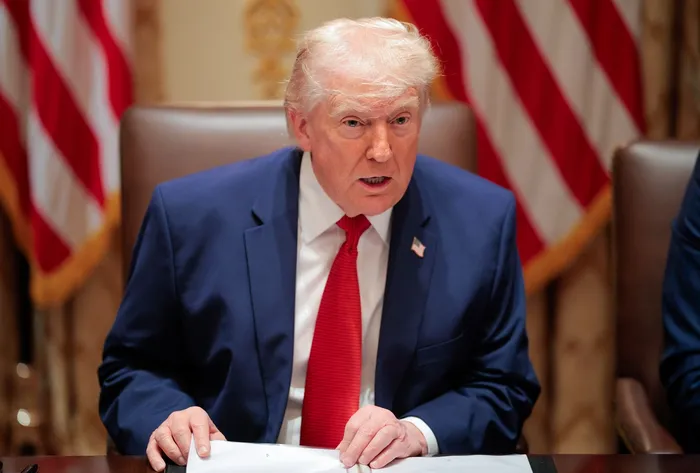
Donald Trump has signaled a plan to end birthright citizenship via executive order on his first day in office, targeting the children of undocumented immigrants and temporary visitors. He argues that the Fourteenth Amendment was intended only for the children of formerly enslaved people and that modern "birth tourism" or illegal entry shouldn’t grant automatic status. This move would immediately trigger a constitutional crisis, forcing the Supreme Court to decide if a 125-year-old precedent can be overturned by a president’s pen.
The strategy hinges on a narrow, originalist reading of the phrase "subject to the jurisdiction thereof." By claiming that "jurisdiction" implies a requirement of political allegiance—not just physical presence—the Trump camp aims to dismantle the long-held standard that anyone born on U.S. soil is a citizen.
The Origin of the Jurisdiction Trap
The debate isn't actually about the first sentence of the Fourteenth Amendment, which states that all persons born or naturalized in the United States are citizens. It centers on the qualifying clause that follows. For over a century, the legal consensus has been that "subject to the jurisdiction" simply means you are under the authority of U.S. laws. If you commit a crime in Ohio, you are tried in Ohio. That is jurisdiction.
Trump’s legal advisors are dusting off a minority legal theory popularized by scholars like Peter Schuck and Rogers Smith in the 1980s. They argue that jurisdiction requires a "mutual consent" between the individual and the state. In this view, if the government didn't invite you to stay permanently, your child shouldn't inherit the right to belong. It treats citizenship as a contract rather than a geographical fact.
This isn't just a policy tweak. It is an attempt to surgically remove the "jus soli" (right of the soil) principle from the American identity and replace it with "jus sanguinis" (right of blood), which is more common in Europe and Asia.
The Ghost of Wong Kim Ark
Every modern legal challenge to birthright citizenship eventually runs into a wall built in 1898. In United States v. Wong Kim Ark, the Supreme Court ruled that a child born in San Francisco to Chinese parents—who were legally barred from ever becoming citizens themselves—was nonetheless a U.S. citizen by birth.
The Court at the time was clear. It ruled that the Fourteenth Amendment affirmed the ancient British common law tradition. If you were born within the "king’s peace," you were a subject. The only exceptions were the children of foreign diplomats, who have immunity, and "alien enemies" during an actual military occupation.
Trump’s team argues that Wong Kim Ark is being misread. They point out that Wong’s parents were legal residents, not "temporary visitors" or people who entered without inspection. They believe they can carve out a distinction between the children of legal residents and the children of those who lack a formal invitation.
The Practical Mechanics of a First Day Order
If Trump signs this order, the immediate impact would be administrative chaos. The Social Security Administration and the State Department would likely be ordered to stop issuing cards and passports to infants born to parents without lawful permanent residency.
Hospital administrators would find themselves on the front lines of federal enforcement. Under current law, a birth certificate issued by a county clerk is the "gold standard" of proof. An executive order would effectively tell federal agencies to ignore these state-issued documents unless the parents can provide their own proof of status.
Imagine a scenario where a child is born in a Texas hospital. Under the proposed order, that child becomes "stateless" the moment they are born. They aren't recognized as Americans, and they might not be recognized by their parents' home countries either. This creates a permanent underclass of residents who can never work legally, vote, or leave the country without being barred from return.
The Originalist Counter Argument
Advocates for the change often cite Senator Jacob Howard, who helped draft the amendment in 1866. Howard famously said the amendment would not include "persons born in the United States who are foreigners, aliens, who belong to the families of ambassadors or foreign ministers."
Critics of birthright citizenship focus heavily on the word "aliens" in that quote. However, historians argue Howard was referring to the specific legal status of Native Americans at the time, who were considered members of sovereign "domestic dependent nations."
To win in court, the administration would have to convince a conservative supermajority on the Supreme Court that the 1898 Court fundamentally misunderstood the intentions of the 1866 Congress. While this court has shown a willingness to overturn long-standing precedents like Roe v. Wade, birthright citizenship is baked into the very structure of the American electorate.
The Economic Ripple Effect
Beyond the constitutional theory, there is the cold reality of the American labor market. The United States is currently facing a demographic slowdown. Birth rates among the native-born population are dropping below replacement levels.
Economists have long argued that birthright citizenship acts as a powerful integration engine. It ensures that the second generation is fully invested in the American system. When you remove that status, you don't remove the people; you simply remove their ability to participate in the formal economy.
The "birth tourism" industry, where wealthy foreign nationals fly to the U.S. to give birth in luxury suites, is the often-cited villain in this narrative. While it exists, it represents a tiny fraction of the millions of births that happen annually. Ending birthright citizenship to stop a few thousand "passport babies" would essentially drop a nuclear bomb on the legal status of millions of others.
The Inevitable Supreme Court Showdown
Any executive order would be sued into a standstill within hours. District courts in liberal-leaning circuits would likely issue nationwide injunctions. The case would then move with lightning speed to the Supreme Court.
Justice Clarence Thomas has previously signaled a willingness to revisit various settled doctrines. However, other conservatives like Brett Kavanaugh and Amy Coney Barrett have emphasized "statutory stasis"—the idea that if a law or interpretation has functioned for over a century without Congress changing it, the courts should be wary of meddling.
There is also the question of the "self-executing" nature of the amendment. Most legal scholars agree that the President does not have the authority to interpret the Constitution in a way that contradicts a Supreme Court ruling. For Trump to succeed, he doesn't just need to sign an order; he needs to convince the judicial branch to surrender its role as the final arbiter of what the Constitution means.
Redefining the American Identity
This fight is about more than just border security or immigration numbers. It is a fundamental disagreement over what makes someone an American. Is it a matter of geography and the "luck of the soil," or is it a privilege granted only to those the current government deems worthy?
If the "consensual" theory of citizenship wins, the definition of an American becomes fluid. It becomes something that can be granted or revoked based on the political whims of whichever party holds the White House. That shift would mark the end of the American experiment as a nation of immigrants and the beginning of a nation of subjects.
The legal framework for this battle is already being built in white papers and policy briefs across Washington. When the order is signed, it won't be a surprise; it will be the opening shot of a war to decide who actually belongs.
Ask me to draft a comparison of birthright citizenship laws in G7 nations to see how the U.S. standard compares globally.