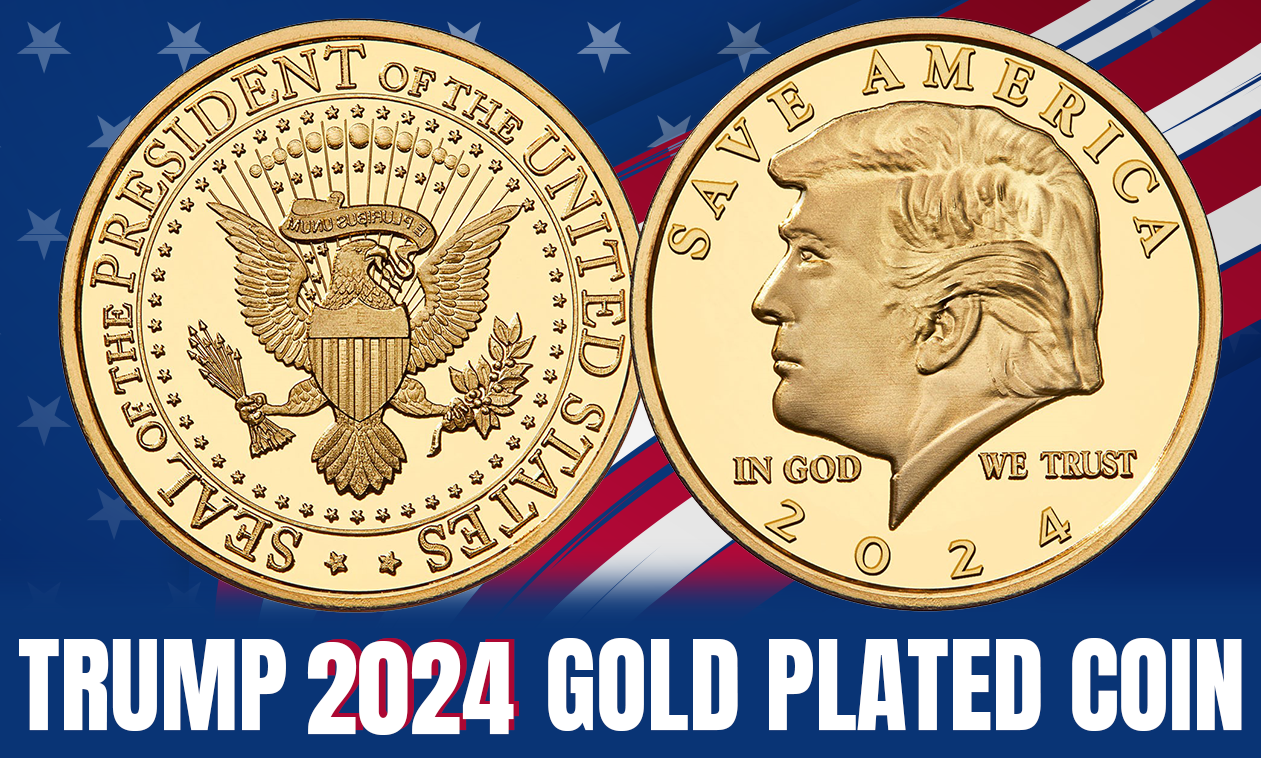
The outrage machine is currently redlining over a piece of metal. When the US Commission of Fine Arts (CFA) gave the nod to a gold coin featuring Donald Trump’s profile, the predictable chorus of "politicization of the mint" and "unprecedented ego" began its scheduled broadcast. The critics are missing the point so spectacularly it feels intentional. This isn't about vanity. This isn't even about the 45th President. This is a cold-blooded experiment in the intersection of numismatic value and political polarization.
Most analysts are treating this like a campaign button. It’s not. It is a high-purity bullion play that leverages the most volatile commodity on earth: human tribalism.
The Myth of the Neutral Mint
The most tired argument circulating right now is that the CFA or the Mint has "lost its neutrality." This assumes a neutrality that never existed. Currency has always been a weapon of statecraft and a billboard for whoever holds the leash. From Roman denarii featuring Nero to the Susan B. Anthony dollar, the "selection" process is always a reflection of power dynamics.
The CFA's approval isn't a moral endorsement; it’s a bureaucratic acknowledgment of market demand. To pretend that the Mint should only produce "safe" or "unifying" imagery is to ignore the primary function of commemorative programs: revenue generation. The US Mint is one of the few government entities that actually turns a profit. In a debt-ridden economy, complaining about a high-margin product that collectors are screaming for is peak financial illiteracy.
Why the Numismatic Premium Will Defy Logic
In standard precious metals investing, you pay the spot price plus a small premium. With commemorative coins, you pay a "collector’s premium" based on rarity and demand. Usually, these premiums decay over time as interest fades.
The Trump gold coin breaks the standard depreciation model.
- Antagonistic Demand: Half the country wants it because they love him. The other half wants it because they think it’s a historical anomaly they can flip to the first group later.
- The Infamy Multiplier: In the world of high-end collecting, "controversial" beats "respected" every single time. A coin that triggers a national debate is inherently more valuable than a coin featuring a generic bald eagle or a forgotten 19th-century senator.
- Proof of Scarcity: If the backlash leads to restricted production runs, the secondary market price will skyrocket. The critics are effectively acting as a free marketing department, driving the "FOMO" that sustains high premiums.
I have seen collectors dump millions into "prestige" assets that have zero cultural heartbeat. This coin has a pulse so loud it’s shaking the room. You don't have to like the man to recognize the math of the asset.
The Counter-Intuitive Risk
The real danger here isn't the "degradation of national symbols." The risk is the bifurcation of the secondary market. We are entering a period where the value of a physical asset might depend entirely on the political leanings of the appraiser. Imagine a scenario where "Blue State" auction houses refuse to list the coin while "Red State" boutiques trade it at a 300% markup over spot. We are looking at the birth of the first truly partisan currency.
This isn't just a coin; it’s a litmus test for the liquidity of "toxic" assets. If the coin maintains its premium despite institutional shun, it proves that decentralized collector markets are now more powerful than the traditional gatekeepers of "prestige."
Stop Asking if it is Appropriate
People keep asking: "Is it appropriate for a living political figure to be on a gold coin?"
That is the wrong question. The right question is: "Does this asset provide a hedge against the very instability its existence proves?"
The CFA approval signifies that the bureaucracy has surrendered to the reality of the attention economy. They know that a coin with Trump’s face will outsell a "Unity" coin 100-to-1. In a world of $34 trillion in debt, the government cannot afford to be "appropriate." It needs to be profitable.
The Institutional Hypocrisy
The same voices screaming about the "sanctity of the coinage" are often the ones cheering when a corporation uses its balance sheet to signal social virtues. You cannot have it both ways. If you want "The Market" to decide what has value, you have to accept when the market chooses a lightning rod.
The gold itself doesn't care whose face is on it. Gold is $Au$—atomic number 79. It is chemically indifferent to populism. But when you wrap 24-karat gold around a figure that commands 24/7 news cycles, you aren't just selling metal. You are selling a piece of the most intense period of American friction.
From an investment standpoint, "friction" is just another word for "volatility," and volatility is where the money is made.
The Playbook for the Skeptic
If you hate the idea of this coin, the most "rational" thing you can do isn't to protest it. It’s to ignore it. Every op-ed written about why this is a "dark day for the Republic" adds exactly $50 to the future resale value of the coin. You are literally minting his legacy with your outrage.
For the serious investor, the play is simple: ignore the noise, look at the mintage numbers, and realize that we are no longer in an era of "boring" assets. We are in the era of the Meme Economy, and this is the first time the US Government has officially joined the fray.
Stop looking for dignity in the tax code or the minting press. Start looking for where the eyes are. The eyes are on the gold.
Buy the metal. Ignore the statue. Or buy the statue because you know someone else will pay double for it in five years just to spite their neighbor. Either way, stop pretending this is about aesthetics. It's about the commodification of the American Divide.
Get your checkbook out or shut up.