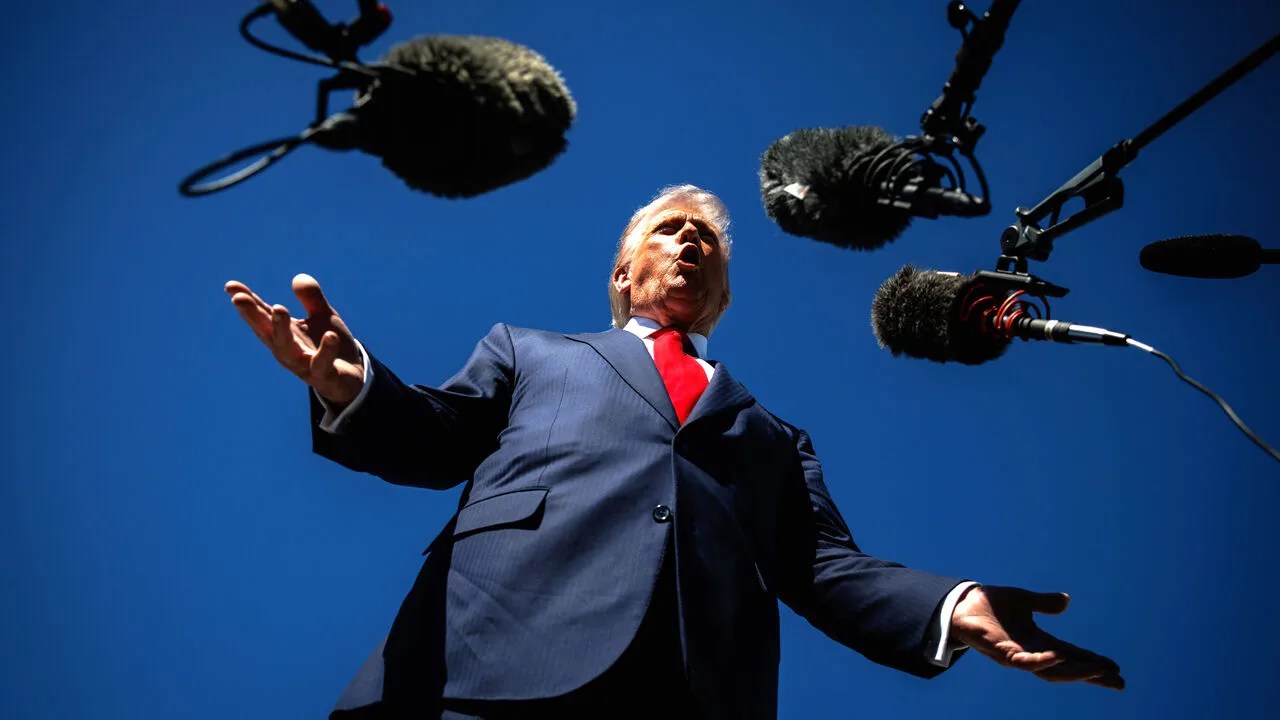
Donald Trump isn't interested in the subtle dance of traditional diplomacy anymore. On Saturday, he bypassed the usual back-and-forth of State Department cables and went straight for the jugular of the Iranian regime. In an eight-minute video that’s already being dissected by every intelligence agency on the planet, Trump laid out an ultimatum that’s as blunt as it is terrifying: surrender and receive total immunity, or stay the course and face "certain death."
This isn't just another round of "maximum pressure." We’re past that. With Operation Epic Fury now in full swing, the U.S. and Israel have moved from symbolic strikes to a systematic dismantling of Iran’s military infrastructure. The killing of Supreme Leader Ayatollah Ali Khamenei in a coordinated strike has left a massive power vacuum, and Trump is moving to fill it with a psychological sledgehammer aimed directly at the rank-and-file soldiers of the Islamic Revolutionary Guard Corps (IRGC).
The End of the Nuclear Stalemate
For over a year, we’ve watched a slow-motion car crash between Washington and Tehran. Trump started 2025 by sending a personal letter to Khamenei, giving him 60 days to scrap every inch of his nuclear program. It didn't happen. Instead, we saw a series of "limited" strikes in June 2025—Operation Midnight Hammer—that supposedly leveled the enrichment sites at Fordow and Natanz.
But the regime didn't collapse. They dug in. They tried to rebuild. By early 2026, it was clear that the "zero enrichment" red line was being crossed again.
Honestly, the mistake many analysts made was thinking Trump would settle for a lopsided deal. He won't. He's made it clear that any agreement has to cover "no nuclear weapons, no missiles, no this, no that." When the latest round of talks in Geneva fizzled out last week, the window for talking slammed shut. Now, the goal has shifted from "containment" to what looks like a total regime reset.
Breaking the IRGC’s Will
The most fascinating part of Trump’s Saturday address wasn't the threat of force—it was the offer of a way out. By promising "complete immunity" to those who lay down their arms, he’s trying to trigger a mass defection within the IRGC and the police forces.
It’s a classic counter-insurgency tactic played out on a global stage. He’s telling the guys holding the rifles that their bosses are gone and their cause is a dead end. If they quit now, they get to live in the "new" Iran. If they don’t, they’re just targets for the next wave of bunker busters.
Let's be real about the "certain death" part. This isn't empty rhetoric. The U.S. has spent the last month building up a massive "armada" in the region, including the USS Gerald R. Ford. We’re seeing a level of coordination with the Israeli military that makes the 2003 Iraq invasion look like a rehearsal. They aren't just hitting factories; they're hunting the navy and the missile batteries with surgical precision.
What This Means for the Iranian People
Trump is betting everything on the idea that the Iranian people are ready to "take over your government." He’s telling them this is their only chance for generations. It’s a high-stakes gamble. Just last month, the regime killed thousands—Trump claims 32,000, though human rights groups put it closer to 7,000—to crush domestic protests.
The strategy is clear:
- Annihilate the leadership: With Khamenei gone, the "head of the snake" is removed.
- Neutralize the hardware: Flatten the missile sites and sink the navy so they can't strike back at Israel or U.S. bases.
- Fracture the security forces: Use the immunity offer to make the soldiers question who they’re even fighting for.
- Empower the street: Provide the window of opportunity for the public to seize government buildings while the IRGC is in chaos.
The Risks of a Total Power Vacuum
You can’t just remove a 47-year-old theocracy and expect a seamless transition to democracy. That’s the part that keeps the UN Security Council up at night. UN Secretary-General Guterres is already warning about a "chain of events no one can control."
If the IRGC doesn't take the immunity deal and instead retreats into a long-term insurgency, the region could stay volatile for decades. There’s also the question of the "terrorist proxies." Groups like Hezbollah and the Houthis aren't going to just vanish because a video was posted on Truth Social.
But Trump’s "America First" doctrine doesn't seem to care about the long-term nation-building projects that mired the U.S. in the Middle East before. He’s focused on the immediate threat: a nuclear-armed Iran and its missile industry. He wants them "razed to the ground" and "obliterated." Once that’s done, he seems perfectly happy to leave the "taking over" part to the Iranians themselves.
Navigating the Next 48 Hours
The next few days are the most dangerous. We’re looking at a country in 40 days of mourning, a military under fire, and a U.S. President who is "not in the mood to negotiate."
If you're watching the markets, expect massive swings. The Strait of Hormuz is the world's most important oil chokepoint, and if Iran’s remaining naval assets decide to go out in a blaze of glory, energy prices will skyrocket.
The immediate next step for anyone with interests in the region is to monitor the internal movement within the Iranian military. If we see reports of units refusing to fire or abandoning their posts in response to the immunity offer, then Trump’s gamble might actually pay off. If they dig in, "certain death" isn't just a threat—it's the operational plan. Pay close attention to the communication channels coming out of Tehran; the silence from the remaining leadership is currently the loudest thing in the room.



