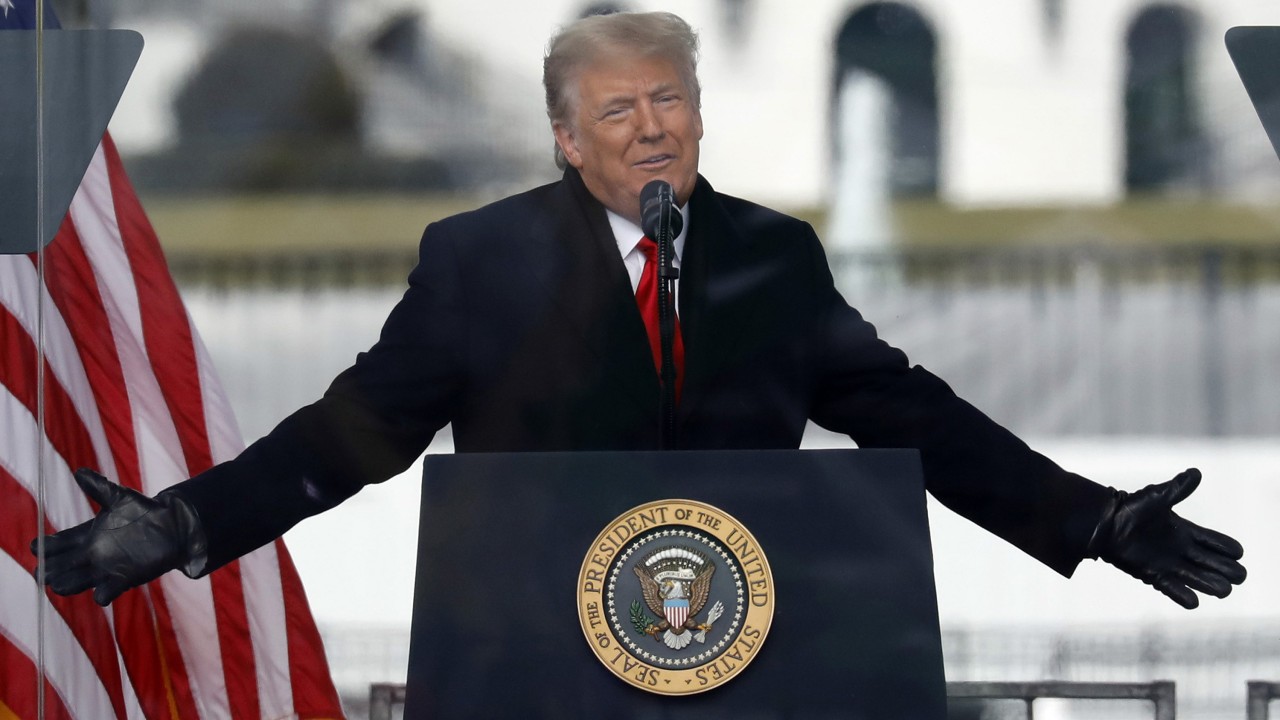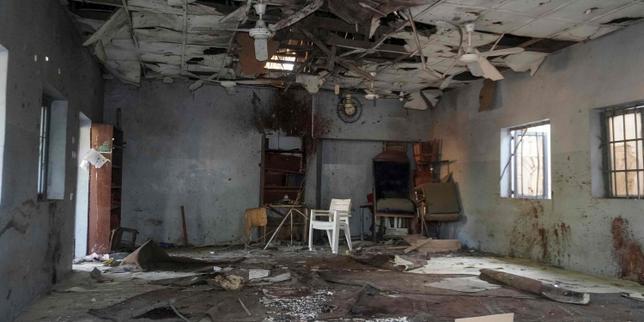
Donald Trump’s approach to Middle Eastern warfare operates as a corrective mechanism for what his administration perceives as the "sunk cost fallacy" of American interventionism. While traditional analysis focuses on isolationism or personal grievance, the underlying logic is a rigorous re-indexing of military power against national solvency. This strategy seeks to decouple the United States from the "Forever War" cycle by shifting the burden of regional stability onto local actors, effectively transitioning from a model of Hegemonic Underwriting to one of Transactional Realignment.
The Architecture of Strategic Retrenchment
The shift in U.S. foreign policy under Trump is not a withdrawal in the vacuum of pacifism; it is an optimization of force. To understand this, one must analyze the three structural pillars that define this recalibration:
- The Extraction of Enforcement Costs: The U.S. has historically provided a "security umbrella" for global trade routes and energy markets. The Trump framework views this as a massive, uncompensated subsidy to global competitors. By demanding higher defense spending from allies and threatening withdrawal, the administration attempts to internalize these costs for regional partners.
- The Kinetic Preference over Occupation: The strategy prioritizes high-impact, low-footprint kinetic actions (e.g., targeted strikes, drone warfare, and special operations) over long-term territorial occupation. Occupation creates a persistent liability—both financial and political—whereas surgical strikes offer a "clear and exit" path that minimizes the exposure of U.S. personnel.
- Proxy-Led Stabilization: This involves the outsourcing of regional containment to local powers, most notably through the expansion of the Abraham Accords framework. By aligning Israeli technological and military capabilities with Gulf Arab capital, the U.S. creates a self-sustaining counterweight to Iranian influence, reducing the need for a permanent American "tripwire" force.
Quantifying the Trauma of Asymmetric Warfare
The "trauma" referenced in geopolitical circles is better understood as a massive ROI failure in the post-9/11 era. The U.S. spent approximately $8 trillion on the Global War on Terror with negligible improvements in regional stability.
The Attrition Variable
In conventional warfare, victory is measured by territorial gain or the destruction of enemy assets. In the Middle Eastern theaters of Iraq and Afghanistan, the U.S. encountered a Cost-Asymmetry Gap.
- Inversion of Value: An insurgent group utilizing a $500 IED could disable a $5 million MRAP vehicle.
- The Governance Debt: Every successful military engagement created a "governance vacuum" that required U.S. nation-building—a task for which the military is neither trained nor funded.
Trump’s policy assumes that if the U.S. cannot solve the governance debt, it should not incur the kinetic cost. This logic dictates that interventions only occur when a direct, quantifiable threat to U.S. soil or core economic interests (like the Strait of Hormuz) is identified.
The Iranian Pivot and the Mechanics of Maximum Pressure
The withdrawal from the Joint Comprehensive Plan of Action (JCPOA) and the subsequent "Maximum Pressure" campaign represent a shift from diplomatic containment to Economic Attrition. The objective was to degrade the Iranian state’s ability to fund regional proxies (Hezbollah, Hamas, Houthis) by cutting off their primary revenue streams—oil exports and international banking access.
The Logic of Sanction-Based Deterrence
Sanctions serve as a non-kinetic weapon that avoids the political fallout of troop deployments while achieving similar ends: the degradation of the adversary's military-industrial complex. However, the limitation of this strategy is the "Autarky Response." When a nation is fully decoupled from the Western financial system, it finds alternative, clandestine trade routes (e.g., the "ghost fleet" of oil tankers), which diminishes the marginal utility of further sanctions.
The assassination of Qasem Soleimani was the ultimate expression of this doctrine: a demonstration that the U.S. would use high-tier kinetic capabilities to enforce "red lines" without committing to the ground-war escalation that characterized the Bush and Obama eras. It was a calculated risk intended to reset the deterrence equilibrium.
The Abraham Accords as a Strategic Multiplier
The Abraham Accords are not merely "peace deals"; they are a Regional Security Architecture. By normalizing relations between Israel and several Arab nations, the U.S. effectively created a "Middle Eastern NATO" in all but name.
- Intelligence Integration: The sharing of SIGINT (Signals Intelligence) and ELINT (Electronic Intelligence) between former adversaries creates a dense surveillance net that the U.S. previously had to maintain alone.
- Air Defense Interoperability: The sale of F-35s and advanced missile defense systems to Gulf partners creates a unified shield against missile and drone threats, allowing the U.S. to redeploy its own Patriot batteries to the Indo-Pacific theater.
This creates a "Force Multiplier" effect. The U.S. can maintain a presence in the Middle East through its partners rather than through its own deployments.
The Risks of the Transactional Model
While the Trump doctrine reduces immediate U.S. expenditure and casualty risk, it introduces new systemic vulnerabilities.
- The Accountability Gap: When the U.S. outsources regional security to local actors, it loses granular control over how that power is used. Regional partners may use American-made hardware to pursue sectarian or local interests that do not align with broader U.S. strategic goals.
- The Power Vacuum Paradox: Rapid withdrawal from contested areas (like Northern Syria) creates openings for rival superpowers—specifically Russia and China—to establish permanent bases of influence. This can lead to the loss of long-term strategic depth.
- The Fragility of Non-Institutional Agreements: Much of this doctrine relies on personal relationships between leaders rather than formal institutional treaties. This makes the entire regional architecture susceptible to "Succession Risk" if a key leader in Riyadh, Jerusalem, or Washington changes.
Engineering the Post-Interventionist Reality
The shift in Middle Eastern policy is a recognition that the 20th-century model of "Global Policeman" is unsustainable in a 21st-century multipolar world. The U.S. is moving toward a Portfolio Management approach to global security.
In this model, the Middle East is a "Mature Asset" where the goal is to maintain stability with minimal reinvestment. The "Growth Asset" is the Indo-Pacific, where the real challenge to U.S. primacy—China—resides. Every soldier, dollar, and diplomatic hour spent in the Middle East is an opportunity cost in the competition with Beijing.
The Trump strategy is an attempt to "stop the bleed" of the Middle Eastern wars to prepare for the much larger geopolitical confrontation on the horizon. It is a pivot from a tactical fixation on insurgencies to a strategic focus on Great Power competition.
The next phase of this strategy requires the aggressive expansion of the Abraham Accords to include Saudi Arabia, which would finalize the regional "containment ring" around Iran. Simultaneously, the U.S. must finalize the transition of its remaining bases in Iraq and Syria from combat roles to "Advice and Assist" hubs, strictly focused on counter-terrorism rather than regional policing. The ultimate metric of success for this doctrine is not the "transformation" of the Middle East into a democratic bloc, but the achievement of a regional balance of power that functions without the constant infusion of American blood and capital.