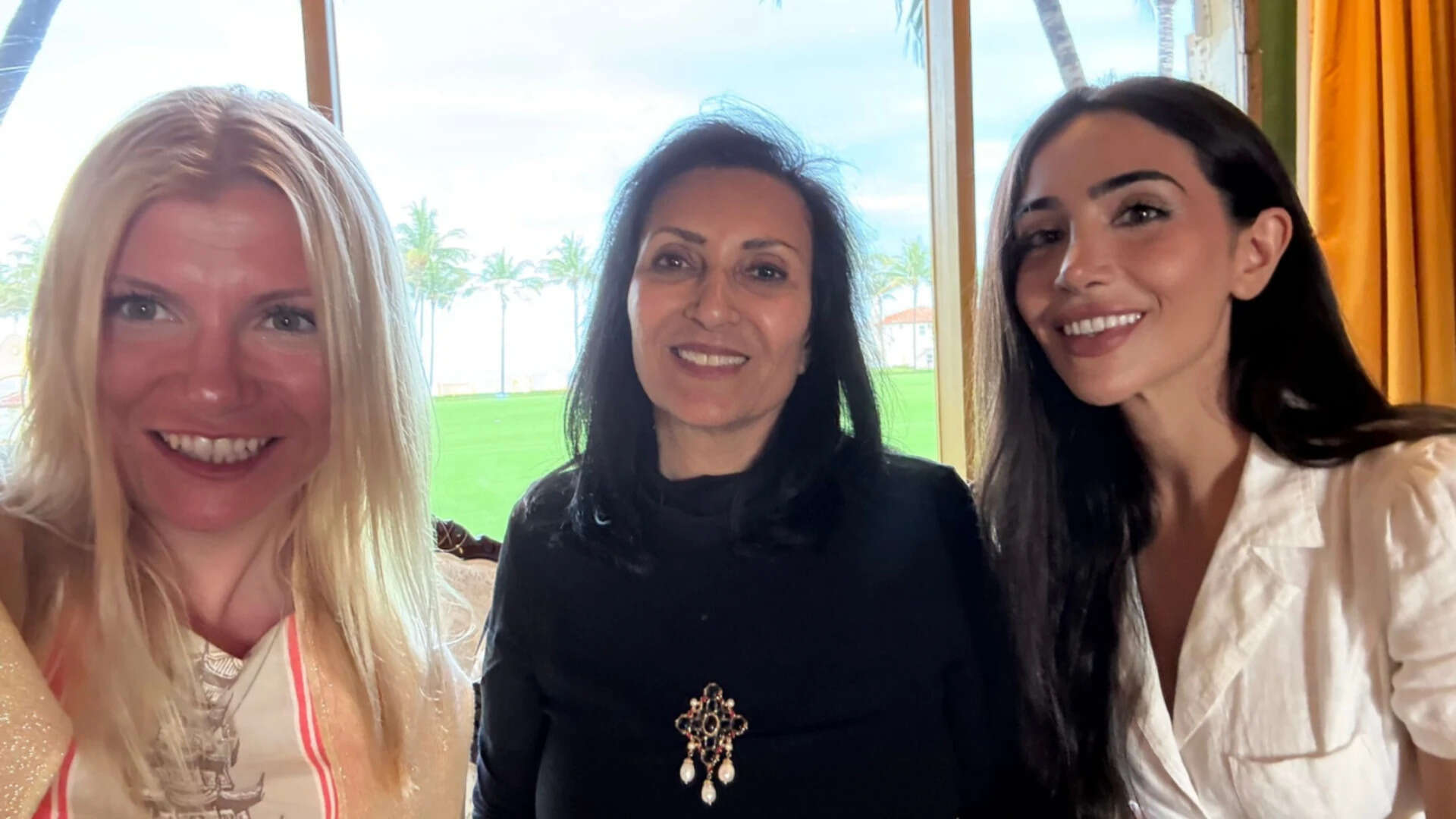
Donald Trump doesn’t do quiet nights. While most of the world was catching up on sleep or scrolling through news feeds, an Indian-origin venture capitalist was sitting across from the President at Mar-a-Lago, watching the gears of a global conflict grind into motion. Asha Jadeja Motwani spent two hours with Trump just as he made the call to stop talking and start shooting. It wasn't just a dinner; it was the front row to a geopolitical earthquake.
The atmosphere at the Florida estate wasn't one of panic, but of intense, structured activity. Motwani described seeing the "entire team"—including heavy hitters like Steve Witkoff, Marco Rubio, Pete Hegseth, and Jared Kushner—moving like a pendulum between the residential quarters and a makeshift "war room." Trump, true to his brand, was working the room and the phones simultaneously. This wasn't a snap decision made in a vacuum. It was the culmination of a strategy the administration is calling Operation Epic Fury.
The dinner that changed the Middle East
Imagine trying to talk about midterm elections while the most powerful military on earth prepares to dismantle a nation's navy. That was the surreal reality at the table. Motwani noted that the conversation bounced between domestic politics and the looming strikes. It’s a classic Trump move: keeping the vibe "wildly positive" even as he prepares to "commence the war."
But the real meat of the night came from the high-level updates shared by Steve Witkoff. While the public sees the explosions on TV, the inner circle was focused on the immediate aftermath and the shifting alliances in the region. Israel wasn't just an ally in this; they were described as "leading the whole operation." This suggests a level of tactical integration that goes way beyond mere intelligence sharing.
Four goals and no nation building
Secretary of War Pete Hegseth isn't mincing words about what the U.S. wants here. If you're looking for a repeat of the decade-long quagmires in Iraq or Afghanistan, you're looking at the wrong war. The administration has laid out four surgical objectives:
- Eradicating Iran’s missile capabilities: Stopping the reach before it can touch U.S. assets or allies.
- Annihilating the Iranian Navy: Ensuring the Strait of Hormuz stays open by removing the threat entirely.
- Nuclear denial: A permanent "no nukes" policy enforced by GBU-57 "bunker busters."
- Cutting off the proxies: Stopping the flow of cash and hardware to "terrorist armies" outside Iran’s borders.
The most striking part of Hegseth’s briefing? The flat-out rejection of "democracy-building." The U.S. is essentially saying they don't care who runs the country next, as long as they don't have the tools to cause trouble. "The regime sure did change," Hegseth remarked, referring to the chaos following reports of Ayatollah Khamenei’s death, but he insists this isn't a regime-change war in the traditional sense. It's a demolition job.
The chaos on the ground
While the mood in Mar-a-Lago was controlled, the reality in the Persian Gulf is anything but. We’re seeing reports of U.S. F-15s going down in Kuwait and retaliatory strikes hitting Dubai and Doha. This isn't a clean, one-sided affair. Iran has responded by targeting over 500 sites linked to U.S. and Israeli interests.
The economic fallout is already hitting home. Indian markets are bleeding, with the Sensex and Nifty dropping significantly as oil prices climb past $80 a barrel. For an investor like Motwani, the irony is thick: you spend two hours with the man pulling the trigger, only to watch the global markets react to the gunpowder.
What happens when the smoke clears
Trump claims these strikes are the "last, best chance" to handle Iran. He’s betting that a five-week blitz can achieve what forty years of sanctions couldn't. But war is messy. Even with the "big wave" yet to happen, the U.S. State Department is already telling every American from Egypt to the Gulf to "depart now."
If you’re tracking this for your portfolio or your sanity, keep your eyes on the Strait of Hormuz. Iran claims it’s shut. The U.S. says they’re "annihilating" the navy to keep it open. Whoever wins that specific argument decides the price of gas for the next decade.
Don't expect a diplomatic climbdown anytime soon. The latest talks in Geneva failed, and Tehran’s leadership—or what's left of it—seems settled on a long-haul resistance. The "deal-maker" has put down the pen and picked up the sword. Now, the rest of us have to live with the edge.
Keep a close watch on the daily CENTCOM briefings for "battle damage assessments." The true success of Operation Epic Fury won't be measured in Mar-a-Lago dinner stories, but in whether those centrifuges in Fordow are actually dust.